Stop buying expensive skincare products blindly! The spots, dullness, and redness on your face are not just surface skin problems, but precise SOS signals from your internal organs.
Having worked in clinical practice for 30 years, I’ve seen far too many patients treat facial problems as skin diseases, applying all sorts of ointments to no avail, only to discover later that the underlying issues are with their heart or liver. The face is one of the areas in the body richest in meridians and blood circulation; every inch of skin corresponds to a specific organ. The state of one’s blood circulation and the imbalance of these organs are directly reflected on the face. However, many people don’t even know which organ their face corresponds to, thus missing the optimal window for early detection and intervention.
How the Chinese Face Map Links Zones to Organs
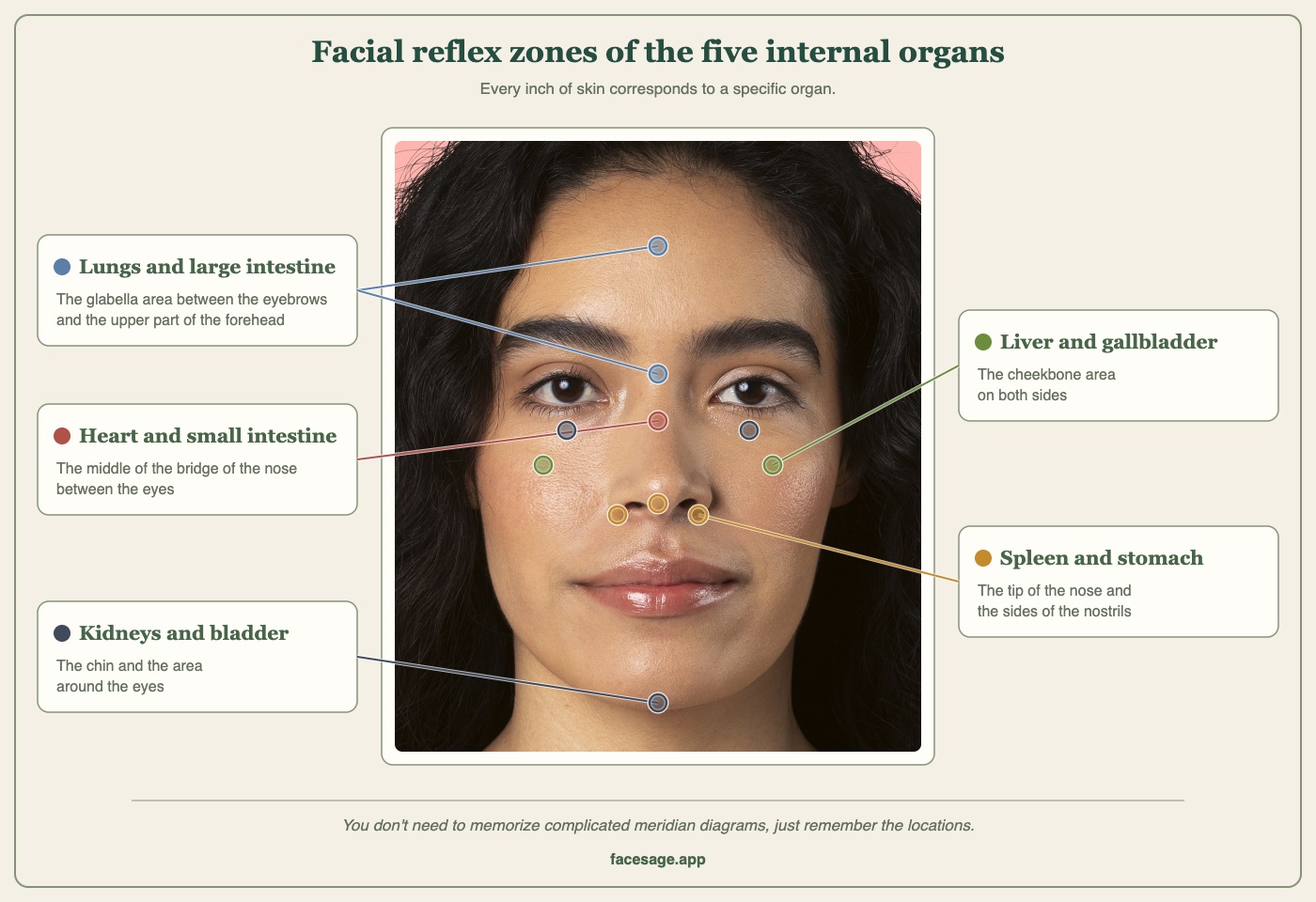
Let me first explain the facial reflex zones corresponding to the five internal organs. You don’t need to memorize complicated meridian diagrams, just remember the locations. The reflex zone for the heart and small intestine is located in the middle of the bridge of the nose between the eyes, slightly below the glabella. Changes in the color and texture of the blood vessels here directly correspond to the state of Qi and blood circulation in the heart. The reflex zone for the liver and gallbladder is the cheekbone area on both sides. Patches and dark spots on the cheekbones are mostly related to the liver and gallbladder’s function of regulating Qi. The reflex zone for the spleen and stomach is the tip of the nose and the sides of the nostrils. The condition of the skin in this area reflects the function of the spleen and stomach. The reflex zone for the lungs and large intestine is the glabella area between the eyebrows and the upper part of the forehead. Insufficient lung Qi and poor large intestine function will show obvious changes here. The reflex zone for the kidneys and bladder is the area of the chin and around the eyes. The kidneys’ fluid metabolism and the state of their essence are directly reflected in the color of the chin and around the eyes.
How to Check Each Organ in the Mirror
The Heart
Now, by looking in the mirror, you can quickly check for problems in each of your internal organs. First, look at your heart: if the middle section of the bridge of your nose between your eyes is red or purple, or even covered with red vessels, it’s likely due to poor blood circulation in the heart. Clinically, these patients often experience chest tightness and palpitations. If even your lips are purple, it’s a sign of insufficient blood oxygen supply, so don’t ignore it. Many people only think it’s skin sensitivity and never consider its connection to the heart.
The Liver
People with liver problems often develop yellowish-brown patches on their cheekbones, commonly known as liver spots. Dark circles under their eyes may also persist, even after eight hours of sleep. This is because the liver’s function of regulating qi and blood is impaired, preventing blood and qi from nourishing the face and causing toxins to accumulate. If you also experience symptoms such as chronic sleep deprivation, irritability, and dull pain in the upper right abdomen, you should have your liver function checked immediately.
The Spleen and Stomach
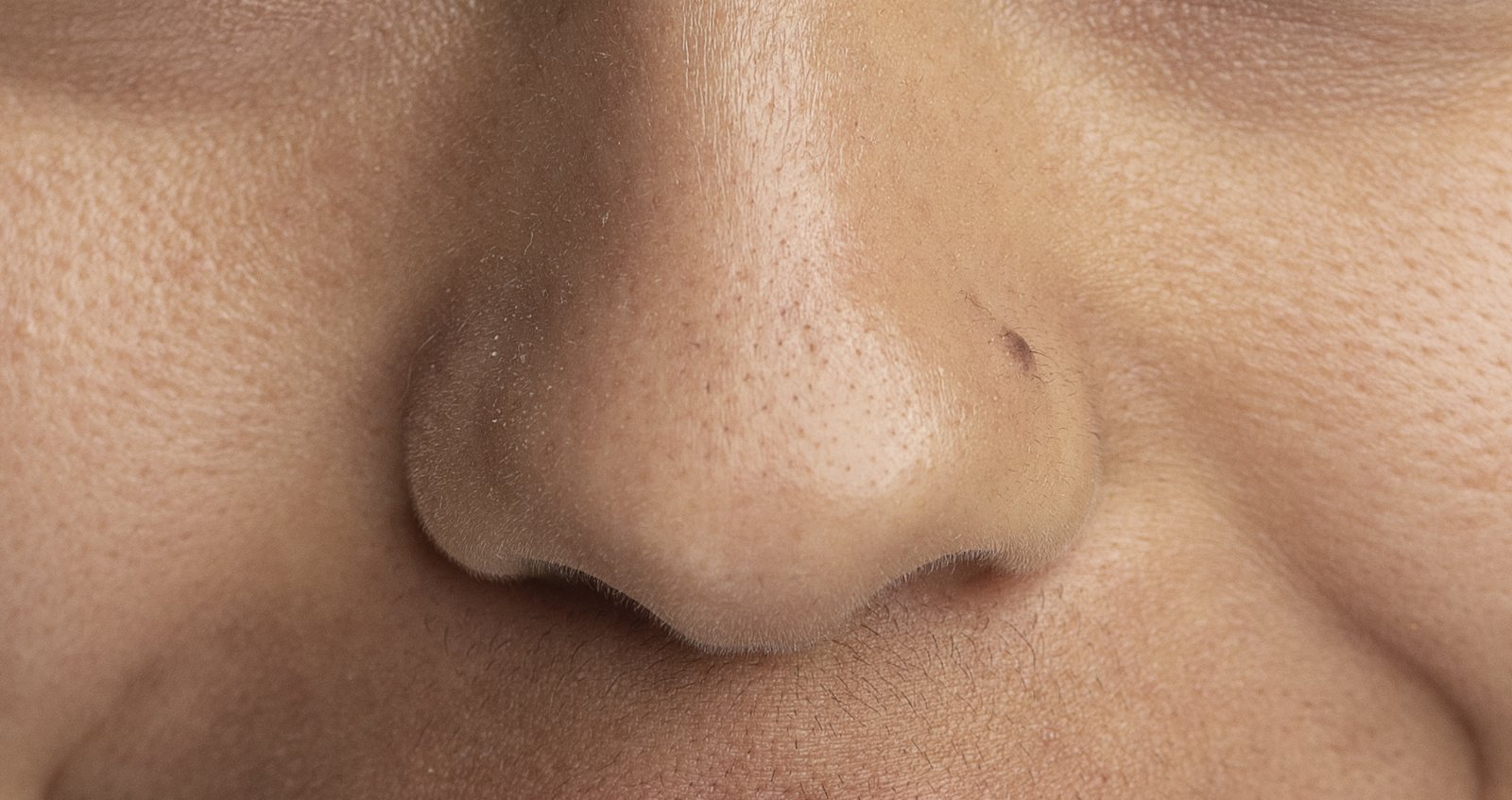
People with weak spleen and stomach often have a red nose, large pores on the sides of their nose with excessive oil production, and a dull, sallow complexion. They also experience bloating and indigestion after eating even a small amount. This is because their spleen and stomach are weak, preventing the body from properly nourishing their facial skin, resulting in a sallow complexion and a red nose. Don’t think that taking some stomach medicine will solve the problem; long-term spleen and stomach weakness can lead to anemia and malnutrition, which are serious issues.
The Lungs
People with poor lung health often have a pale complexion in the area between their eyebrows (the glabella), are prone to pustular acne on their forehead, and frequently experience coughing, shortness of breath, and bronchitis in autumn and winter. This is because insufficient lung qi prevents the proper flow of blood and qi to the face, causing the glabella to appear pale. If the large intestine is not functioning properly, it can also be accompanied by constipation and bad breath. Many people mistake forehead acne for “internal heat,” but it’s usually a sign of lung and large intestine problems.
The Kidneys
People with kidney problems often have a dark or dull chin, very dark circles under their eyes, swollen eyelids like walnuts in the morning, and are prone to lower limb edema. This is because the kidneys’ fluid metabolism is impaired, preventing vital energy from nourishing the face, leading to a dull complexion and edema. If you also experience frequent urination, urgency, and lower back pain, you should have your kidney function checked immediately.
Does a Yellow Face Always Mean Liver Trouble?
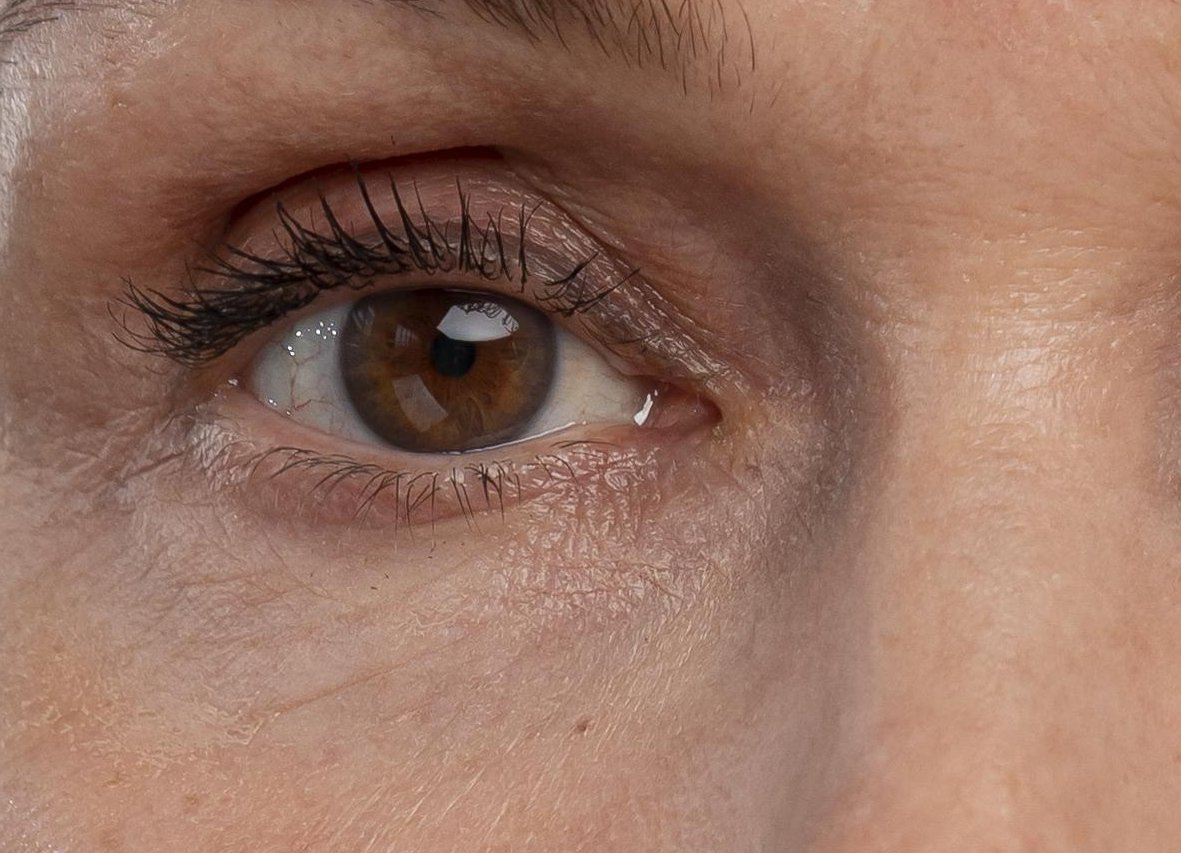
Many people will have questions after reading this, so let’s start with the most common one: Does a yellow complexion always indicate abnormal liver function? Clinical studies show that over 70% of yellow complexions are caused by spleen and stomach weakness. Only a bright yellow color, like orange peel, accompanied by dark urine, itchy skin, and dull pain in the upper right abdomen, truly warrants a liver function test. If you only have a sallow complexion and poor appetite, it’s mostly due to weak spleen and stomach function. A yellow complexion alone cannot diagnose abnormal liver function; it must be combined with tests such as alanine aminotransferase (ALT).
Is a Puffy Face a Sign of Thyroid Trouble?
Some people ask if facial swelling is a sign of thyroid dysfunction. Clinically, thyroid-related edema is mostly generalized myxedema, especially thickening and swelling of the skin in the lower legs. Facial swelling is more often due to problems with kidney fluid metabolism or drinking too much water before bed. You should only have your thyroid function checked if you experience sudden weight gain, sensitivity to cold or heat, mood swings, or poor sleep.
Three Pitfalls for Beginners
There are three pitfalls to avoid when consulting a doctor for the first time. First, don’t make a diagnosis based on a single symptom. Facial signs are only a reference and cannot replace a professional clinical examination. Second, don’t just look at the color; also look at the sheen and texture. For example, both may appear red, but a heart problem might present with a purplish-red hue, while a spleen and stomach problem might present with a flushed, oily complexion. The differences are significant. Third, don’t self-medicate. If you notice any abnormalities in your face that persist for more than two weeks and are accompanied by other physical discomfort, you must go to the hospital for a targeted examination. Don’t buy liver-protecting or spleen-strengthening medications indiscriminately, as this could delay proper diagnosis.
Why the Chinese Face Map Is Not Fortune Telling
A facial consultation is not fortune telling; it helps you quickly identify warning signals from your body. It’s a free self-check, but never rely on it for diagnosis. Many people ignore these subtle facial signals, eventually developing serious health problems. Don’t wait until your organs malfunction before it’s too late.

References
[1] Wang Hongmei, Zhang Jiayan, Wang Ying, Zhang Liping, Cai Lingling. Clinical analysis of low T3 syndrome in maintenance hemodialysis patients [J]. Clinical Research of Traditional Chinese Medicine.
[2] Zhu Jiuzhen and Zhu Huijun. On relevant issues in the diagnosis and treatment of stroke [J]. Chinese Community Physician (Medical Professional Semi-monthly).
[3] Zhou Xiaoyue, Ke Fajie, Hu Yanhong, Ye Zhaoda, Chen Ziyang, Chen Sheng. Exploring the pathogenesis and treatment of diabetic retinopathy from the perspective of abnormal small intestinal visceral function [J]. Shanxi Journal of Traditional Chinese Medicine.
Keep reading
How Mian Xiang Chinese Face Reading Uses Your 5 Facial Features
Facial features are not just for predicting good or bad fortune; they can also help us understand our innate traits, personality weaknesses,…
How to Use Chinese Face Reading for Health, TCM Style
How Chinese Face Reading for Health Works Traditional Chinese medicine‘s diagnostic method of observation is profound, and judging health by facial features…