
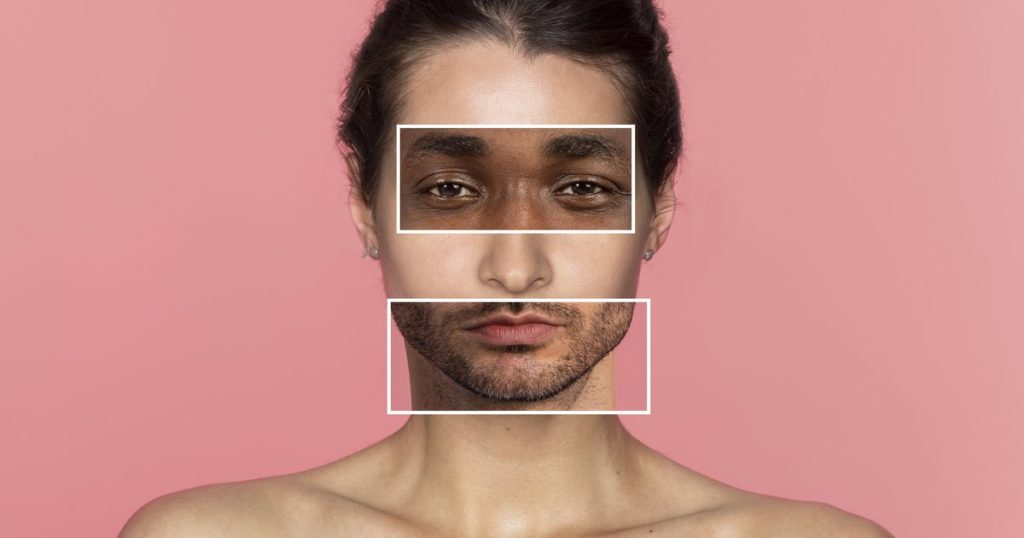
Is face reading accurate, or does it just put words to the snap judgment we make about a stranger’s face before they speak?
You must have had this intuition: When you first meet a stranger, you automatically form a judgment in your mind without even having to talk to them. Some people have ordinary features, yet they inspire trust and closeness at first glance; others are exquisite and eye-catching, yet they exude an aloofness and hostility, making people instinctively wary and hesitant to get to know them closely. Reading character from faces like this is an old practice, and why physiognomy is called a pseudoscience explains both the criticism and what the tradition still records.
There’s an old saying: “Look at the eyelids to see if someone is good or evil, and look at the lips to see if someone is true or false.” Many people consider physiognomy to be superstition.
However, numerous psychological experiments, gene sequencing, and AI personality assessment studies have suggested that the saying “your appearance reflects your inner self” is not a metaphysical notion, but rather a real mark left on your face by long-term emotions and life experiences. Your face is the most direct external reflection of your personality, mentality, and character.
Is Your First Impression of a Face Accurate?
Face perception research shows that the brain only needs 0.1 seconds (100ms) to quickly determine the credibility, aggression, and friendliness of a stranger.

This instantaneous intuition often aligns closely with the judgments people make after a longer look. An experiment conducted by Carré’s team at Brock University in Canada has confirmed that people’s judgments of a stranger’s aggressiveness are significantly positively correlated with the individual’s actual behavior.
A 2020 study pushed this further. Researchers trained a computer on 31,367 photos from 12,447 volunteers who had also taken a Big Five personality test, and it guessed their scores better than chance, most of all how conscientious they were.
Why Are First Impressions So Accurate?
The 43 facial muscles are directly connected to the central nervous system and are not constrained by the skeleton. Paul Ekman, the father of microexpressions, discovered that while people can deliberately lie, subconscious emotions can affect muscles within 0.2 seconds, leaving traces that cannot be faked. Temporary emotions can be faked, but long-term mindset and habits will be like water polishing a stone, fixing them into fixed facial lines and expressions, becoming facial features that are difficult to change.
The Two Scientific Ideas Behind Face Reading
The core of judging a person by their face lies in two fundamental principles: genes and hormones shape one’s innate character, while emotions and habits sculpt one’s acquired appearance.
Hormones and Genes Shape Innate Personality
The human face is a direct display of hormones and genes; appearance is never randomly generated. Some studies have found that the larger the face width-to-height ratio in men, the higher their testosterone levels, the more assertive and competitive their personality, and the higher the probability of impulsiveness and aggression. The old saying “square-faced men are not to be trifled with” is precisely an ancient summary of hormonal patterns.

Facial features also reveal personality traits: Prominent brow bones: Higher testosterone levels, stronger leadership and control. Thicker lips: Higher estrogen levels, more emotional personality, and stronger empathy.
Facial Feedback: How Emotions and Features Shape Each Other
The facial feedback hypothesis in psychology challenges conventional wisdom: appearance is not predetermined, and emotions and facial features have a two-way relationship of shaping each other. The classic experiment in 1988 and a 2019 review of studies covering more than 11,000 people have both confirmed that facial expressions are not only the result of emotions, but can also influence emotions. A deliberate smile can generate feelings of pleasure, while a constant frown and tension can exacerbate anxiety and depression.

Repeated micro-expressions over a long period of time can solidify into permanent facial muscle memory. Constantly irritable and tense, with lines etched between the brows; perpetually complaining and pessimistic, with the corners of the mouth permanently drooping; habitually calculating and deceitful, with eyes that naturally carry a detached scrutinizing air. Before 30, looks are largely determined by genetics; after 30, looks are largely determined by self-cultivation.
Four Facial Features Said to Reveal True Character
Combining psychology and traditional wisdom in judging character, these four facial details can quickly reveal a person’s true nature. They are simple and practical.

Look at the Eyes
The eyes reveal a person’s true character and shrewdness. The muscles around the eyes are the hardest to fake; your eyes reveal your true personality.
A downward-looking, inquisitive gaze = a deep-seated, calculating nature. An old saying goes, “Those who look down are sullen, and those who peer sideways are cunning.” People who habitually look down or peer sideways are deep-seated and calculating. A long-term habit of scrutinizing and calculating will cause tight, downward-sloping lines to form at the corners of their eyes, devoid of warmth, making others feel as if they are being weighed against.
A gloomy, half-open gaze = cunning and controlling. These people are reserved and composed. They often observe others’ discussions with a detached eye, secretly weighing the pros and cons and calculating gains and losses. They have a strong desire for control, exude an aura of intimidation, and are difficult to approach.
Shifty eyes and an evasive demeanor indicate a lack of security and hidden motives. Zeng Guofan, the 19th century Chinese statesman, in his book “Bingjian,” described this type of gaze as “floating eyes.” People who avoid eye contact and whose eyes dart away when speaking are insecure, lack confidence, and are constantly on edge. They may appear gentle, but in reality, they are selfish and harbor hidden aggression.
Three-white eyes and four-white eyes = strong personality and weak empathy. People with “three-white eyes” or “four-white eyes” (sanpaku, where the whites of the eyes are mostly visible and the irises are relatively small) are often in a state of dominance and rage, with overactive sympathetic nervous systems. These individuals tend to be strong-willed, lack empathy, act impulsively and stubbornly, and are prone to arguments.
Look at the Area Between the Eyebrows
The lines reveal your emotional turmoil. The space between the eyebrows is a barometer of one’s temperament: those with relaxed eyebrows and eyes are stable, open-minded, and insightful at heart; those with furrowed brows are mostly overthinking and constantly expending internal energy.
Many young people have a clear vertical line between their eyebrows, a vertical line resembling a hanging needle. People who are chronically anxious, perfectionistic, and have a strong desire for control will have their brow muscles constantly contracted, which over time will lead to the formation of stubborn vertical lines. People with a vertical line between their eyebrows are persistent and responsible, but they are prone to getting stuck on trivial matters, excessive internal conflict, and are very harsh on themselves and others, giving off a repressive aura.

Look at the Corners of the Mouth
The curve reveals your underlying mindset. The muscles around the mouth are connected to the brain’s emotional mechanisms, and a person’s long-term state of mind will ultimately be reflected in the curve of the corners of their mouth.
An ancient physiognomy book says, “A mouth like an overturned boat, with drooping corners, indicates a lot of resentment.” This refers to an overturned boat mouth: in its natural state, the corners of the mouth droop, the nasolabial folds are deep, and the face looks tired and bitter.
These people have a pessimistic and negative mindset, are used to complaining and criticizing, and are prone to self-destruction. Even if life is going well, they often harbor resentment and bring their own negative energy field, which can easily drain those around them.
Traditional Chinese medicine believes that “excessive thinking leads to qi stagnation.” Long-term depression and anxiety can cause poor blood circulation in the spleen and stomach, resulting in facial muscles losing support, which in turn leads to sagging and a resentful appearance.
Observe the Shape of the Mouth
Asymmetry indicates inconsistency between words and actions. People whose faces appear normal in daily life, but whose mouths become noticeably crooked when speaking or when emotionally agitated, should be viewed with caution.
This is a typical example of cognitive dissonance: long-term inconsistency between words and actions, deliberate pretense, and continuous conflict in the brain nerves eventually lead to uneven facial muscle exertion and asymmetrical appearance. Face reading also gives each side of the face its own meaning, and the left and right sides in face reading explains the left for men, right for women rule and why both sides are read together.
These types of people are skilled at creating a persona, saying one thing to your face and another behind your back. They are extremely defensive and it is difficult for them to trust you sincerely.
Why Do Some Faces Feel Out of Harmony?
Some people in life have exquisite features, yet they give off an awkward feeling and make people feel wary, with a strong sense of facial disharmony. This has nothing to do with appearance; it is essentially an outward manifestation of inner conflict and inconsistency between one’s inner and outer self. Everyone has an innate personality and temperament, but many people forcibly pretend to be different in order to conform to worldly norms and please others.
Disliking social interaction but forcing a smile, feeling exhausted inside but pretending to be cheerful. The subconscious desire for relaxation clashes with the deliberate rational attempt to accommodate others, leading to long-term emotional drain and ultimately creating a sense of estrangement, a forced smile that is both friendly and distant.

In short: Your face holds all your insincerity and inner turmoil.
Changing Your Face by Cultivating Your Mind
Many people worry: If my face looks bad, does that mean my life is already set? Please remember: facial features are a probability, not a destiny; they are trends, not conclusions.
AI-powered facial analysis reads tendencies too, not fixed outcomes. Genetic appearance only determines innate tendencies and cannot compete with self-cultivation. Identical twins may share the same genes and appearance, but their different experiences and mindsets can lead to drastically different life qualities.
Is Face Reading Real? Final Thoughts
Traditional physiognomy is not superstition, but rather a psychological and behavioral statistical approach to emotions that has been passed down for thousands of years. It teaches us to recognize and distinguish people, but it never advocates stereotypes, prejudices, or judging people by their appearance. Our physical appearance is a gift, but a relaxed and graceful demeanor is a form of self-cultivation. Every act of forgiveness and letting go, every instance of emotional stability, is a step towards becoming a better version of yourself.
Cultivating the mind leads to cultivating the face; a calm and composed face, reflecting emotional stability and inner clarity, is the best good luck charm a person can have. Want to see what the old readings say about your own features? You can try it on a photo of your face.
Keep reading

Is Physiognomy a Pseudoscience? What the Research Shows
Physiognomy, pseudoscience or not, has been used to judge people by their faces for centuries, from choosing officials in ancient times to…
Can You Tell Personality From a Face? What Psychology Found
Psychology, face reading and personality meet at first glance, when we decide in milliseconds whether a stranger seems kind or hard to…