What Do Your Eyes Reveal in Face Reading?
I have studied traditional physiognomy for twelve years, and I have only had two teachers.
The first one taught me to see bones, the second one taught me to see spirit.
The experienced masters don’t like to write their skills down as formulas, and they’re even less willing to explain fortune telling as something to be said on the street. The traditional map of the face is still the starting point, and our face reading palace chart places the eyes on it, from the Children Palace beneath them to the Property Palace on the upper eyelid.
They repeatedly emphasized that facial features can only reveal a person’s state, habits, and tendencies in dealing with the world; they cannot replace facts, much less condemn someone based on a few lines on their face.
Over the years, I have reviewed thousands of facial photos and compared them with many people’s career changes, marital ups and downs, and choices in life.
At first, I thought judging eye shape was about looking at size, length, roundness, and flatness. Later, I realized that the real place where it’s easy to misjudge a person is precisely in the most subtle changes in the eyes.
The same eye shape can lead to completely opposite conclusions when placed on different people’s faces.
The master left behind a core saying: “The shape of the eyes can be the door, but the gaze is the key.”
In physiognomy, this method of judging people is called the “Form and Spirit Method of Judging the Mind.” It doesn’t rely on any one place or a single sentence, but rather on how a person’s eyes conceal their emotions and reveal their true reactions.
The eyes mentioned in traditional physiognomy are not only the shape of the eyelids and the eye slits, but also include the distance between the eyebrows and eyes, the focus of the gaze, the clarity of the pupils, and the movement of the gaze.
Simply put, eye shape represents a person’s long-term outward expression, much like the door of a house; the gaze represents the current mental state, much like whether there are people or lights in the house.
Long Eyes vs Short Eyes
Many people show me a photo and ask me if someone with long eyes is loyal and affectionate, or if someone with short eyes is shrewd and calculating.
This question cannot be answered directly with such a conclusion.
Eye length is only a horizontal proportion; to show true affection, one must also observe whether the gaze is steady, whether the outer corners of the eyes are extended, and whether the eyes have warmth.
If one’s eyes are long and one’s expression is unfocused, it may actually indicate that one has many thoughts, makes many promises, but does little to fulfill them.
Having short eyes is not a natural negative trait.
People with short eyes but focused attention are usually quick to observe and react, and sensitive to the boundaries of interests.
They may not be plotting against others, they just don’t want to reveal their own hand.
In business negotiations, such people are often able to quickly seize the other party’s weaknesses; in interpersonal relationships, they are also less likely to take on excessive responsibility due to momentary enthusiasm.
Why a Single Photo Can Mislead
The real problem is mistaking shape for personality, and a still photograph for a person’s entire being.
Photos can be affected by lighting, angle, fatigue, and facial expressions. People who stay up late for a long time may have unfocused eyes, people under stress may have heavy eyelids, and people who have just experienced a major change may also temporarily lose focus.
If physiognomy is divorced from reality, it is easy for observation to turn into prejudice.
Why the Gaze Matters More Than Eye Shape
Ancient books say that those with abundant spirit are noble, while those with scattered spirit are worrisome. Here, “spirit” does not refer to mysterious power, but rather to a person’s attention, energy, and inner stability.
“Spiritual focus” means having a fixed gaze, not easily drifting away when facing people, and being able to regain order after emotional changes; “distracted gaze” means having eyes open but attention is like a kite with a broken string, easily led astray by external factors.
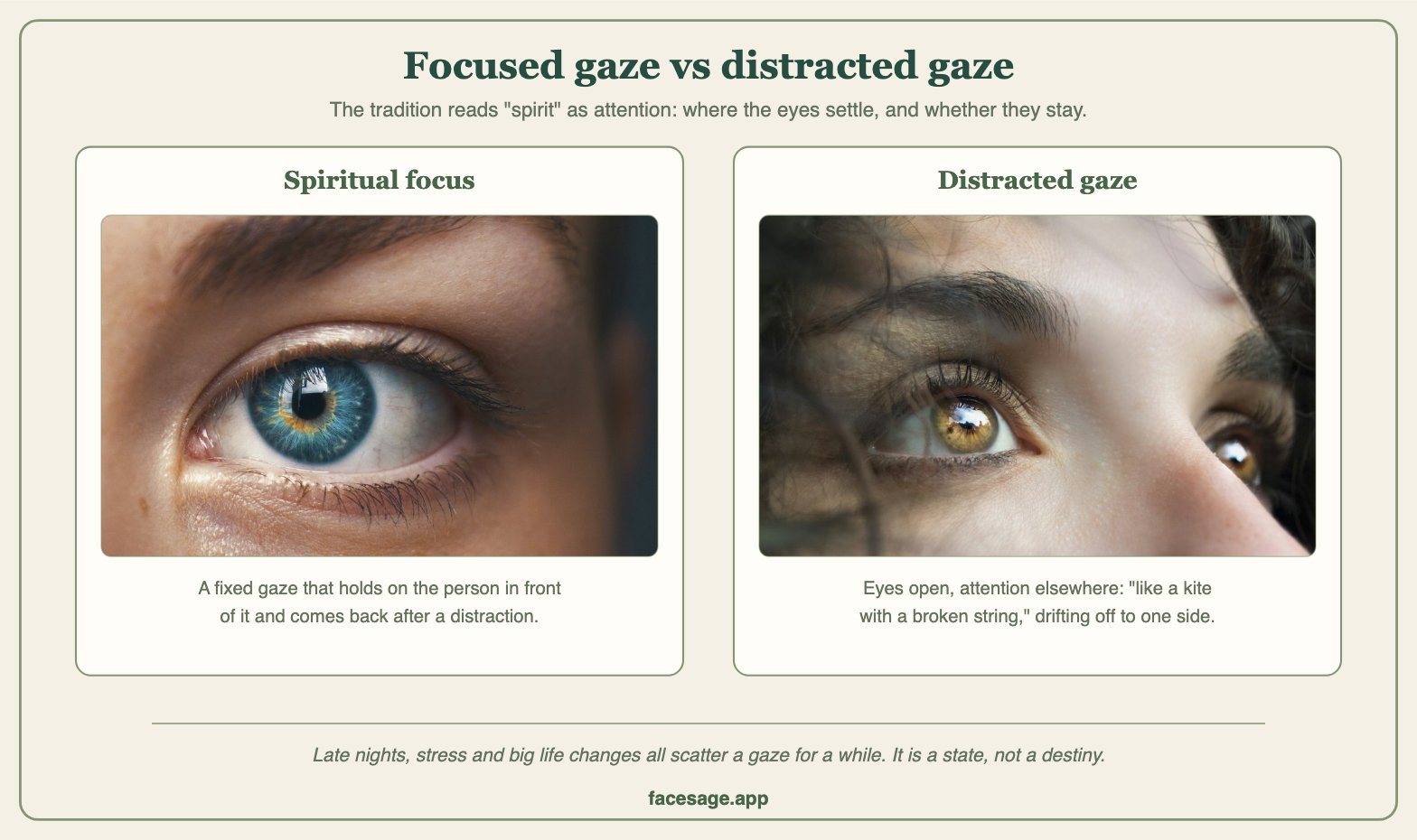
People with steady eyes are not necessarily without worries, but rather they are able to gather their worries and deal with them.
A person with unfocused eyes is not necessarily unlucky; it just means that they are more prone to anxiety, distraction, or excessive exertion at certain stages.
Mistaking a state for destiny is the most common transgression in physiognomy.
Look at the outer shell for form, look at the inner essence for spirit; the outer shell can contain, but the inner essence is hard to hide.
When Eye Shape and Gaze Disagree
I once met a business owner who ran a supply chain business. He had long eyes with slightly drooping corners.
According to common sense, he should have a gentle personality and be trusting.
However, during the interview, his gaze rarely lingered on the other person’s face. Whenever he heard a key number, his eyes would suddenly tighten before returning to calm.
This detail shows that he is not slow-witted, but rather has a strong sense of risk; he just doesn’t want to show his abilities on the surface.
I’ve also seen people with short eyes and upturned corners, who at first glance seem shrewd or even mean, but are extremely trustworthy in their words and deeds.
Such people have boundaries, but they are not necessarily malicious.
They are not good at expressing their emotions and are unwilling to prove their relationship with fanfare. However, when it comes to taking real responsibility, they are more reliable than some people who are all smiles and enthusiasm.
Therefore, when judging the appearance of eyes, one should not stop at whether long or short eyes are better.
Length only solves the problem of form, not the problem of spirit.
Form is a person’s habitual posture, while spirit is a person’s inner motivation.
When both are in agreement, the judgment is relatively stable; when they conflict, it often indicates a complex past.
Eye Shape Meanings: Long, Short and Vacant Eyes
Long, Bright Eyes
People with long, bright eyes often have a wide field of vision, a large capacity for emotion, and are willing to consider the situation of others.

However, if one’s eyebrows are lowered and one’s eyes are dull and unclear, affection may become a burden, and one may easily take the blame for others.
True magnanimity is not about blindly giving in, but about having the ability to maintain a sense of proportion even after seeing the complexities involved.
Short Eyes With a Sharp Gaze
Those with short eyes but sharp minds are often quick to judge and decisive in action, knowing what can be discussed and what cannot be touched.
However, if the gaze is intense, the whites of the eyes are overly exposed, and the facial expressions change frequently, one should be wary that the person may be acting hastily.
If shrewdness lacks stable value boundaries, it can easily turn into being constantly wary of others, ultimately making it difficult to establish genuine cooperation.
A Vacant Gaze
A vacant gaze is one of the types of people that are most easily misunderstood.
It doesn’t necessarily mean that the person is incompetent, nor does it necessarily mean that they have no opportunities in life.
When a person works under high pressure for a long time, or suffers from sleep deprivation or excessive mental stress, their eyes will lose focus.
Physiognomy can indicate the extent of one’s life loss, but it cannot replace medical judgment, much less be used to label others as having little fortune.
The Four Levels of Reading the Eyes
I later divided eye physiognomy into four levels of observation, and the key to understanding it is only four words: form, spirit, momentum, and response.
Form refers to static proportions, spirit to the quality of the gaze, and momentum to the tension and advance/retreat between the eyebrows and eyes; response should be the feedback of a person in real-life interactions.
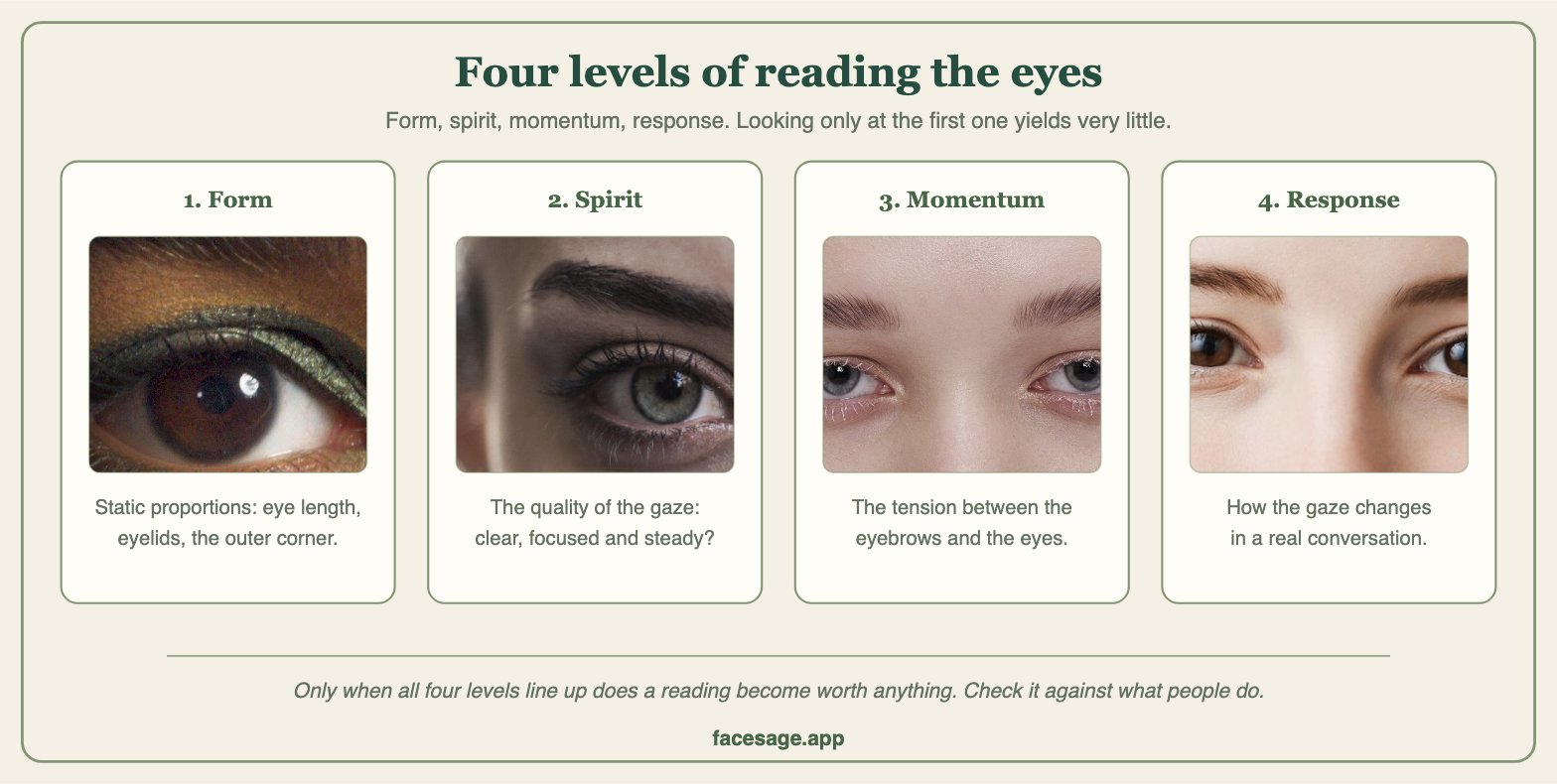
Looking only at the first level yields very little accuracy; only by seeing the fourth level can one possibly get close to a person’s true way of dealing with the world.
Momentum: The Eyes Within the Whole Face
The so-called “momentum” refers to the overall aura formed between the eyes, eyebrows, bridge of the nose, and cheekbones.
Bright eyes but low-set eyebrows often indicate inner stress; small eyes but relaxed eyebrows often indicate a stable mindset.
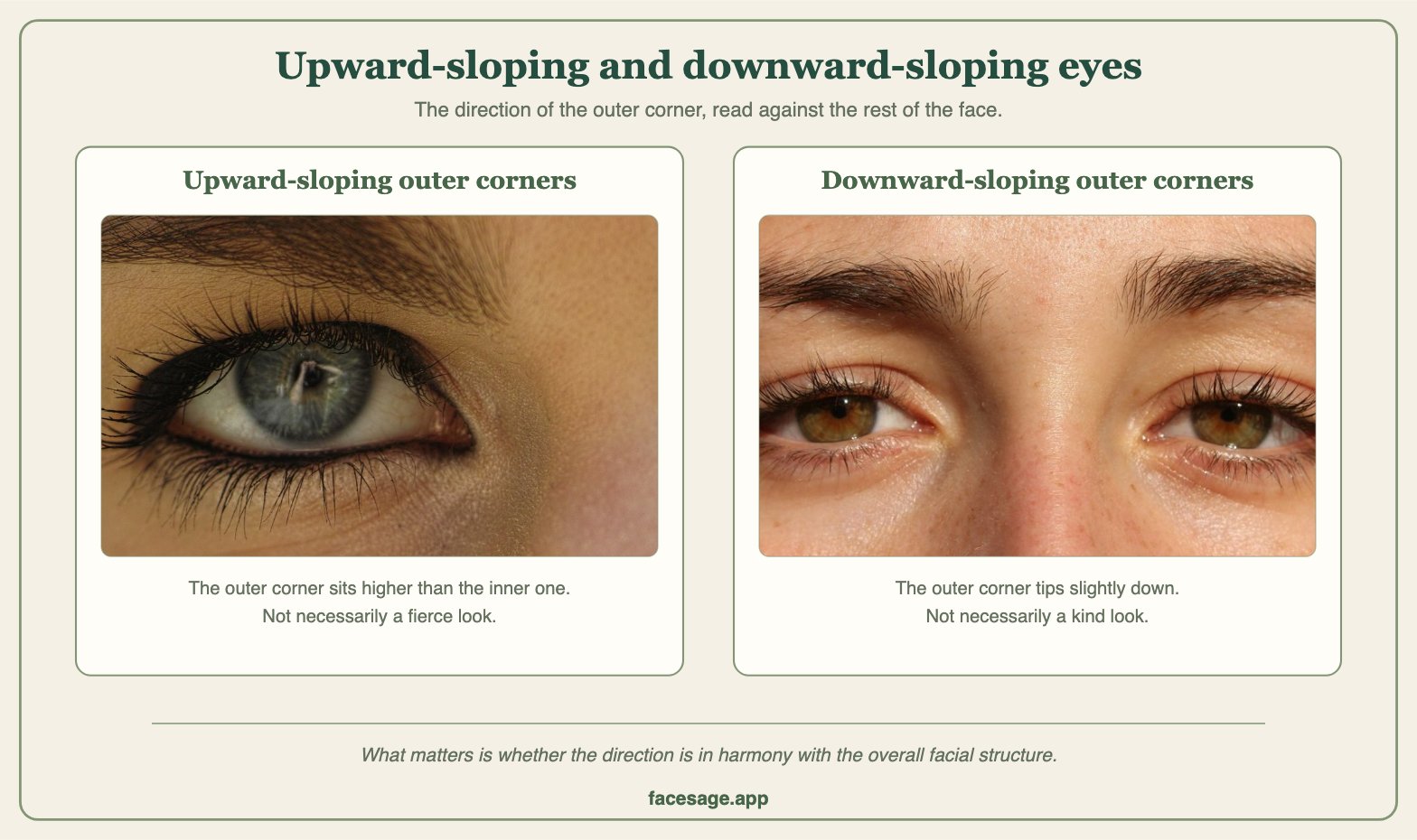
Upward-sloping eyes don’t necessarily indicate a fierce look, nor do downward-sloping eyes necessarily indicate a kind look. The key is whether this direction is in harmony with the overall facial structure.
Response: How the Gaze Reacts
The term “response” refers to observing whether a person’s gaze changes in a regular pattern when they hear different content.
A sudden shift in demeanor when discussing interests, a hardening gaze when discussing responsibilities, and a softening expression when talking about the plight of others, these reactions are more informative than a passport photo.
The real usefulness of physiognomy lies not in making judgments for people, but in helping us discover unusual signals in our interactions.
There is a blind spot that is easily overlooked: some people have bright eyes, but that doesn’t mean they are sincere; some people have dull eyes, but that doesn’t mean they are weak.
Light can illuminate the eye, but experience can change a person’s perspective.
An overly intense gaze can sometimes indicate a strong desire for control; an overly calm gaze can sometimes simply be a sign of long-term self-protection.
How Modern Life Changes What the Eyes Show
From a social perspective, interpersonal interactions were slower in the past, making it easier to observe pauses, avoidance, and changes in closeness or distance in eye contact.
Today’s social media is fragmented by short videos, filters, profile pictures, and business packaging; a person can even design their own expressions in advance.
In an era of excessive information packaging, we must not only look at the surface appearance, but also observe the subtle reactions of the other party when they are caught off guard.
During periods of economic expansion, outgoing, risk-taking, and visionary individuals are more likely to seize opportunities; during periods of industry contraction, those who can control the pace and identify risks are more likely to preserve their strength.
If fortune telling and physiognomy are out of touch with the times, they will mistake environmental advantages for personal talent and cyclical decline for a decline in ability.
What the Eyes Record About Past Stress
A person’s eyes often record how they dealt with stress in the past.
People who are constantly criticized may habitually withdraw their gaze; people who control resources for a long time may have a sense of oppression in their eyes; people who frequently navigate complex relationships may have calm eyes, but they don’t easily reveal their secrets.
These are not inherently good or evil, but rather the accumulation of experience on the body.
True value lies not in the size of one’s eyes, but in the composure of one’s spirit; true affection lies not in the length of one’s eyes, but in the boundaries they hold.
Why Simple Eye Shape Rules Fail
In a typical face reading, a simple ranking is usually given: long eyes indicate a sentimental nature, short eyes indicate a shrewd nature, round eyes indicate a simple nature, narrow eyes indicate a deep nature, bright eyes indicate good fortune, and scattered eyes indicate a lot of worries.
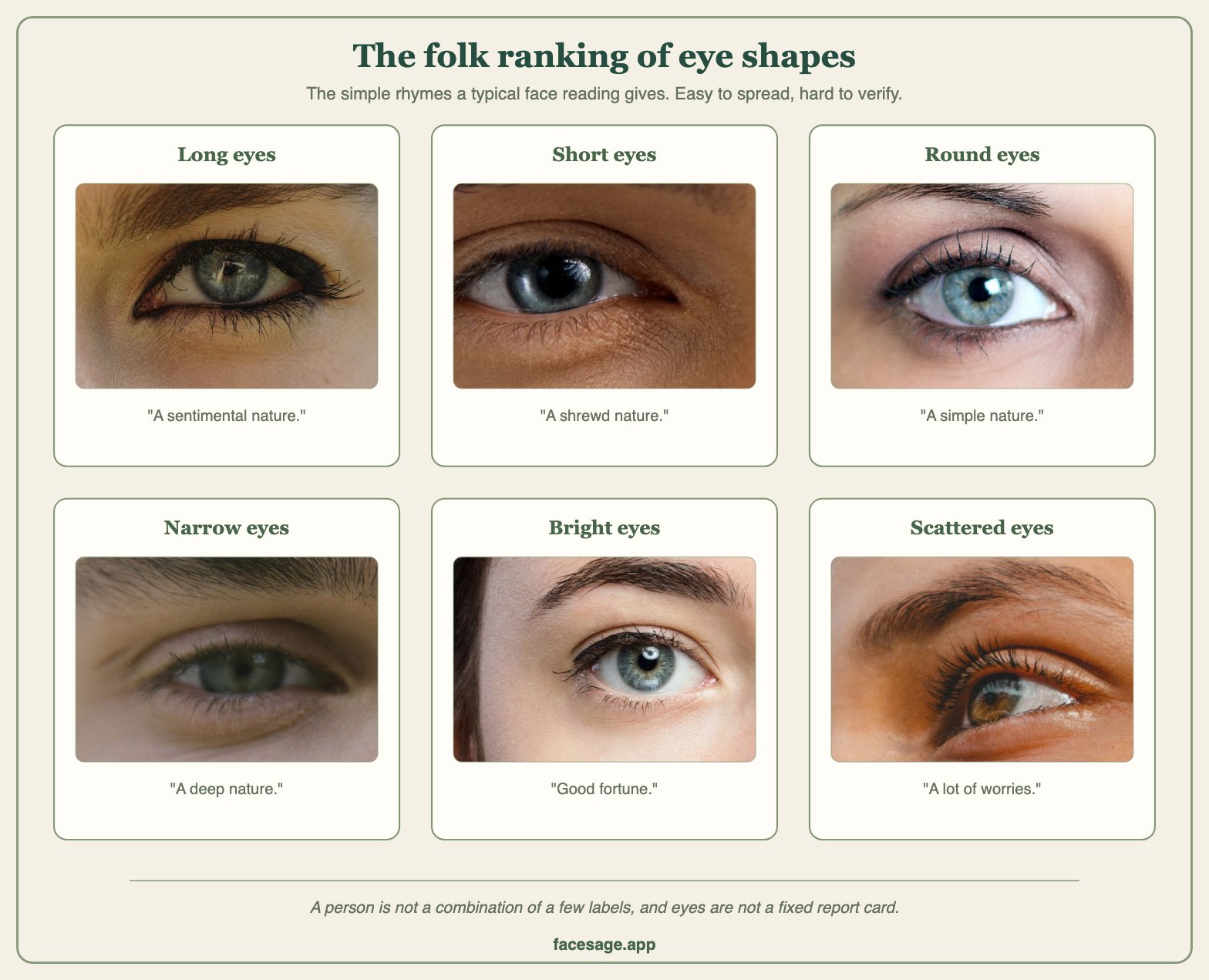
Such rhymes are easy to spread, but they cannot withstand repeated verification by real cases.
A person is not a combination of a few labels, and eyes are not a fixed report card.
I reviewed dozens of cases of misjudgment and found that the problem was concentrated in the same place: focusing only on the appearance of the eyes and not on how eye contact works in a relationship.
Some people appear robust but are actually adept at shirking responsibility; some have sharp eyes but are actually very trustworthy; some seem docile but repeatedly test the waters when faced with crucial interests.
When surface shape and behavioral feedback are inconsistent, it is precisely this contradiction that is truly valuable.
Reading the Eyes Against the Rest of the Face
The blind fortune-telling school places great emphasis on the relationship between the host and guest.
In physiognomy, the eyes can be considered the main feature, while the eyebrows, nose, mouth, and the actions while speaking can be seen as the environment.
A gentle demeanor in a cramped environment suggests that the person may be experiencing inner repression; a sharp demeanor in a dignified environment suggests that sharpness may not necessarily be harmful; if the eyes are wandering and the person talks too much, it often indicates that their thoughts and actions are out of sync.
But this is just the starting point of the method, not the complete answer.
The People Who Read Others Best
Because the people who can see through others most easily are often not those with the brightest, sharpest, or most aggressive eyes, but rather those who can turn their gaze back and not be swayed by external emotions.

They observe people carefully but don’t rush to express their opinions; they judge others carefully but don’t rush to reveal themselves.
Such people usually don’t intimidate others with strong gazes.
Their eyes may be calm, introverted, and not even striking at first glance.
Once you get to know them, you’ll find that they are rarely swayed by a few nice words, and they don’t easily change their stance just because the other party shows weakness.
They are not suspicious; rather, they wait for the facts to complete the loop.
The clarity here doesn’t mean being able to guess everything at a glance, but rather being able to distinguish between emotions, interests, and facts.
What the other party says is emotion; what they can offer is their benefit; how things ultimately come to fruition is the truth.
What the eyes reveal is simply whether a person has developed this habit of observation over a long period of time.
The Form and Spirit Method, Step by Step
I deliberately stopped here.
Because if the complete standard for this type of eye shape is stated directly, readers can easily fall into another misconception: looking for people based on their eye shape and using partial features to replace real interactions.
What Master disliked most back then was turning the way of life into a mantra, and the mantra into a weapon.
More importantly, what determines whether someone can judge a person is not a single eye-line, nor the size of their eyes, but whether a stable combination of several details is formed.
The core challenge of this method lies in how form and spirit are coordinated, how the gaze changes under pressure, and whether there is any break in the breath between the eyebrows and eyes.
But there’s an even deeper mechanism hidden here.
This mechanism can only be clearly seen by dissecting the hidden meaning behind the eye-image technique.
Now, I will break down the complete deduction for you step by step.
The method of discerning the mind through form and spirit that my master passed on to me, when truly put into practice, is not about looking at a single feature, but rather breaking down the appearance of the eyes into four layers: form, spirit, momentum, and response, and then verifying it using the three words: concealment, transparency, and stillness.
Conceal: Observe whether emotions can be controlled; Transparency: Observe whether gaze can express clearly; Stillness: Observe whether one can return to one’s original state after being stimulated.
Form: The Shape of the Eyes
In terms of shape, we mainly look at the length of the eye fissure, the thickness of the eyelid, the direction of the outer corner of the eye, and the distance between the eyebrows and the eyes.
A longer palpebral fissure usually indicates a wider range of attention and an ability to receive multiple pieces of information simultaneously; a shorter palpebral fissure is often associated with better concentration and faster judgment.
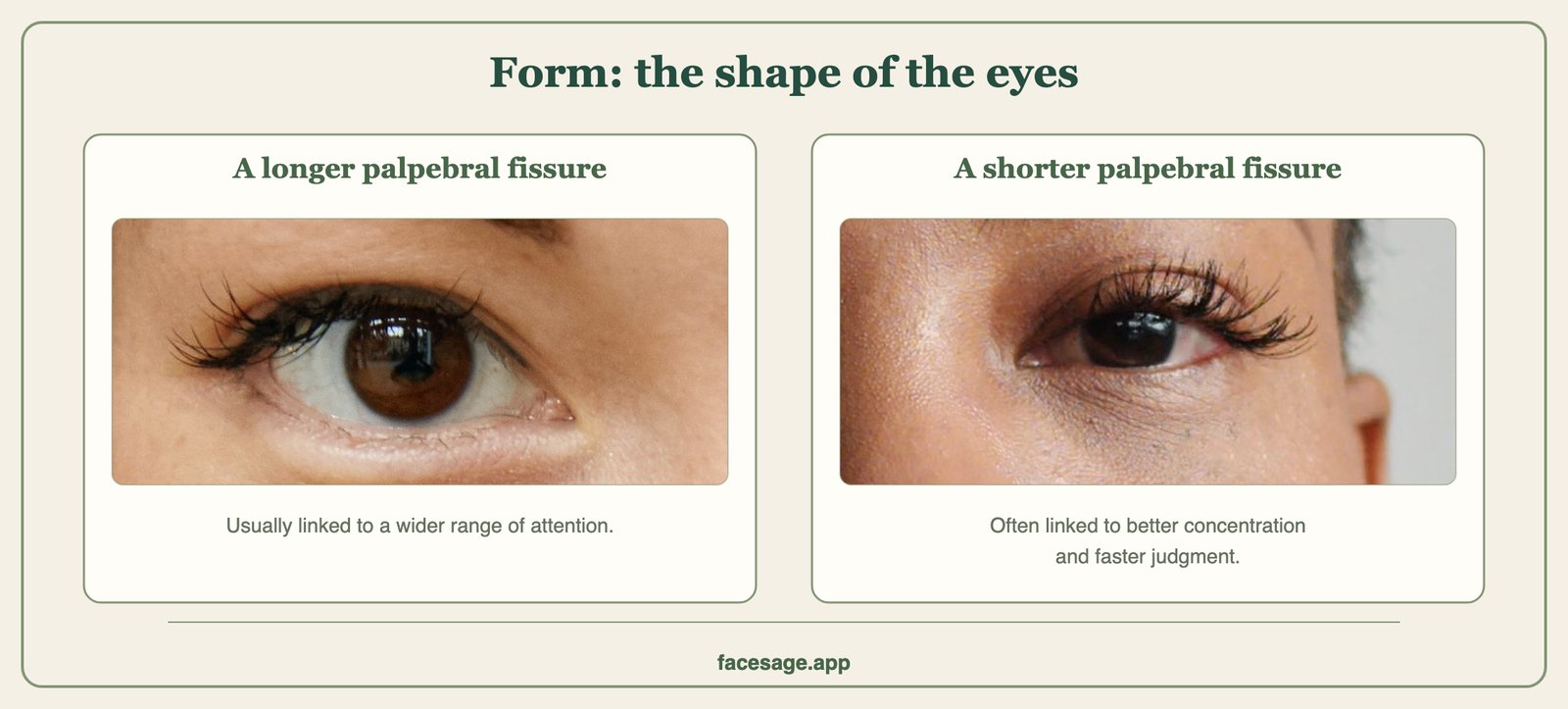
However, form only represents the tendency of information processing and cannot be directly inferred as good or evil.
Like a knife, its length indicates its purpose, but the person holding the knife decides how to use it.
Spirit: The Clarity of the Gaze
On the spirit level, one observes whether black and white are clear, whether the pupils are focused, and whether the gaze is steady.
Clear, bright eyes with a steady gaze often indicate focused concentration and an ability to stay on track. Cloudy, murky eyes with a constantly shifting gaze often indicate recent fatigue, anxiety, or being preoccupied with worries.
This requires observation over time; you can’t judge based on just one photo.
Momentum: How the Eyebrows and Eyes Interact
In terms of momentum, the key is whether there is any conflict between the eyebrows and eyes.
Eyebrows pressing down on the eyes indicate a high level of external pressure or self-expectations; eyes looking outward often indicate a strong desire to express oneself and a competitive nature; eyes looking inward while eyebrows are relaxed usually indicate a better ability to retain judgment.
Having a strong eyebrow and eye structure isn’t necessarily a bad thing; many managers, negotiators, and researchers have a strong eyebrow and eye structure.
Response: The Hardest Layer to Fake
This layer should be the most important, and also the most difficult to fake.
When someone suddenly hears information about benefits, responsibilities, risks, or praise, their gaze will react differently.
When someone’s eyes light up at the mention of benefits, they may be overly focused on gains; when they immediately shy away from the mention of responsibility, they may be unwilling to bear the consequences; when their expression changes drastically upon hearing praise, they may strongly rely on external validation; and when they remain calm upon hearing of risks, they often possess strong realistic judgment.
The Eye Combination Face Readers Value Most
A smooth eye-corner, a focused gaze, clear pupils and a defined distance between the eyebrows and eyes, this is the combination I value most after years of review.
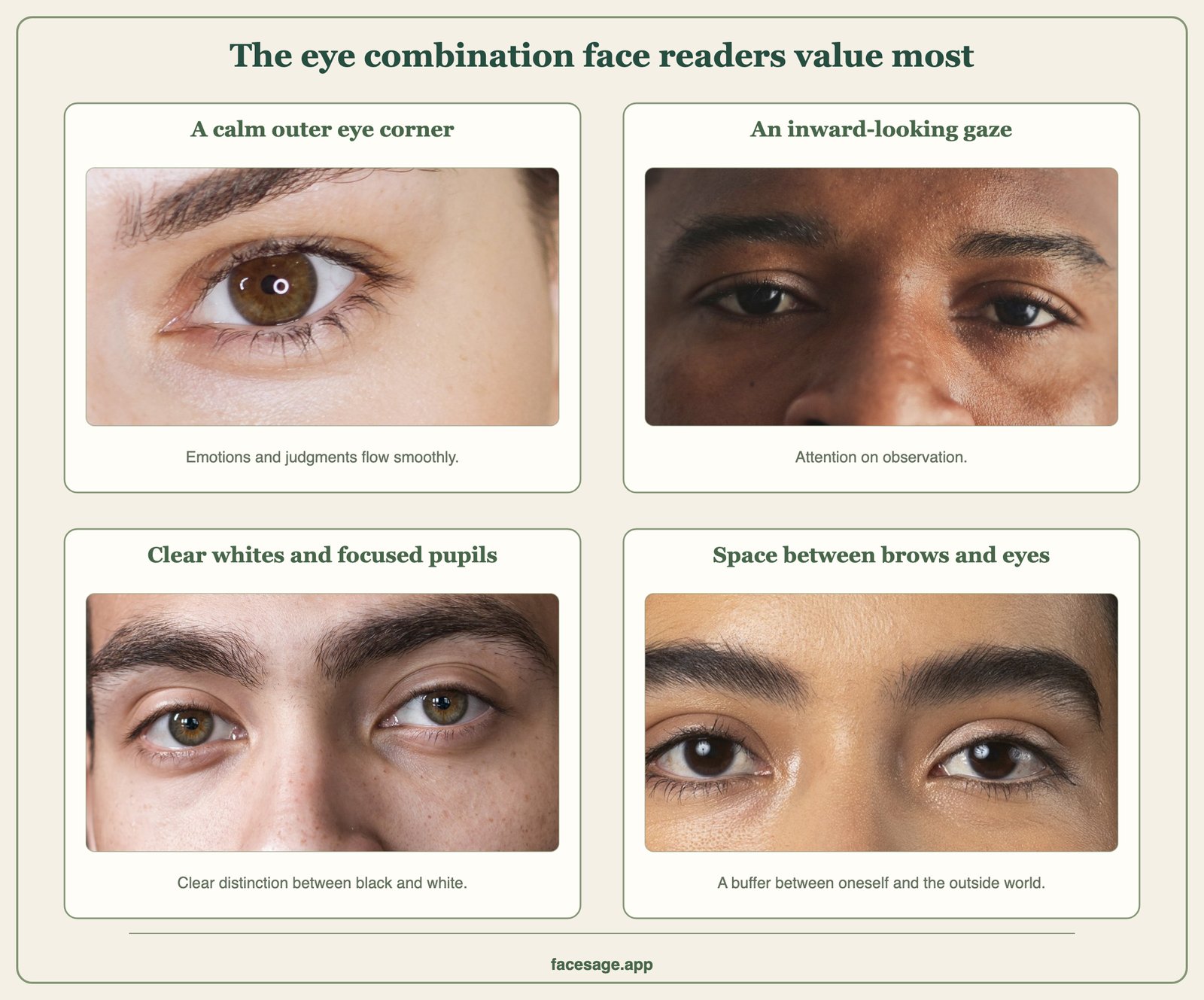
It’s not the conventionally beautiful eyes; some people don’t even have big eyes or upturned corners, but their gaze is steady, their emotions remain calm, and they don’t lose boundaries when in close relationships.
Such people are often not in a hurry to gain trust, nor do they easily give it away.
A Calm Outer Eye Corner
A calm eye shape at the outer corner does not necessarily indicate a weak personality.
It’s more like a smooth road, where emotions and judgments can flow smoothly without constantly crossing the boundaries.
To put it simply, when faced with a conflict of interest, he may not immediately turn hostile, but he will remember the facts and adjust his distance in subsequent arrangements.
An Inward-Looking Gaze
Looking inward does not necessarily mean being timid.
Introversion involves focusing attention on observation rather than immediately releasing aggression.
If the Qi of Shen and You appears in physiognomy, it can only be used to describe a feeling of restraint and order, and should not be mechanically applied to the Heavenly Stems and Earthly Branches.
To put it simply, these kinds of people don’t lay all their cards on the table; instead, they observe how others play their cards first.
Clear Whites and Focused Pupils
A clear distinction between black and white is one of the outward manifestations of mental state and life order.
It is not a medical diagnosis, nor is it a certificate of wealth; it only indicates that a person is more focused at the current stage.
To put it simply, although you have a lot on your mind, you can distinguish between what’s important and what’s not, and you won’t be overwhelmed by every sudden piece of news.
Space Between the Eyebrows and Eyes
A distance between the eyebrows and eyes indicates that there is a buffer between oneself and the outside world.
If the eyebrows are too low, the pressure will be directly reflected in the eyes; if the distance between the eyebrows and eyes is moderate, there is usually room for expression and thought.
To put it simply, when someone says something, he won’t immediately adopt that person’s emotions as his own.
Real Cases: When Eye Shape Was Misleading
Narrow Eyes With a Steady Gaze
I once verified a male case. His face was not particularly outstanding, his eyes were narrow, the corners of his eyes were straight, and his gaze was not strong but very stable.

He started working in sales in his early twenties. His performance wasn’t particularly outstanding at first, and my income fluctuated.
After turning thirty, the industry entered a period of reshuffling, and many people who were good at performing left the market. However, he gradually shifted to supply chain services by recording contract details and identifying customers’ true payment ability.
The most interesting thing about this case is not how much he earned, but that he rarely judged his partners based on first impressions.
He would break down the other party’s promise into three parts: time, cost, and responsibility.
The shape of his eyes can only indicate that he has a tendency to observe and restrain himself; what truly leads to results is that this tendency is trained into a specific process.
Long Eyes With Drooping Corners
Another example is a woman with long eyes and slightly drooping corners, who initially appears gentle.

According to common physiognomy, this person is easily judged as soft-hearted and easily influenced by others.
After actual verification, it was found that she was very sentimental in family relationships, but had clear boundaries in financial cooperation.
She can help relatives and friends solve short-term difficulties, but she does not accept vague loans, nor will she sign liability documents for others.
This shows that long-eyedness and deep affection can coexist, but deep affection does not mean losing boundaries.
Drooping eyes may indicate strong emotional empathy. If one is calm, one can turn sympathy into measured help; if one is distracted, one is easily swayed by the complaints of others.
The judgment must be based on whether God is affirmative or negative, and whether the judgment is stable.
Short Eyes and a Sharp Gaze
There is another type of person with short eyes, sharp gaze, and close-set eyebrows and eyes.
They did exhibit strong competitiveness in their youth and had a habit of quickly judging the value of others.
However, once you enter the technology industry, this rapid screening actually becomes an efficiency advantage.
They are not good at long conversations, but they can quickly find the key issues in complex projects.
A Lesson From Overly Bright Eyes
There’s a blind spot here that I’ve personally learned a lesson about.
I once judged someone with overly bright eyes and extremely enthusiastic expression as having strong initiative, but later I found that he was just good at creating a sense of certainty, and repeatedly procrastinated on actual execution.
After reviewing the situation, I realized that the brightness in one’s eyes should be judged by its stability. A bright but superficial gaze is merely stimulating; a bright but steady gaze reflects true spirit.
How Economic Cycles Amplify Eye Traits
Industry cycles amplify these tendencies.
During an economic upswing, outgoing, adventurous, and self-promoting individuals are more likely to get opportunities, while those with keen insight are more likely to enter resource centers.
When an industry contracts, cash flow, contracts, and credit become important again, and those who can focus on the details are more likely to avoid a chain of risks.
This is not about appearance determining fate, but rather a resonance between a person’s habits and cycles.
Taking the platform economy and physical retail in recent years as examples, during the traffic expansion phase, expressiveness and persuasiveness were highly rewarded; however, when customer acquisition costs rise, regulations become stricter, and capital turnover slows down, enthusiasm and packaging alone are no longer enough.
If a person’s eyes consistently convey an eagerness for a response or a desire to prove themselves, they are more likely to make excessive commitments when the cycle cools down.
Conversely, those with calm eyes and orderly reactions may not be the most dazzling during their rise, but they may preserve their strength during the reshuffling period.
They tend to separate what they want to do from what they are capable of doing, and what good relationships are from who bears the responsibility.
To put it simply, it means not increasing costs for the sake of temporary excitement, nor taking on risks for others just because they are loyal to them.
How to Use Eye Reading in Real Life
In practice, a very simple observation process can be used.
When you first meet someone, observe their appearance and don’t draw conclusions. During conversation, observe their demeanor to determine if they are focused. When discussing interests, observe their posture and whether their gaze suddenly shifts outward. When discussing responsibilities, observe their willingness to face specific issues.

Only when all four layers are combined can a judgment be formed that can be used for reference.
Choosing Business Partners
When dealing with potential partners, the key is not to find someone with good eyes, but to find someone whose vision and actions align.
His eyes were gentle, yet he kept changing his mind; we cannot relax our scrutiny just because of his gentle appearance.
He has a sharp eye, yet he acts according to the contract and doesn’t refuse to cooperate just because of his intimidating appearance.
Romantic Relationships
When it comes to romantic relationships, the most important thing to observe is not how affectionate the other person is when they look at you, but whether they can maintain their description of the facts after a disagreement.
Shifty eyes, frequent changes of topic, and shifting blame back to you, these behaviors are more noteworthy than eye shape.
Physiognomy can only help you improve your observation skills; it shouldn’t eliminate the need for verification.
Workplace Relationships
When dealing with workplace relationships, pay attention to whether the other party remains trustworthy even when there is no benefit to be gained.
A truly insightful person will not only maintain a stable gaze in front of those with resources.
How they express themselves to the vulnerable, service workers, and those with no bargaining power is often more telling than how they show deference to their superiors.
Reflecting on Your Own Eyes
Concealment, transparency, and stillness can also be used to reflect on oneself.
Concealment is not about suppressing emotions, but about not letting them take over immediately; transparency is not about speaking without restraint, but about allowing true intentions to be understood; composure is not about being stubborn, but about maintaining a framework for judgment even after information changes.
Changes in the eyes are often an alarm bell for shifts in one’s inner order.
If you find yourself with unfocused eyes and difficulty concentrating, don’t rush to label yourself as unlucky.
First, check your sleep, stress, work rhythm, and long-term emotions.
If eye or mental symptoms persist, professional help should be sought.
Traditional physiognomy can serve as a form of cultural observation, but it cannot replace medical and psychological services.
If the gaze is too intimidating, don’t take it as an unchangeable personality trait.
Many powerful figures are drawn to the competitive environment of the past, and people in high-pressure positions develop a protective shell.
By slowing down responses, restating facts, and reducing immediate evaluations, one’s gaze and expression will gradually become more nuanced.
Trends can be adjusted, and habits can be trained, but the premise is to acknowledge that problems exist.
Final Thoughts on What Your Eyes Reveal
Before my master passed away, he didn’t teach me how to predict good or bad fortune for others. He only reminded me of one thing: when reading someone’s face, first check if you’ve been deceived by appearances.
If a fortune teller becomes obsessed with being able to tell a person’s character at a glance, he will eventually be exploited by his own confidence.
True judgment is never based on mysterious prophecies, but on placing observation, verification, and real-world feedback on the same table.
Eye shape is the door, gaze is the key; appearance can be embellished, but the key turns at crucial moments.
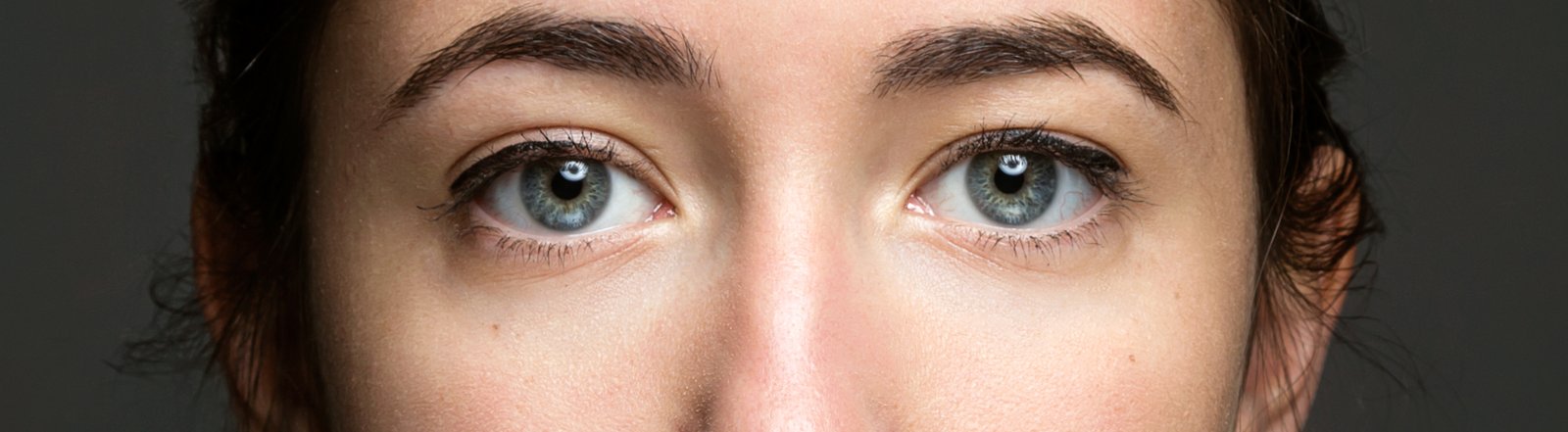
A person can train their facial expressions, cultivate a persona, and use eloquent words to conceal their intentions, but in moments of interest, responsibility, risk, and loss of control, their eyes will often reveal their true priorities.
Being able to see through people doesn’t mean never being deceived.
No pair of eyes can shield someone from all risks, and no method of physiognomy can guarantee that a relationship will always be reliable.
Being transparent simply means asking one more question when a commitment is made, taking one more step when enthusiasm is high, and clearly defining the boundaries of responsibility before deciding to take on the task.
This is also what I valued most later on.
Appearance is merely a probabilistic indicator; behavioral feedback is the true evidence of reality.
A person with steady eyes cannot be beautified if they repeatedly break their promises; a person with sharp eyes should not be misled by their appearance if they keep their word in the long run.
A person is ultimately defined by choices, not by the contours of their eyebrows and eyes.
The cycle is equally ruthless to everyone.
The upward phase rewards courage but also masks flaws; the contraction phase punishes recklessness but also highlights patience.
A person’s eyes may record their temperament, but they cannot make choices for them.
The true meaning of “spirit” lies in whether one can see one’s place amidst change.
I recall when my master taught me to read eyes. He never asked me to memorize many auspicious or inauspicious words. He only asked me to add a sentence after each judgment: What are the facts? Where is the evidence? Is there enough time?
Twelve years have passed, and I am increasingly convinced that these three questions are more reliable than any fancy formula.
Destiny analysis is not about changing one’s fate, and physiognomy is not about judgment.
At best, they offer an old mirror, allowing one to see their own inertia in relationships and cycles.
The mirror reflects tendencies, not outcomes; the outcome is still determined by actions, circumstances, and long-term choices.
Don’t rely on eye shape to judge a person; verify their character through their gaze. Don’t be greedy for short-term gains when assessing a situation; always adhere to boundaries when doing things.
The true essence of the “discerning the mind through form and spirit” method is not which type of eye is best, but rather that when facing anyone, you should never mistake the answer you most need to believe for the facts already given by the other person.
Keep reading
What Is Face Reading and What Can It Tell You?
What Is Face Reading (Physiognomy)? Physiognomy is a folk art of fortune-telling that involves observing a person’s facial features, and strictly speaking,…
The Face Reading Chart Guide to the Twelve Palaces
“If you have a heart but no appearance, your appearance will follow your heart; if you have an appearance but no heart,…