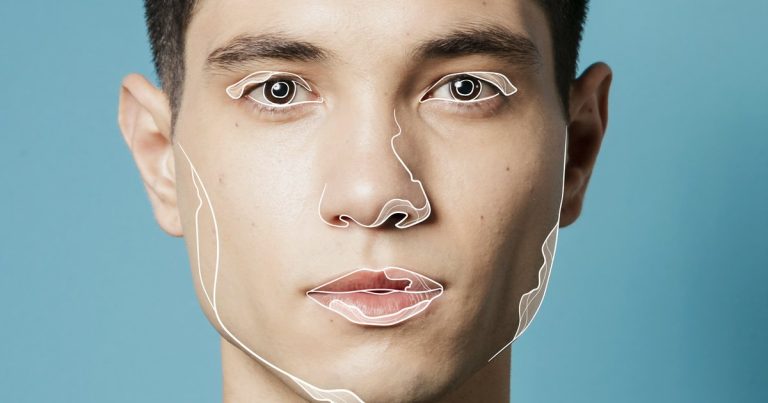
What Chinese Face Reading Says Emotional Neglect Looks Like
People who have never been favored often exhibit certain typical facial features. These features are not singular characteristics, but rather a combination of facial details that reflect the impact of long-term emotional neglect or lack of care on their physical and mental well-being. Specifically, this may manifest in the following ways:
Eyes and Brows
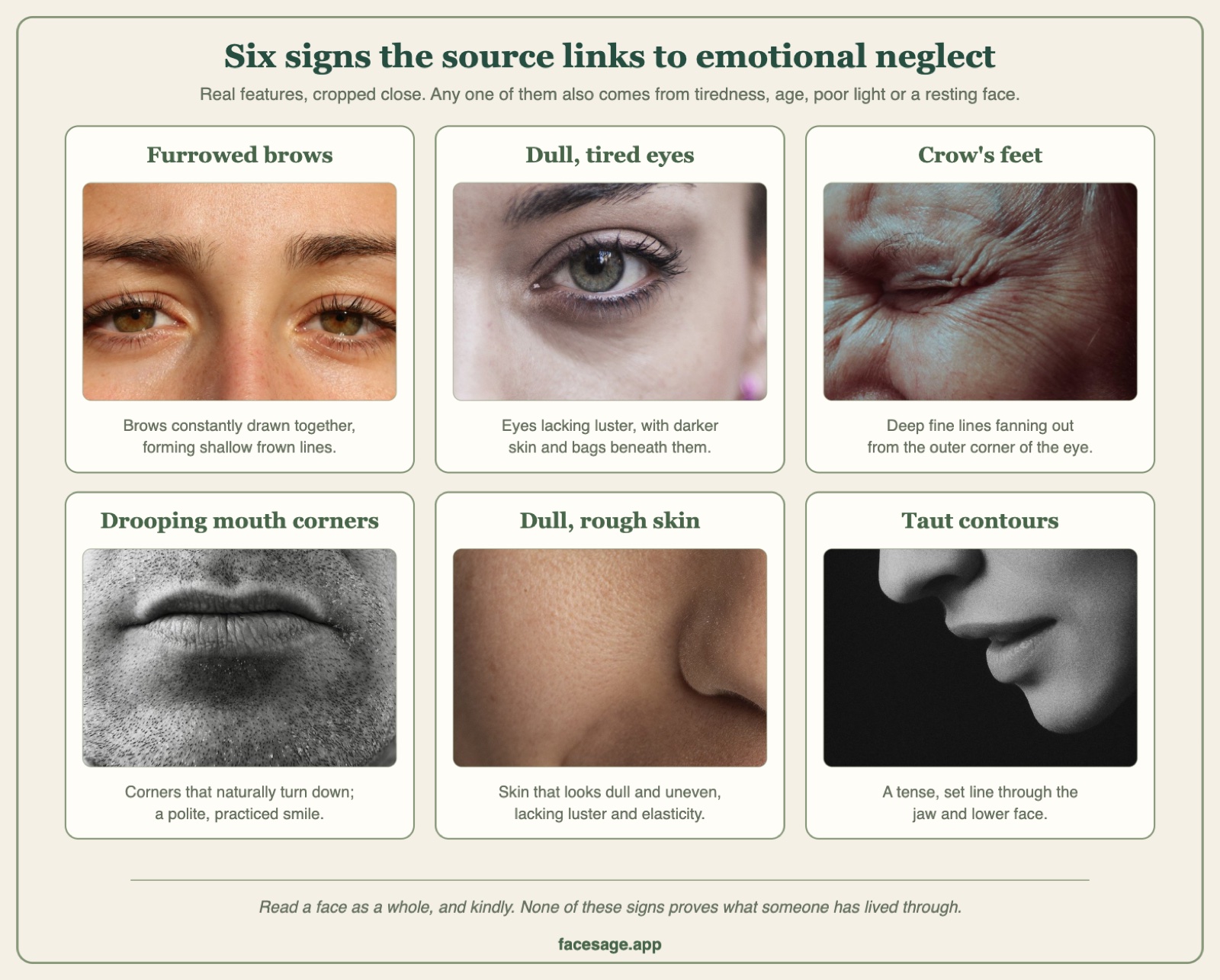
The eyes may appear dull, lacking vitality, or even distant, as if showing little interest in the surrounding environment and interpersonal interactions. The eyebrows may be constantly furrowed or appear limp and lack natural, relaxed energy. The skin around the eyes may develop deep fine lines due to prolonged emotional distress, especially crow’s feet and under-eye bags, making the person look tired and worn out. In Chinese medicine face reading, dull eyes and a listless expression are also read as signs of weak spirit, a measure of the body’s overall energy.
Mouth and Facial Expressions
The corners of the mouth naturally droop, making it difficult to maintain an upward smile. Even in social situations, the smile is often a “standard smile” rather than a genuine expression of joy. The overall facial expression is rather static, lacking vividness and variation, giving people a distant and unapproachable feeling. The classic Mian Xiang method also lists naturally drooping mouth corners among its less favorable mouth signs, next to dry lips and dense lip lines.
Skin Condition
Due to prolonged stress, lack of sleep, and emotional suppression, skin may appear dull, rough, and lack luster and elasticity. Skin problems such as pigmentation and acne scars may occur, and recovery is slow. In some individuals, skin problems may become more pronounced due to social isolation or lack of skincare. If breakouts are the main concern, the Chinese face map pairs traditional zone meanings with common skin explanations for where acne appears.
Overall Aura
Facial contours may appear taut or saggy, lacking soft lines. The overall aura tends to be introverted and aloof, giving the impression of being “defensive” or “unapproachable.” This aura is closely related to a long-term lack of positive emotional feedback and reduced social interaction.
The formation of these facial features is a long-term process, directly related to whether an individual receives sufficient care, affirmation, and emotional support in their upbringing.
Why Trauma Can Leave a Mark on the Face
Psychological research shows that early emotional neglect may lead to an insecure attachment pattern, which in turn affects an individual’s emotional regulation ability and interpersonal communication style in adulthood. These internal psychological states are reflected in external expressions such as facial expressions, eye contact and overall temperament.
It is important to note that facial features are a complex reflection of psychological and physiological states, and one cannot determine a person’s experiences based on a single characteristic. However, prolonged emotional neglect can indeed leave observable traces on the face. Understanding these signs can help us to be more sensitive to the emotional needs of others and provide more appropriate support and care.
Low Self-Worth and People-Pleasing
People who have never been favored seem to lack a sense of dignity and are prone to fawning and pandering. These individuals often lack sustained, unconditional positive attention and affirmation during their upbringing, causing their sense of self-worth to be built on external evaluations rather than on stable internal perceptions.
In interpersonal interactions, they tend to overemphasize the needs and feelings of others, actively lowering their own expectations and sacrificing personal interests in exchange for the recognition and acceptance of others. Behind this behavioral pattern may lie deep psychological mechanisms, such as low self-esteem, fear of abandonment, and anxiety about “not being liked.”
From a psychological perspective, individuals who consistently lack favoritism may develop “conditional self-esteem,” meaning their sense of self-worth depends on feedback from others and success in specific situations. To maintain this fragile self-esteem, they may employ people-pleasing strategies, such as frequently using humble language in communication (e.g., “I might not do well,” “You’re right”), proactively taking on extra work to prove their worth, deliberately conforming to others’ opinions and preferences, and even suppressing their own true needs and boundaries. While such behavior may achieve superficial harmony and acceptance in the short term, it exacerbates internal conflict in the long run, further eroding self-identity.
People-pleasing behavior can be seen as a form of “social adaptation strategy,” but it is inefficient and costly. Specifically, individuals need to continuously invest energy in interpreting others’ intentions and adjusting their own behavior to meet those expectations, which consumes significant psychological resources, leading to decision fatigue and emotional exhaustion. Furthermore, excessive people-pleasing can trigger a “reverse psychology,” where others gradually become accustomed to it, no longer sensitive to the “effort” put in, and may even develop an attitude of “taking it for granted,” further reinforcing the individual’s perception of “not being favored.”

Often Being the One Who Gets Dumped
Those who are never favored seem to always be the ones who get dumped. This phenomenon often hides complex psychological dynamics and relationship patterns. From a psychological perspective, the party who consistently fails to receive sufficient attention and emotional response in a relationship may gradually experience a decline in self-worth and a decrease in their commitment to the relationship.
When one party continuously feels “unfavored,” resentment and disappointment will accumulate in their subconscious. If these negative emotions are not effectively communicated and resolved over a long period, they may eventually lead to the breakdown of the relationship.
Specifically, in close relationships, favoritism is usually reflected in the details of daily interactions, such as prioritizing the other person’s needs, proactively expressing care, and allocating more high-quality time together.
If one party consistently feels neglected in these areas, for example, their opinions are not valued in important decisions, they lack emotional support, or partners prefer to connect with others, this “relative deprivation” will gradually erode the foundation of trust. From a technical perspective of relationship development, a healthy intimate relationship requires a dynamic balance of input and return from both parties. When this balance is broken and not adjusted in time, the weaker party (i.e., the “unfavored one”) may protect themselves by reducing input and emotional withdrawal, which may appear to an outside observer as a “passive breakup.”
Furthermore, the “equity theory” in social psychology also explains this phenomenon: individuals in relationships constantly evaluate whether their contributions and rewards are fair. When they perceive unfairness (i.e., they give more but receive less), they experience strong negative emotions, leading them to take action to change the situation; breakups are often the result of extreme circumstances.

It’s important to note that this isn’t an absolute rule; individual differences, communication skills, and relationship repair mechanisms all influence the final outcome. However, for those who have long been in a state of “not being favored,” timely identification of imbalances in the relationship, proactive and effective communication, and seeking change are key to maintaining a healthy relationship.
A Face That Shows Loneliness
People who have never been favored often exhibit a strong sense of loneliness in their facial features through various subtle characteristics. A long-term lack of emotional care and positive interaction can lead to increased facial muscle tension, a more reserved expression, fewer or unnatural smiles, and an overall demeanor that may convey detachment and indifference.
Signs of melancholy are particularly prominent in their facial features. For example, their brows may be constantly furrowed, forming shallow frown lines; the skin around their eyes may appear dark or wrinkled due to emotional stress; and their eyes lack luster, often conveying a sense of fatigue and heaviness. The eyes are an important window into one’s inner world, and these individuals typically appear lonely and forlorn, lacking a sense of connection with the outside world. Not every line carries this meaning, and the guide to face lines and wrinkles explains which lines under the eyes and between the brows are read as auspicious.
Their gaze may be lowered, avoiding prolonged eye contact, or revealing unease, wariness, or even a subtle sadness when eye contact is made. Their gaze may wander, finding it difficult to focus on a specific object, as if searching for some nonexistent comfort or response.
Behind this lonely and desolate look often lies a psychological state accumulated from long-term unmet emotional needs, manifested as a dull response to external stimuli, a closed inner world, and difficulty in establishing deep emotional connections.
Keep reading
How Mian Xiang Chinese Face Reading Uses Your 5 Facial Features
Facial features are not just for predicting good or bad fortune; they can also help us understand our innate traits, personality weaknesses,…
How to Use Chinese Face Reading for Health, TCM Style
How Chinese Face Reading for Health Works Traditional Chinese medicine‘s diagnostic method of observation is profound, and judging health by facial features…