
“Your appearance is clearly extraordinary; you’re destined for great wealth and high status.”
Many people heard similar things when they were young, perhaps from relatives teasing you, or from a fortune teller on the street praising your parents. Back then, we didn’t understand; we just thought it was funny. But looking back as adults: can the flesh on a person’s face and those eyes really reveal their destiny?
Some people believe in it wholeheartedly, regarding face reading as a “life manual”; others scoff at it, considering it feudal dross. But interestingly, regardless of belief, the story of “judging by appearance” has been told from ancient times to the present day, and it’s only getting more and more prevalent: in ancient times, people selected officials based on their facial features, while modern companies recruit based on “temperament”; in ancient times, people said “a full forehead and a square jaw,” while modern HR professionals say, “His eyes are quite firm, he seems reliable.”
What exactly happened in between? What is face reading? Can it really determine a person’s life? Let’s go through it from the beginning.
Where Physiognomy Came From: West and East
Let’s start with a fact: humans have always been “acting based on appearances,” it’s just that in ancient times it was called “physiognomy,” and in modern times it’s called “first impressions,” “nonverbal communication,” “micro-expressions,” “personality trait recognition,” and so on.
However, when it comes to the formation of a systematic approach to physiognomy, there are actually two lines: one in the West and one in the East.
Physiognomy in the West
In the West, as early as ancient Greece, people began to ponder whether there was a relationship between appearance and personality. Philosophers and rulers of that time had advisors who would judge a person’s loyalty, treachery, and reliability based on their appearance, expression, and demeanor. This system later became known as “physiognomy,” which translates to “face-reading” or “the study of physiognomy.” Physiognomy examples from European history, such as Della Porta’s animal comparisons and Lavater’s silhouettes, show what this system looked like in practice.
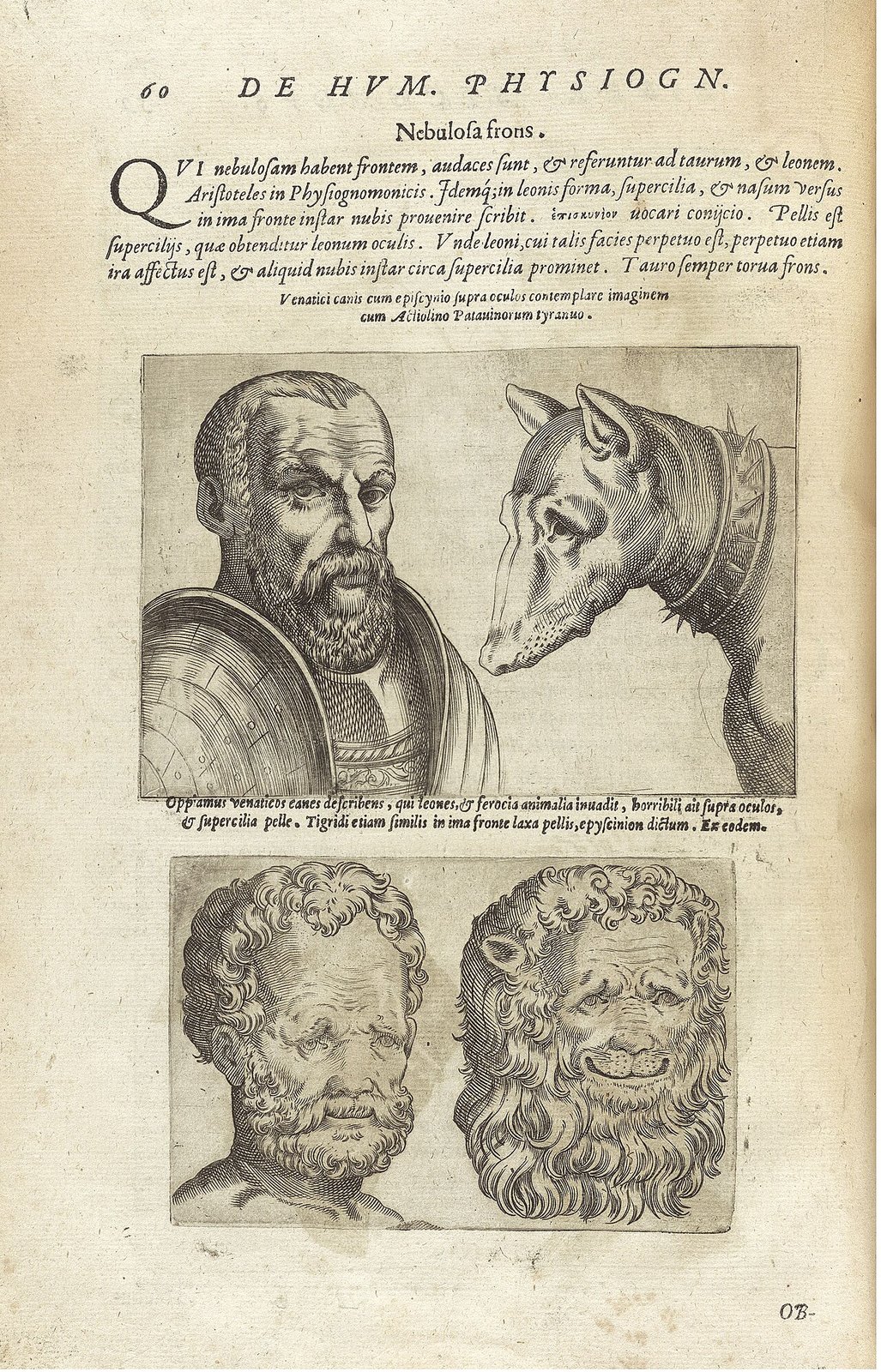
Many historical records mention that before promoting their subordinates, some monarchs would have a “face reader” take a look: “Is this person reliable?” Back then, there were no background checks like we have today, no resumes or academic credentials. Rulers could only make judgments based on limited information, so face, eyes, and temperament became important references.
Face Reading in Ancient China
In the East, however, face reading is presented in a more systematic and mystical way.
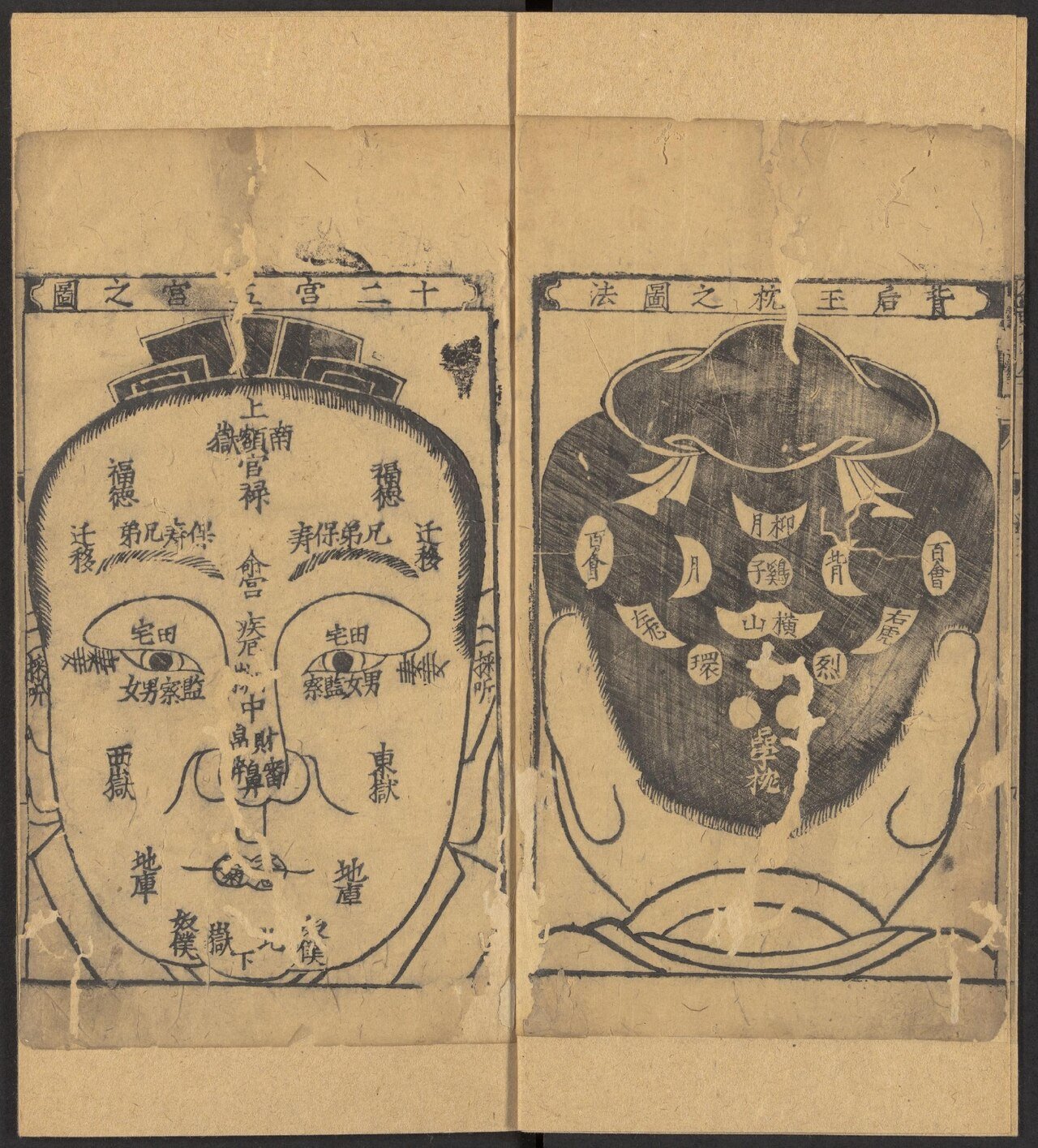
In China, some of the earliest examples can be traced back to the Book of Rites, such as the frequently quoted saying: “A person who always looks up is arrogant; one who always looks down is anxious; one who speaks or acts in a crooked manner is treacherous.”
Ancient people did not understand psychology or nonverbal behavior analysis, but through long-term observation, they discovered some connections between “facial habits,” “gaze direction,” and personality. They then gradually summarized these connections into various “physiognomy formulas,” and combined them with some theories of Yin and Yang and the Five Elements. This combination formed the prototype of “physiognomy” that we see today.
Later, during the Song, Ming, and Qing dynasties, physiognomy was no longer just a tool of “charlatans,” but had become an integral part of everyday life. People would have their faces examined when choosing a wife, when selecting officials, and even to determine whether someone had a “lucky face” or not.
You’ve probably heard the saying, “A full forehead and a square chin.” The forehead and chin are traditionally considered auspicious signs. A full forehead symbolizes good fortune in youth and early support; a fleshy, well-defined chin signifies a stable and blessed middle and old age. Whether this is scientifically accurate or not, in ancient times, it likely meant that people with full foreheads generally had good nutrition and favorable growth conditions; those with full chins tended to have good health and reserves, leading to a smoother life.
Why Is Physiognomy Considered a Pseudoscience?
But here’s the problem, why did the scientific community later classify physiognomy as pseudoscience? The reason is simple: it has too much “storytelling” and too little verifiable and repeatable information.
By the late 19th century, Western science began to employ rigorous experimental methods, requiring data to support and repeatedly verify a wide range of social phenomena. Physiognomy, however, relied on experience and “feelings,” lacking standardized scales, unified experimental designs, and any concept of causal chains. Philosophers raised doubts long before the laboratory did, and the philosophers who rejected physiognomy, from Lichtenberg to Hegel and Kant, each challenged it from a different angle.
Scientists conducted a series of tests and found that different fortune tellers often gave vastly different assessments of the same person; even the same fortune teller’s judgments about the same face varied depending on the occasion and their emotional state. This demonstrates that it lacks stability and verifiability, essentially meeting the typical characteristics of pseudoscience.
What Psychology Says About Judging People by Their Faces
However, physiognomy isn’t entirely without merit. Psychological studies have conducted numerous experiments that have shown humans can indeed form initial judgments within seconds based on a person’s face, eyes, and posture, even without realizing it. This “first impression” contains a wealth of information: whether the other person is tired, tense, angry, confident, or anxious. The studies behind this, from snap judgments of election candidates to facial structure and the Big Five traits, are described in what psychology says about faces and personality.

A psychologist once said something quite apt: it is possible to discern personality traits from facial features, but most of the time, what we are looking at is not a “predestined fate,” but rather our current state, coupled with our own psychological suggestions and subjective guesses.
In other words, a small part of physiognomy is “observation skills” summarized from long-term experience; but a larger part is the human nature of “making up stories”.
Face Reading in Traditional Chinese Culture
Having discussed the origins, let’s look at the Eastern perspective.
In traditional Chinese culture, physiognomy is categorized as one of the “Five Arts.” What are the Five Arts? They are: Mountain (representing spiritual cultivation), Medicine (representing healing), Destiny (representing fate), Physiognomy (representing appearance), and Divination (representing divination). You’ll find that physiognomy is placed within a whole worldview; it doesn’t exist in isolation but is intertwined with Yin and Yang, the Five Elements, the interaction between Heaven and Man, and the Eight Characters of Destiny.
In ancient times, physiognomy was not just about looking at the face. They emphasized “looking at the facial features, observing the complexion, and examining the bone structure,” and even the way a person spoke, walked, and turned their head were considered “physiognomy.” Many older people believed that some “experts” could tell a person’s general situation just by looking at them standing there, such as how many people were in the family, whether they had siblings, whether they were struggling financially, and even guess what troubles they were recently experiencing.
How Fortune Tellers Seem So Accurate
These stories sound incredible, but if you break them down calmly, they are roughly composed of these steps stacked together:
Read the Person’s Personality
Judging whether a person is mild-mannered or irritable, cautious or reckless, optimistic or suspicious by observing their eyes, facial expressions, and posture. Many psychologists also work on these things, but the ancients used experience rather than scales.
Listen to What They Want to Know
Most people who go to fortune tellers have a “question” in mind: whether it’s about promotion and wealth, marital troubles, or family discord. After the person speaks a few words, the fortune teller can generally tell what you want to ask. Often, people unconsciously “reveal information.”
Add Local Background Knowledge
In ancient times, fortune tellers would often stay in one place for a long time, and they would probably know a lot about which family did what, how much land each family owned, how many children each family had, and what kind of things had happened to each family in the past. Once you sat down, he would look at your clothes, accent, and age, and then connect them with some families in the town, and he could almost guess your “background”.

Work Backward, Then Forward
By combining the three pieces of information above, one can make “reasonable inferences” about your past: how many books you have read, whether you have traveled extensively, whether you have experienced a major upheaval… Once you develop a sense of trust that “he is right,” and he goes on to say things like “you will meet a benefactor in the future” or “you will face a calamity in three years,” it becomes easier for you to match the various coincidences in your life with his words.
At this point, his reputation for “incredibly accurate face reading” was established.
You see, this is actually the same logic as selling melons. A seasoned melon seller can basically guess whether a batch of melons will be sweet or not just by glancing at the variety and shape of the melons and asking, “How was the rainfall this year?” Fortune tellers are the same: physiognomy is just the entry point; what really matters is experience, observation, and their insight into “human relationships and social dynamics.”

From this perspective, it’s unfair to say that physiognomy is entirely fabricated; but to call it a “firmly established science of destiny” is even more far-fetched.
What Modern Research Says About Physiognomy
In modern times, physiognomy has taken on a completely different form.
On the one hand, with the popularization of science education, more and more people know what “sample size,” “statistical bias,” and “confirmation bias” are. Many things that were once mythologized have quickly been exposed under the scrutiny of scientific experiments. Physiognomy naturally ranks quite high on the list of “pseudoscience.”
On the other hand, human communication has never been separate from “judging by appearance.” When you go for a job interview, the HR will judge whether you are serious, confident, and stable based on your clothing, expression, and eye contact; when you are queuing at the supermarket and see someone who is frowning and looking a little irritable, you will subconsciously take a step back. These judgments almost all rely on information from “face.”
At this point, modern psychology and behavioral science emerged. They conducted numerous experiments, such as:
, Show participants only a photo of someone’s face without providing any background information, and ask them, “Do you think this person is reliable?” or “Does he/she have leadership qualities?”
, Analyze different people’s judgments about the same face to see if there is any consensus;
, Follow these people over a long period of time to see if the initial “first impression” has any “predictive power” to some extent.
The result is quite interesting:
On certain dimensions, such as “Does he seem extroverted?”, “Is he easily angered?”, or “Is he optimistic?”, there is a certain degree of consistency in judgments among different people, and these judgments have a moderate correlation with the person’s true personality. Simply put, it’s not entirely guesswork. However, this correlation is far from enough to “determine someone’s fate based on their face.” How far these first impressions can be trusted is the subject of whether face reading is accurate, which looks at face perception research and the facial feedback idea.
Why Faces Are Harder to Read Today
There is another practical problem, modern people are better at “pretending”.
Social media teaches people how to pose for photos, while workplace training teaches them how to smile in interviews and maintain a professional demeanor. You can control your eyebrows, eyes, and mouth for a short time, and even deliberately design your pauses and speaking speed. This is undoubtedly a blow to those who rely on facial features and expressions to judge people.
Not to mention modern cosmetic surgery and beauty filters, which completely alter a face. How can someone who judges a person’s fortune based on the height of their nose bridge and the fullness of their chin face a young person who has made a list of plastic surgeries? Should they calculate their fortune based on their original appearance or their altered appearance?

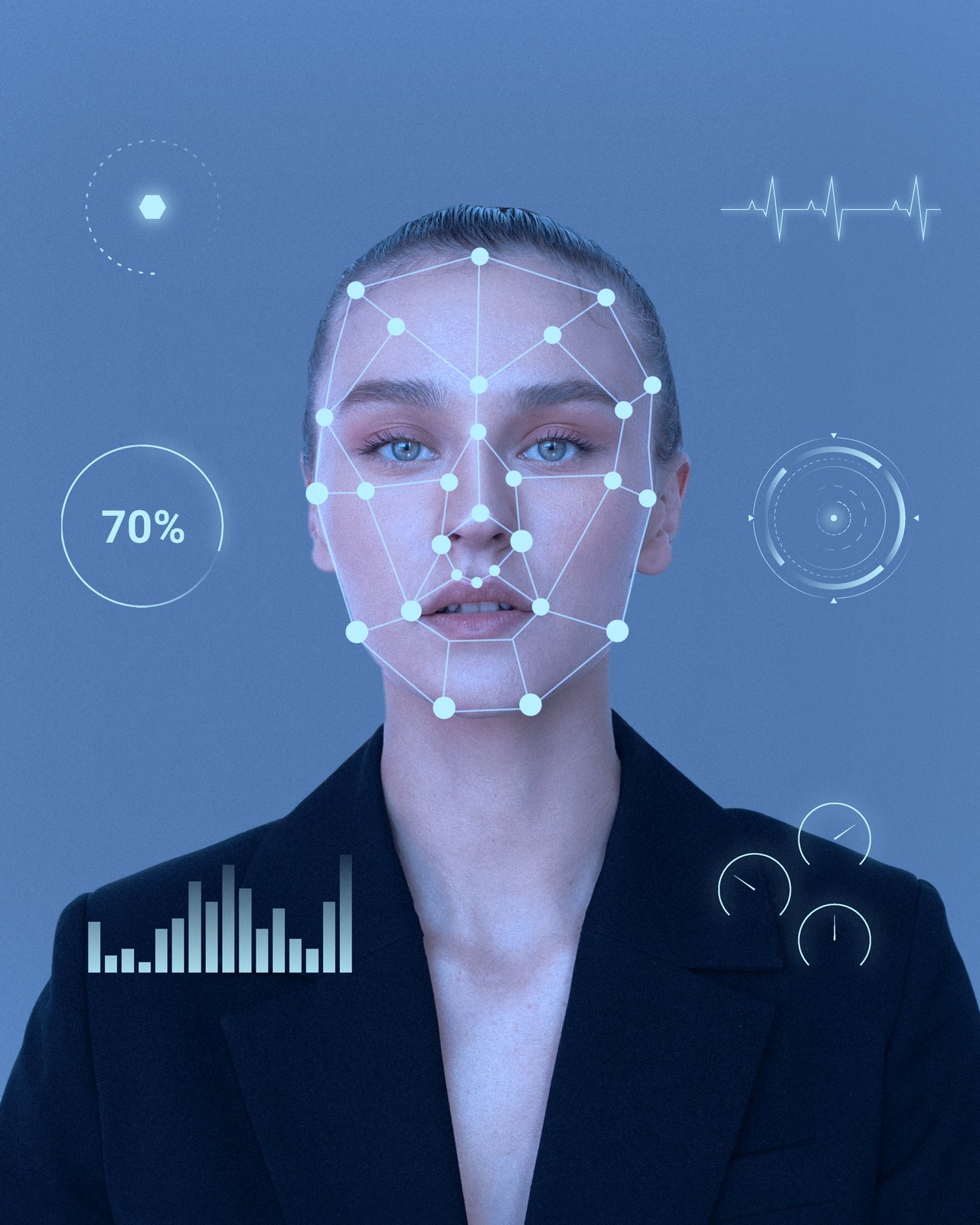
So now, when people talk about face reading, it’s mostly just a topic of conversation or entertainment. You’ll see all sorts of “tests” online: whether you have “peach blossom eyes” or “phoenix eyes” to determine if you’re emotionally sensitive; how deep your nasolabial folds are to predict if you’ll have a life of hard work. Frankly, these things satisfy people’s curiosity about being “interpreted” without having the strong predictive power of traditional fortune telling. Apps now automate this, and how physiognomy AI works explains how software moves from facial landmarks to a personality report, and what the research does and does not support.
However, this does not mean that modern society has completely abandoned the concept of “judging by appearance.” On the contrary, much of the content that originally belonged to “physiognomy” has quietly moved to professional fields such as “psychology,” “management,” “communication skills,” and “micro-expression analysis,” only with different terminology and becoming less mysterious.
For example, during police interrogation, they will pay attention to the suspect’s shifty eyes and subconscious small movements to determine whether he is lying.
For example, sales training will teach you how to judge whether someone is interested or still hesitant by their expression.
The theoretical basis of these things is no longer “heavenly court and earthly chin” or “yin and yang and the five elements,” but to some extent, they have an inherent continuity with the ancient people’s intuition of “distinguishing good and evil by looking at faces.”
Should Physiognomy Be Thrown Out Entirely?
You might ask: Since modern science is so important, should we completely throw physiognomy into the trash?
My personal opinion is that physiognomy can be regarded as a cultural heritage and a set of “folk experience” for observing human nature, but it is absolutely not suitable as the “sole standard” for determining one’s life.
To give a more realistic example:
If there truly were a technology that could accurately identify “who is likely to be scammed” and “who is definitely reliable” just by looking at faces, then all the bad people and scammers in the world would have been eliminated long ago. But reality is quite the opposite: many seemingly upright people may be the masterminds behind the scenes; many seemingly tough and uncouth people are actually kind-hearted despite their sharp tongues.
Modern society relies on systems, technology, and education to prevent fraud and crime, rather than relying on “apprehending people based on their appearance first.” Facial recognition technology can identify “who is who,” but it cannot identify a person’s “goodness or evil.” The question has been tested directly, and whether physiognomy can predict criminality reviews studies from facial width to a 2016 AI paper, along with the criticism they drew.
What Physiognomy Still Means for Us Today
At this point, we can’t avoid asking the same question:
What relevance does physiognomy still hold for our lives today?
I think what it truly leaves behind is not “fortune telling based on appearance,” but a very simple reminder: a person’s face is a projection of their entire state, habits, and experiences.
If you stay up late for a long time, you’ll have dark circles under your eyes, a poor complexion, and your face will show signs of fatigue.
You are constantly in a bad mood, with a furrowed brow, and others can tell at a glance that you are not someone to be trifled with.
You smile often and are used to looking people in the eye when you speak, which naturally makes you seem more relaxed and reliable.

This has little to do with whether your forehead is full or not; it’s more about how you live your life, how you treat yourself, and how you interact with others.
From this perspective, facial features are not a prophecy book, but a “state recorder”.
When others say you “look quite composed,” it’s often not because you have a “composed face,” but because your past experiences and habits have left their mark on your demeanor and expressions.
But the more crucial issue is attitude.
If you are particularly superstitious about physiognomy and think, “I was born this way, so this is my fate,” then physiognomy becomes a shackle. If you don’t work hard, don’t change, and are unwilling to take responsibility, pushing everything onto “fate,” this kind of person is most likely to fall into “self-abandonment.”
Conversely, if you view your face as a form of “external feedback”how others see you through your face, you’ll be more willing to adjust your demeanor. For example, try smiling more, try to focus more in your eyes, and try not to let fatigue show on your face. At this point, your appearance is no longer destiny, but a mirror.

Using Face Reading for Self-Protection
There is also a practical benefit:
Learning some basic knowledge about “face reading” is not for fortune telling, but for self-protection.
If you pay close attention to other people’s facial expressions and subtle movements, you can sometimes detect something amiss early on.
If the other party says “no problem,” but their eyes are darting around and their lips are tight, they are likely feeling uneasy.
If someone on the street keeps staring at you and deliberately gets closer to test you, they are probably up to something.
These are all life experiences, and whether or not the term “physiognomy” is used to describe them is actually not important.
Final Thoughts: Is Physiognomy a Science?
Finally, I’d like to say that this era is changing too fast, and no one dares to use an old theory to definitively judge a living person.
You can treat physiognomy as a cultural hobby, as something to talk about over tea, or even as a tool for observing and understanding people, but don’t let it make decisions for you, and certainly don’t let it shield you from responsibility.
Reality is cruel, but it’s also fair in one way:
How you live your life every day, how much effort you put in, and what choices you make will ultimately be reflected in your face through your state of mind and temperament. A large part of the “face” that others see is sculpted by your own hands.
So instead of worrying about “whether my nose is high enough,” “whether my chin is round enough,” or “whether I have the ‘wealthy and noble face’ described in physiognomy books,” it’s better to ask yourself a few honest questions:
Am I getting a good rest?
Am I working diligently?
Am I living life to the fullest, instead of drifting aimlessly and aimlessly?
Have I been willing to take on more responsibility and complain less during crucial moments?
If the answers to these questions become increasingly affirmative, you don’t need to worry about whether you’re destined for good fortune, because you’re gradually pushing your life in a better direction.
Your face is a gift from your parents.
But expressions are given by life.
A refined demeanor is something you give yourself.
Whether physiognomy is a science can be debated for many years to come.
But almost everyone would agree on one thing
If you don’t work hard, even the best “face” will be wasted.
If you keep moving upwards, even if you don’t look like someone of wealth and status at first, over time you will become more and more confident and at ease.
By then, no matter what the ancient books say, your own face will be the best “physiognomy book” you have written with your whole life.
Keep reading

Philosophers Who Rejected Physiognomy: A 2,000-Year Argument
Hegel and Georg Christoph Lichtenberg are two of the clearest critics of physiognomy, the practice of interpreting character through outward appearance. Hegel…
Can MBTI Face Reading Tell Your Type From Your Looks?
MBTI type can influence temperament, which in turn affects appearance to some extent. The idea echoes traditional face reading, which links features…