
We often hear this kind of assessment:
“This guy doesn’t look like much.”
However, can we really judge a person’s character and qualities based solely on their appearance? Scholars have argued over that question for centuries, as the long debate over physiognomy and science shows.
When discussing judging people by their appearance, one cannot ignore physiognomy.
Physiognomy is a discipline that studies a person’s facial features to reveal their behavioral habits.
Physiognomy in Ancient China
Physiognomy in China has a long history, with records dating back to the Book of Rites, for example:
People with dignified faces and broad glabellas are usually considered blessed, trustworthy, and more likely to achieve great success; while those with shifty eyes and cunning faces are often considered to have ulterior motives.
Phrenology in the West: Reading the Skull
In the West, a similar view exists known as “phrenology.” Earlier scientists such as Gall and Spurzheim believed that…
The shape of the skull is related to a person’s character and the goodness or evil of their behavior.
They believed that if the skull protruded, it indicated that the lower brain was well-developed, which meant that the person possessed higher abilities.
Conversely, a depression in the skull may indicate insufficient development of the lower brain layer and weaker abilities.
Spurzheim further proposed 27 important faculties, such as intelligence, competitiveness, curiosity, loyalty, self-esteem, and lust.
He believed that each faculty had a specific location and characteristics on the skull.
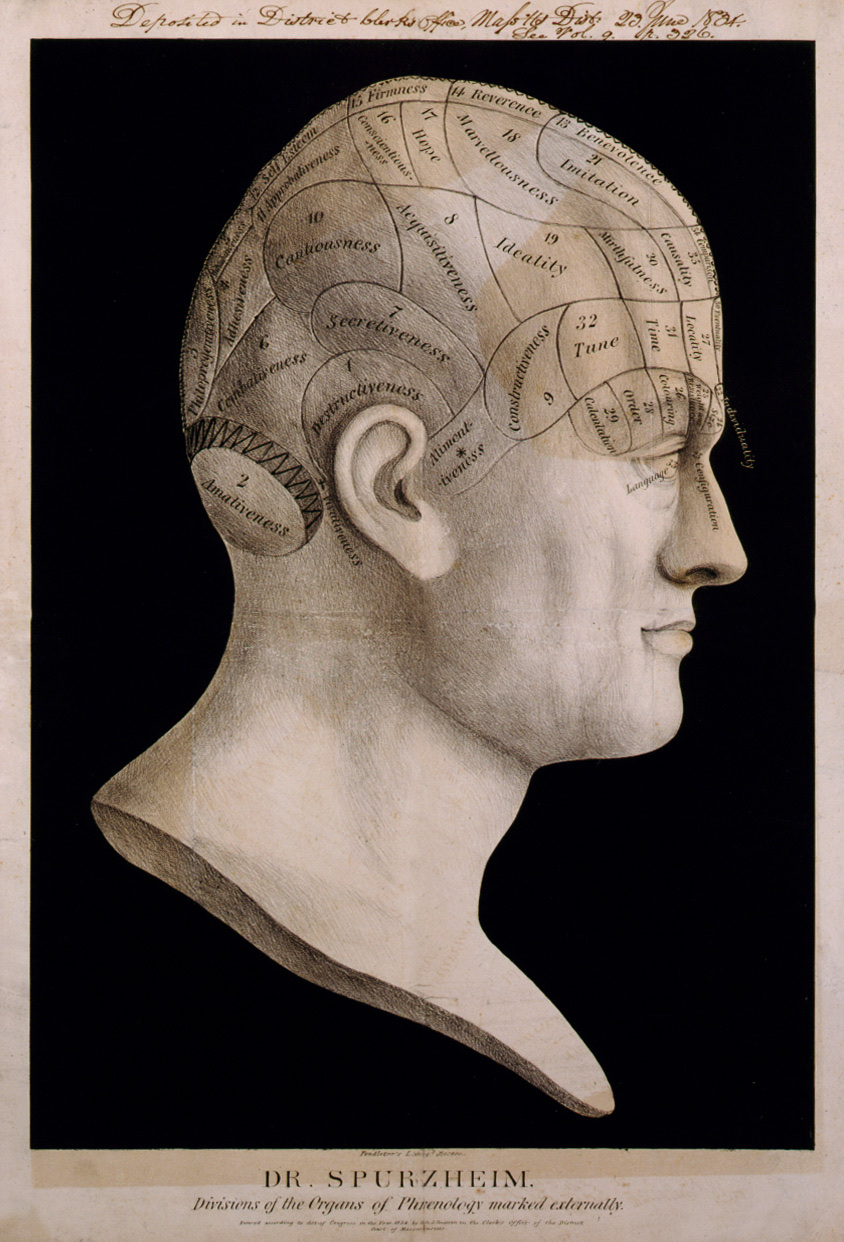
Nevertheless, numerous subsequent scientific studies have shown that these views in phrenology have no scientific basis, and there is no direct link between skull shape and personality behavior.
Can People Judge Personality From Appearance?
In the 1970s, American psychologists conducted an experiment.
The research team recruited 84 undergraduate volunteers from non-psychology majors online; these students did not know each other. In the experiment, they were asked to sit in pairs and observe each other for about 20 minutes, after which each person assessed the other’s personality traits.
The experimental results showed that most volunteers could accurately identify at least three of the five personality dimensions.
This shows that people can infer other people’s character to some extent by observing their appearance.
Do Wider Faces Signal Violent Tendencies?
In his book “The Physiognomy of Psychologists,” psychologist Paul Ekman describes a classic experiment on the relationship between facial features and behavior.
Researchers studied the facial features of 90 ice hockey players and their fouls during matches. The study found that athletes with wider faces (i.e., wider cheekbone distance) were more likely to be penalized by referees because they exhibited more violent tendencies and made larger movements than other athletes.

Further research has found that people with wider faces have higher concentrations of certain hormones in their bodies, which not only affects their facial structure but also enhances their aggression.
These experimental results seem to support the idea that there is some scientific basis for judging a person’s behavior based on their appearance.
Physiognomy and Criminality: Can AI Spot a Criminal Face?
In the context of the rapid development of artificial intelligence technology, the ancient art of physiognomy has been innovatively developed through modern technology.
In 2016, Professor Wu Xiaolin from Shanghai Jiao Tong University explored the possibility of using artificial intelligence algorithms to identify common facial features of potential criminals in his research paper “Automatic Criminality Probability Inference Based on Facial Images”.
In this study, Professor Wu used four algorithms, logistic regression (LR), k-nearest neighbors (KNN), support vector machine (SVM), and convolutional neural network (CNN), to conduct an in-depth analysis of 1,856 facial photographs.
The research results show that there are indeed significant differences in facial structure between criminals and ordinary people.
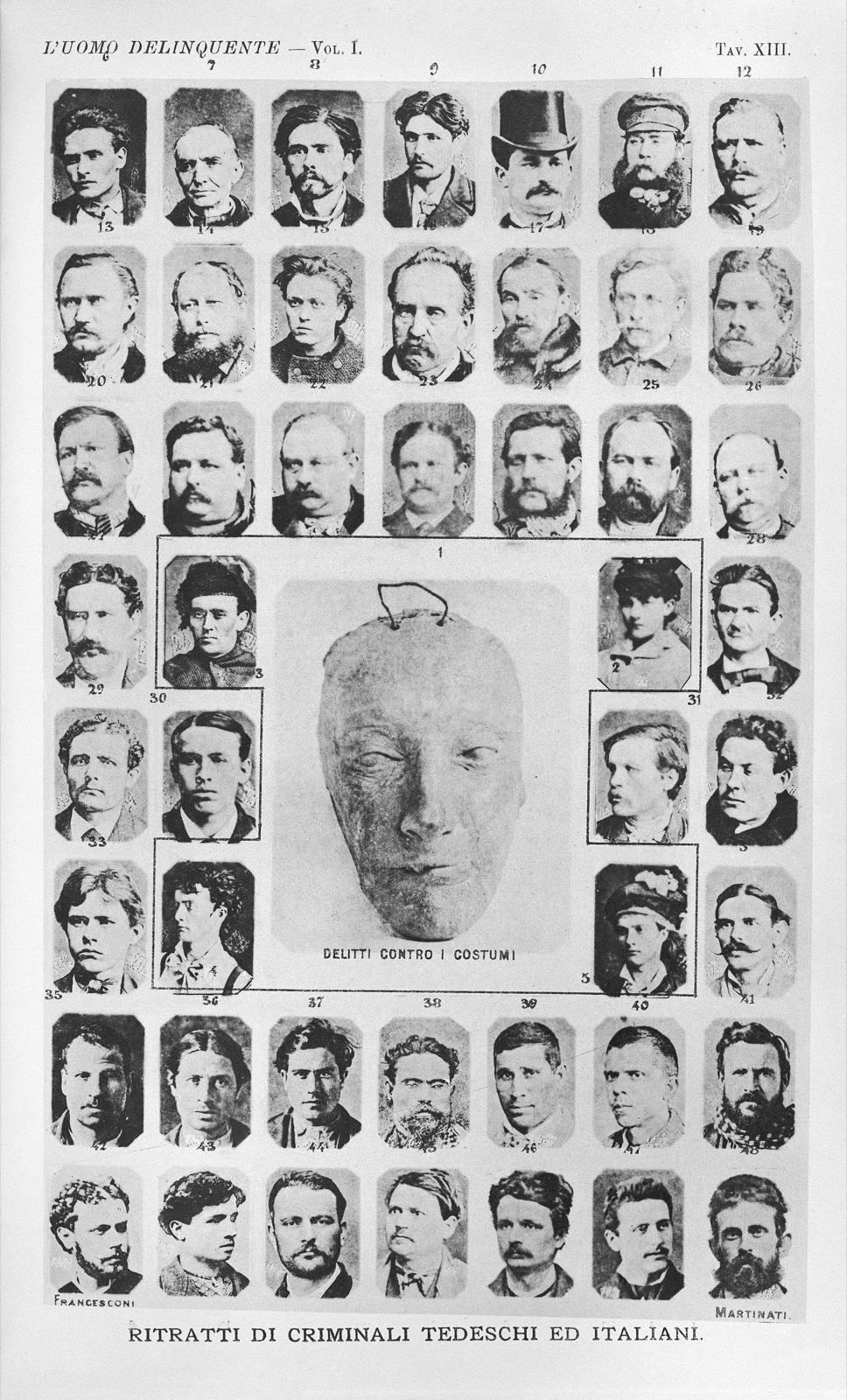
Based on these differences, Professor Wu summarized three key facial features: interpupillary distance, mouth, and philtrum.
Studies have shown that, compared to the general population, criminals have a smaller interpupillary distance, meaning their eyes are closer together.
In ordinary people, the distance between the eyes is usually wider.
In addition, criminals usually have small mouths and their mouths are often downturned.
In contrast, the corners of an ordinary person’s mouth usually turn upwards when they are expressionless.
Criminals have a more prominent philtrum, showing a clear double-line feature, while the philtrum of ordinary people is usually not obvious.
Why Critics Question AI Criminality Research
Although Professor Wu’s research has made some breakthroughs, it has also been questioned by many scholars.
Critics argue that such research may inadvertently categorize people based on their appearance, fostering a “judging by appearance” trend. This not only lacks scientific rigor but could also lead to social discrimination and misunderstanding.
At the same time, since the sample size is less than 2,000, it is not statistically sufficient to constitute a “large sample” study, which raises questions about the representativeness and accuracy of the experimental results.
However, this study has undoubtedly attracted widespread attention in the academic community. To some extent, it has promoted the application of facial recognition technology in the field of criminal psychology and provided us with a new perspective on identifying the good or bad character of others.
Why a Face Alone Can’t Define a Person
Of course, we must also recognize that a person’s character is influenced by a variety of factors, and we cannot evaluate a person comprehensively based solely on facial features. Philosophers made the same point centuries ago, and the thinkers who rejected physiognomy, such as Lichtenberg, argued that occupation, climate, illness and chance all leave marks on a body.
The traditional Chinese proverb “the face reflects the heart” reminds us that a person’s outward expression can reflect their inner state.
If someone’s expression appears relaxed and cheerful, it usually indicates that they are honest in their behavior;
Those with shifty eyes may be dishonest to some extent;
People who wear a melancholy expression for a long time may have a more negative attitude towards life.
Therefore, when evaluating a person, we should take into account their facial features, demeanor, and other nonverbal behaviors.
Keep reading

Is Physiognomy Pseudoscience or a Record of How We Live?
“Your appearance is clearly extraordinary; you’re destined for great wealth and high status.” Many people heard similar things when they were young,…
Physiognomy AI: Get a Face Reading From Your Photo
Physiognomy AI uses artificial intelligence to turn facial appearance into interpretations of character or personality. For someone curious about face reading, the…