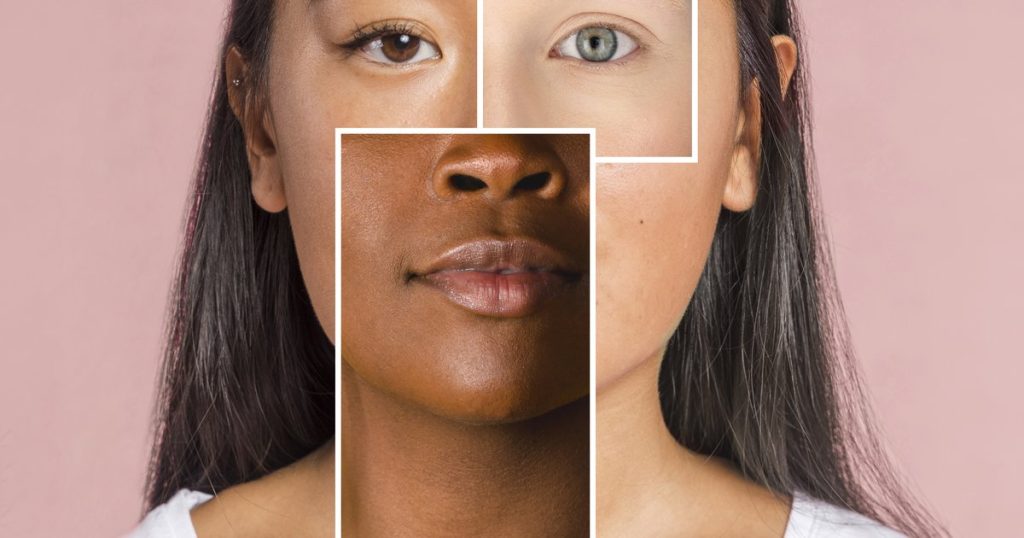
An eagle-shaped nose interpreted as courage is a classic physiognomy example. In a historical English translation of Porta’s animal comparisons, physical resemblance becomes a story about temperament. Other examples read meaning into a forehead’s curve or a fictional character’s nostrils. Exploring them reveals the imaginative vocabulary of face reading—and helps you recognize it in books, pictures, and everyday language.
What makes something physiognomy?
Physiognomy has two useful senses: interpreting character through appearance, and simply describing someone’s outward features. Both appear in Merriam-Webster’s definition. Whether the first sense holds up as science is a separate question, explored in physiognomy and the pseudoscience question.
Here’s an original sentence using the descriptive sense: “The portrait preserves his distinctive physiognomy, from the curved nose to the rounded chin.” Add “the chin reveals gentleness,” and you have moved into face reading.
Phrenology specifically assigns mental qualities to skull contours. Noticing a passing smile or frown is different again: you are observing a changing expression, rather than interpreting the shape of a feature as lasting temperament.
Historical examples: animal likenesses and facial outlines
European physiognomy drew on ancient Greek writings, including Physiognomica, attributed to followers of Aristotle. The National Library of Medicine’s exhibition traces this inheritance and shows how Giambattista della Porta developed illustrated comparisons in De humana physiognomonia (1586). His pairing of a human head with a lion makes the visual method especially memorable.
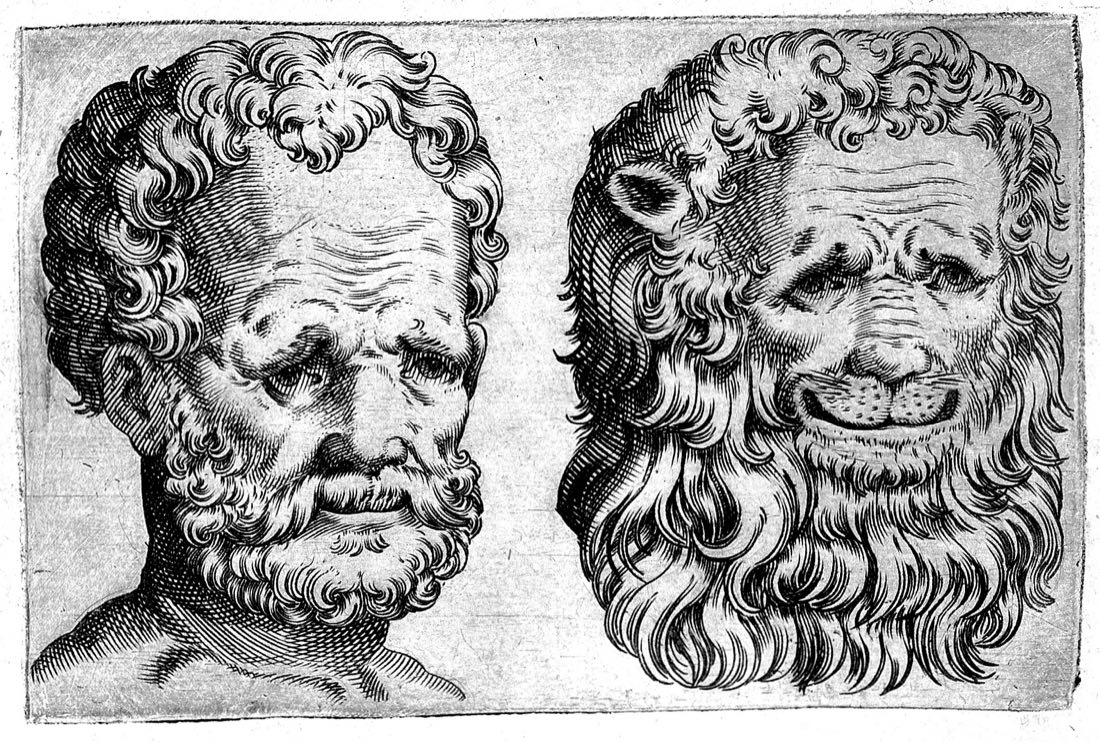
An eagle-like nose and courage. The Porta appendix in the 1817 Pocket Lavater offers a precise example. Its commentary on Figure I connects a strongly curved, beak-like nose with bravery. It also associates the eagle’s supposed royal status with dignity in a person. The reasoning follows a recognizable sequence: nose shape, animal resemblance, symbolic quality. You can see how a familiar animal story supplies the interpretation.
An arched forehead and mildness. Johann Caspar Lavater used silhouettes extensively, focusing attention on facial outlines, as the Austrian National Library documents. A profile makes small differences in the forehead, nose, and chin easy to compare. Lavater’s project also drew sharp critics, and the philosophers who argued against physiognomy, including Lichtenberg and Hegel, explain where they thought it went wrong.
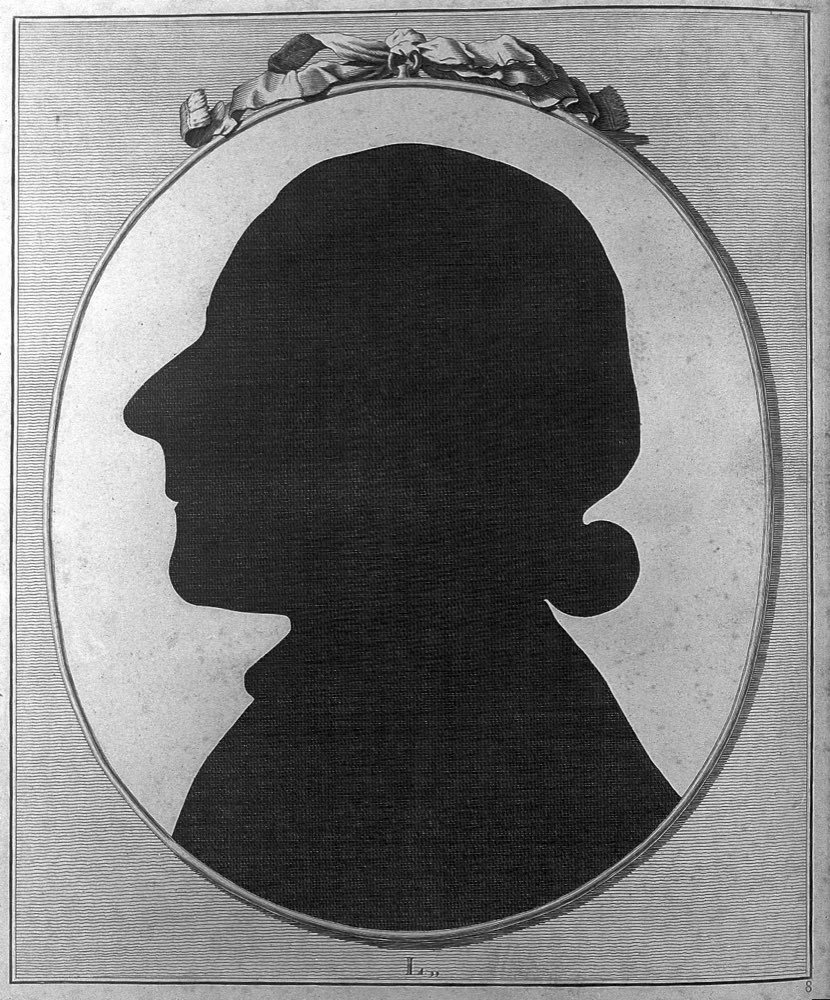
The later Pocket Lavater, a compendium in his tradition, associates a gently arched, angle-free forehead with a mild disposition and sometimes low mental energy in its “Of the Forehead” section. Here, a simple contour carries the meaning. These two examples show distinct approaches within European face reading; they do not stand for every tradition.
A literary example: Jane reads Rochester
In Charlotte Brontë’s Jane Eyre, Chapter 13, Jane studies Rochester’s face by firelight. She notices his square forehead, nose, and grim mouth, then describes his full nostrils as “denoting, I thought, choler”—an angry temperament.
The revealing words are “I thought.” The interpretation belongs to Jane, the narrator. In this scene, the description makes Rochester seem formidable while showing how closely Jane observes her employer.
That gives physiognomy a storytelling role: a face introduces both a character and someone else’s response to them. Literary scholar Rachel Teukolsky’s “Visuality” explores the novel’s tension between questioning surface judgments and finding intense meaning in appearances.
Exploring the meanings today
These sources document historical interpretations and literary choices. They do not establish personality measurements. A review by Todorov and colleagues finds that people share facial impressions, while arguing that their accuracy has been overstated. Agreement about a face does not establish an individual’s character. The stakes rise when the same reasoning is applied to crime, as research on criminal physiognomy shows with studies of facial width and a 2016 AI paper.
The examples remain rewarding to explore as symbolism. When you encounter a reading, identify the visible feature, the meaning attached to it, and the source connecting them. To explore further, a guide to face reading books compares introductions by Mac Fulfer, Chi An Kuei and Lillian Bridges.
To explore how facial features become a personal reading today, try FaceSage. Bring the same curiosity: notice which interpretations interest you and consider how they relate to your own experience.
Keep reading

Is Physiognomy Pseudoscience or a Record of How We Live?
“Your appearance is clearly extraordinary; you’re destined for great wealth and high status.” Many people heard similar things when they were young,…
What Is Face Reading and What Can It Tell You?
What Is Face Reading (Physiognomy)? Physiognomy is a folk art of fortune-telling that involves observing a person’s facial features, and strictly speaking,…