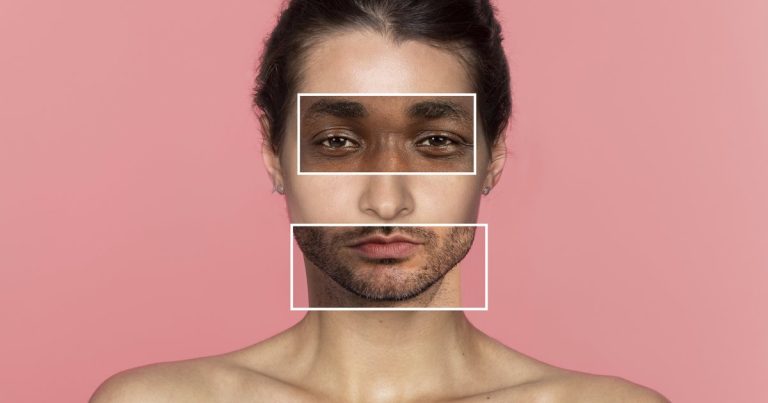
In life, we often have this experience: a casual glance in a crowd, and we have a strange feeling about someone. This seemingly unintentional glance actually contains a lot of information. Just like when we are walking down the street and someone walks towards us, we may only glance at them and have a preliminary impression in our minds: this person looks kind, or this person doesn’t seem easy to get along with.
Why We Read Faces at First Glance
In primates, facial features are a crucial means of communication. Monkeys, for example, can discern each other’s emotions and status simply by looking at their faces. The same applies to humans; facial shape, hair, and other features contain numerous cues for communication. In social interactions, we can rapidly form first impressions based on these cues within mere milliseconds. Reading character from such cues is the old project of physiognomy, and the question of physiognomy as pseudoscience traces how it moved from ancient practice to modern research.
Just a few days ago, my friend Mike attended a social event. No one there knew each other, but Mike immediately noticed a man named Jason. Mike told me, “I just glanced at him and felt he seemed reliable and someone I could get along with.” I asked him why, and he said, “I can’t really explain it, but I just felt his features were quite regular, and his eyes seemed sincere.” You see, that’s the power of a fleeting glance, and these first impressions are often quite accurate.

Can People Judge Ability From a Face?
A study conducted by Princeton University showed 120 participants photos of the winners and runners-up in political elections. Participants were then asked to judge which person was more capable of running for office, with varying time limits. The results showed that, with a time limit of 250 milliseconds, the correct prediction rate was a staggering 68.5%, the highest of all conditions. This suggests that intuition based on appearance can sometimes be quite useful, not only in helping you avoid unsuitable romantic partners but also in serious situations.
However, the concept of “ability” is too broad; a person’s personality is far more complex. Take my friend Tom, for example. He seems cheerful and easygoing at first glance, but once you get to know him, you realize he’s actually very sensitive and has his own unique ideas about many things. So, can we discern these more subtle personality traits just by looking at his face?
How Accurate Are First Impressions of Personality?
In 1966, researchers at the University of Michigan recruited 84 complete strangers among college students. These students did not communicate verbally; they simply observed each other’s appearance and behavior for a maximum of 15 minutes. The results were surprising: these strangers were able to accurately assess personality traits such as extroversion, cooperativeness, and conscientiousness in others. Moreover, their assessments highly correlated with those of people they knew well. It’s like you painstakingly try to hide your personality, only to have a stranger guess it at a glance.

When I told Mike about this research, Mike said, “So, I think Jason is reliable, and maybe I’m actually right?” I smiled and said, “It’s possible, but it’s not absolute.”
Think about it: when we’re facing a living, breathing person, it’s not just facial features that influence our perception of them. Clothing, demeanor, posture, and even small gestures can all play a role. For example, someone who is neatly and appropriately dressed gives off a reliable impression; while someone who constantly shakes their leg might seem frivolous.
The Psychology of Face Reading: Studies on Faces and Personality
To clarify the relationship between facial features alone and personality, British researchers conducted two experiments in 2003. They strictly limited their observations to the single factor of “face,” investigating whether self-assessments and stranger assessments were consistent across three personality dimensions: extraversion, neuroticism, and psychoticism. The assessors viewed standardized, frontal static photographs of the head and shoulders. The results showed that regardless of whether the photograph showed a complete face or one with cropped sections such as the top of the head or chin, the stranger assessors’ ratings on the “psychoticism” dimension closely matched the participants’ self-assessments.
I explained the experiment to Mike, who scratched his head and said, “This experiment is quite interesting, but I still think looking at photos is not very reliable. Everyone’s aesthetic sense is different.” I nodded and said, “You’re right, that’s also a concern of scholars.”
Indeed, everyone has their own preferences when it comes to appearance. Some people find big eyes attractive, while others prefer small eyes. This subjective difference also exists in experiments. Later, a study published in *Nature* recruited participants aged 18-60, asking them to complete 12,447 Big Five (BF) personality questionnaires and upload 31,367 photos of themselves without makeup, looking directly at the camera. The research team used 90% of the data to train a model; a computer vision neural network extracted key facial information from the photos, and a personality diagnostic neural network assessed the participants’ personality traits based on this information. The remaining 10% of the data was used to verify the reliability of the model’s predictions. The results showed a correlation between personality and facial appearance, with “conscientiousness” being the most easily predicted personality trait through facial features.
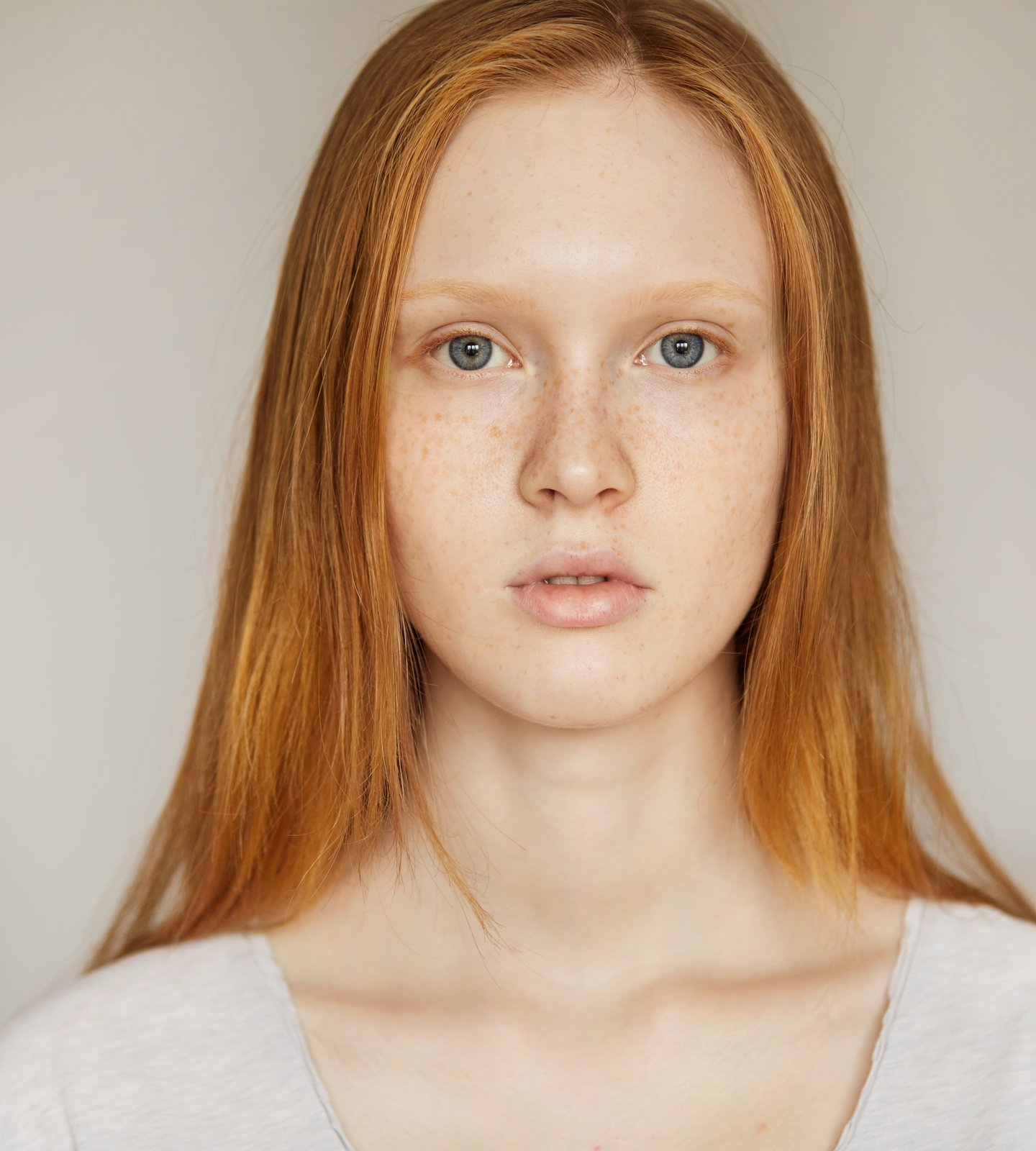
I said to Mike, “Look, scientific research has actually revealed some connections between facial features and personality.” Mike said, “So, when I’m looking for a job, can I check the interviewer’s face first to see if it looks good?” I laughed and patted him on the shoulder, “Your idea is a bit exaggerated. It’s just a research conclusion; you can’t take it all at face value.”
How Expressions Make a Face Seem Trustworthy
If we think about it carefully, there’s a reason why you can form likes or dislikes just by looking at someone’s face. Often, that inexplicable feeling is actually the emotional signals the other person is conveying. Even a seemingly expressionless, static face can influence your choices without you even realizing it through subtle facial cues.
Researchers at the Department of Psychology at the University of York conducted an experiment. They used faces of different people as initial images, categorizing each image into three types: trustworthy, neutral, and untrustworthy. Participants were then asked to rate the emotional intensity of these static images. The results showed that trustworthy faces were perceived as “happier” than the other two types, while untrustworthy faces were rated as “angrier.” This is similar to how looking at a person’s resume photo can evoke different feelings based on their facial expression.
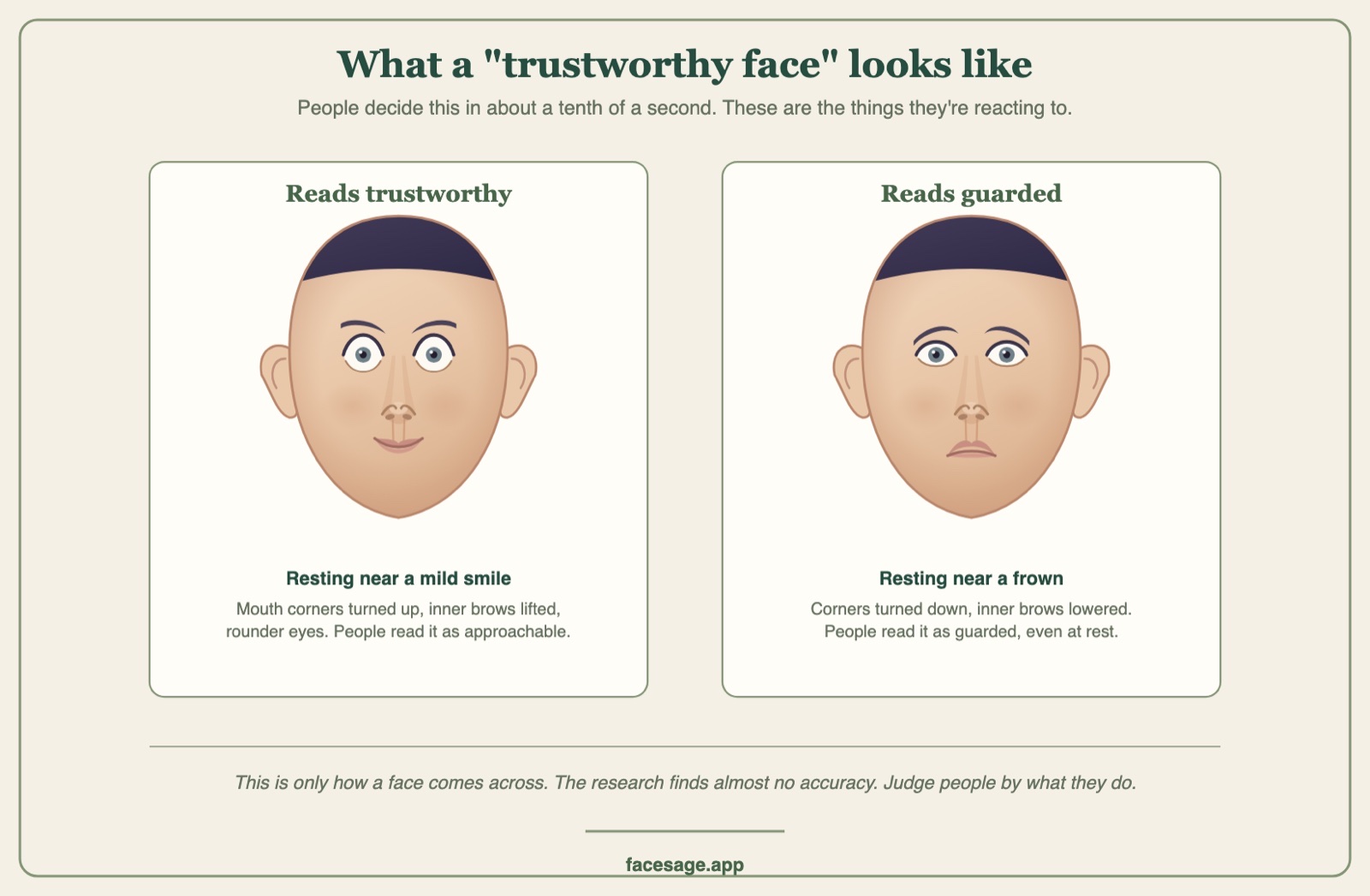
I said to Mike, “You see, that’s why sometimes when you look at someone, you feel they are approachable or unapproachable.” Mike said, “So, does that mean I think Jason is reliable because his face looks ‘happy’?” I smiled and said, “That’s possible.”
Facial Structure, Smiles and the Big Five Traits
In fact, the transmission of these temperamental traits is closely related to facial structure. Just like when Jia Baoyu first met Lin Daiyu in “Dream of the Red Chamber,” he felt a sense of familiarity and familiarity because of her “two arched eyebrows that seemed to frown but didn’t, and a pair of eyes that seemed to be happy but didn’t, filled with affection.” In our daily lives, it’s the same; the distance, thickness, and height of the eyebrows, as well as the size and curvature of the eyes, all affect our “first impression” of a person.
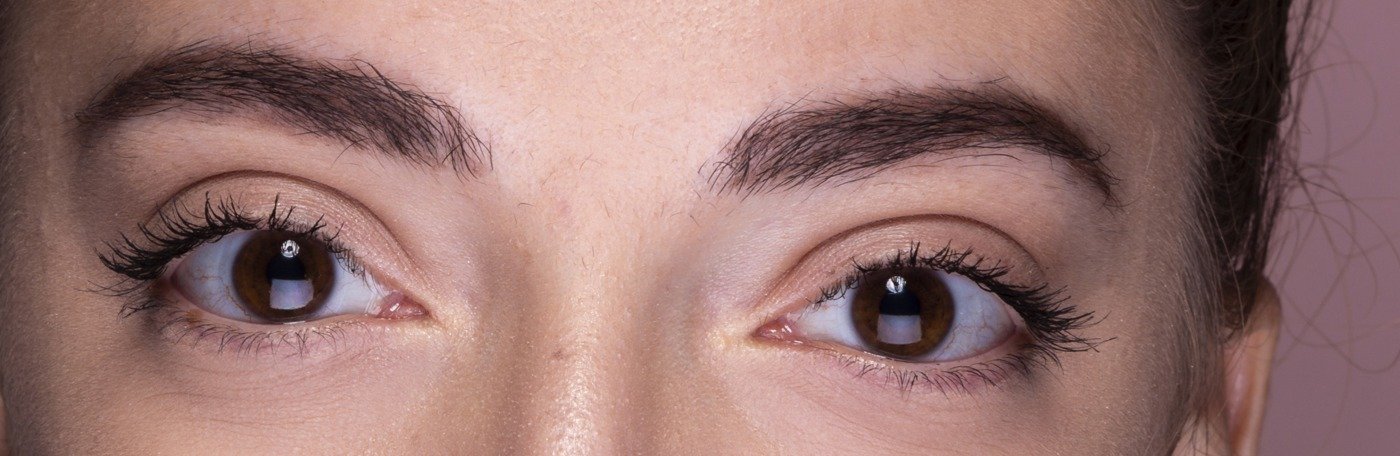
Chinese researchers used a high-resolution 3D camera system to collect facial images of 834 volunteers from Fudan University in Shanghai, and had them complete the Big Five personality scale. The study found that for women, facial features were closely linked to extroversion. Extroverted, sociable women tended to have more prominent noses and lips, and relatively recessed chins and masseter muscles; introverted women had softer, smoother contours in their noses and upper jaws. For men, richer personality information could be gleaned from their faces. Men with high agreeableness often had raised eyebrows, a reduced distance between their eyebrows and hairline, and lips that extended outwards and naturally upturned, resembling a gentle smile; men with low agreeableness tended to have downturned eyebrows and corners of their mouths.
I told Mike about these research findings, and he said, “Wow, I never thought you could really tell so much from a face. I’ll have to pay more attention to other people’s faces from now on.” I reminded him, “Don’t be too absolute. This is just a general trend; everyone is still unique.”
Further research explores the relationship between facial structure changes brought about by “smiling” and individual personality from a more specific perspective. Studies of static images have found that as scores for openness, extraversion, agreeableness, and emotional stability increase, mouth height, the distance between the lips and nose, and eye size gradually decrease. These changes are related to the expansion of the mouth and the wrinkling of the eyes when smiling. Therefore, in movies and TV shows, mob bosses are generally depicted with furrowed brows, sinister eyes, and hard lips, this conveys intimidation; while responsible characters like Jon Snow often have deep-set eyes, taut lips, and a resolute profile, appearing reliable and composed.
You see, every piece of information on our faces reflects ourselves to some extent.
The Evolutionary Roots of Reading Faces
We seem to have an innate ability to instantly tell who’s easy to talk to and who’s difficult to get along with. When asking for directions, whether you’re a social butterfly or a social phobic, you’ll most likely choose the person who looks gentle and friendly. On social media, some people post selfies to show off their faces, letting others see if they have the kind of face that makes them easy to manipulate by their superiors. Just like watching “Empresses in the Palace,” when the empresses stand in a row, even without looking at their clothes, you can roughly guess from their faces who has a strong aura and is not to be trifled with, like Consort Hua.

This is more than just simple intuition. From an evolutionary perspective, our personality is a psychological mechanism that our ancestors gradually developed over a long period of time to cope with the challenges of social life and improve their ability to survive and adapt to their environment, this is called “adaptability.” Different environments influence the formation of personality traits. Based on the realities of survival and social needs, we select traits that can help us achieve our goals and establish connections with people who possess these traits. This strategy has long existed in social animals such as monkey troops, where they also choose partners by observing the facial features of their own kind.
Researchers at the University of Southern Mississippi, after reviewing a large body of literature, found that from the perspective of the “Big Five” personality traits, when we identify “extroversion” traits on someone’s face, we can sense their “sociality” and satisfy our need for interaction; identifying “agreeableness” means that the other person has qualities such as kindness and empathy, increasing the likelihood of cooperation; and identifying “neurotic” facial features can help us avoid emotionally unstable people.
I said to Mike, “Look, our tendency to choose friends or business partners based on looks might be an instinct passed down from our ancestors.” Mike was a little surprised: “Really? Then I’ll have to make good use of this instinct in the future.” I smiled and said, “But don’t rely on it too much; you still need to get to know them better.”
While these evolution-related social choices are often unconscious, the feelings of friendliness or repulsion we experience towards certain people are closely linked to immediate physiological responses. We perceive people with baby-faced features, large eyes, round faces, high eyebrows, and less angular features, as warmer, more genuine, and more agreeable. In this case, the amygdala, responsible for emotional control and memory, is more strongly activated, similar to the reaction pattern towards infants. This also explains why many anime characters are drawn to resemble children to be more endearing. When we see someone display a “smiling” expression, associated with high openness, extraversion, and emotional stability, the medial orbitofrontal cortex, associated with stimulus-reward, shows a much stronger response than when seeing a blank “poker face.”

So next time a friend drags you to a new dinner party, and you’re surrounded by unfamiliar faces, don’t feel embarrassed as you silently observe their expressions. Your brain is actually analyzing and decoding, providing you with a guide to safe social interaction with strangers. However, don’t forget that this is only a preliminary assessment; to truly understand someone, you need in-depth contact and communication.

Keep reading

Is Physiognomy Pseudoscience or a Record of How We Live?
“Your appearance is clearly extraordinary; you’re destined for great wealth and high status.” Many people heard similar things when they were young,…
Can Physiognomy Predict Criminality? What Studies Showed
We often hear this kind of assessment: “This guy doesn’t look like much.” However, can we really judge a person’s character and…