
Sanpaku eyes describe an appearance: white shows above or below the colored part of the eye, as well as on either side. The physical explanation lies in how the eyelids sit around the eyeball. Longstanding anatomy, gaze, aging, scarring, or a condition that changes eyelid position or pushes the eye forward can all contribute.
The most useful starting point is whether this is a familiar feature or a recent change. Understanding that distinction also leaves room to explore the cultural story behind the name.
What you’re seeing when white shows on three sides
The iris is the colored part of your eye; the sclera is its white outer layer. The transparent cornea covers the front. The National Eye Institute’s eye anatomy guide illustrates these structures.
Clinicians describe visible white between the eyelid edge and the corneal border as scleral show. Location matters:
- White below: the lower lid sits below the cornea’s lower edge, exposing a strip of white.
- White above: the upper lid, which usually overlaps the top of the cornea, sits high enough to expose white above it.
A persistently elevated upper lid is called upper eyelid retraction. It can create a wide-eyed appearance even without the eyeball moving forward. “Sanpaku” names the visible pattern; an examination establishes its physical explanation. Face reading calls white above the iris yang sanpaku, and the traditional yang sanpaku meanings describe character claims rather than physical causes.
What causes sanpaku eyes?
Longstanding anatomy and the genetics question
Lower-lid position depends on supporting tissues, muscle tension, and eye prominence. A little white beneath both irises may be part of someone’s usual anatomy. EyeWiki’s lower eyelid reference notes that longstanding, symmetrical lower show is more likely to be a physiological variation.
Some people also have eyelid retraction from birth. Documented congenital upper-lid cases have uncertain underlying mechanisms. “Congenital” means present at birth; it doesn’t automatically mean inherited. A resemblance to a parent may be noticeable, but it cannot establish a particular genetic cause for scleral show.
Gaze, expression, and photographs
Eyelid position changes with gaze. A study measuring 50 healthy people found that looking downward lowered the upper lid and narrowed the opening between the lids. Opening your eyes widely can expose more sclera, as experiments on eye widening document.
For a useful visual comparison, look straight ahead with your head level and your eyelids relaxed. Keep the camera at eye level rather than comparing a downward glance with a wide-eyed pose. This helps you describe what you see; it isn’t a diagnostic test.
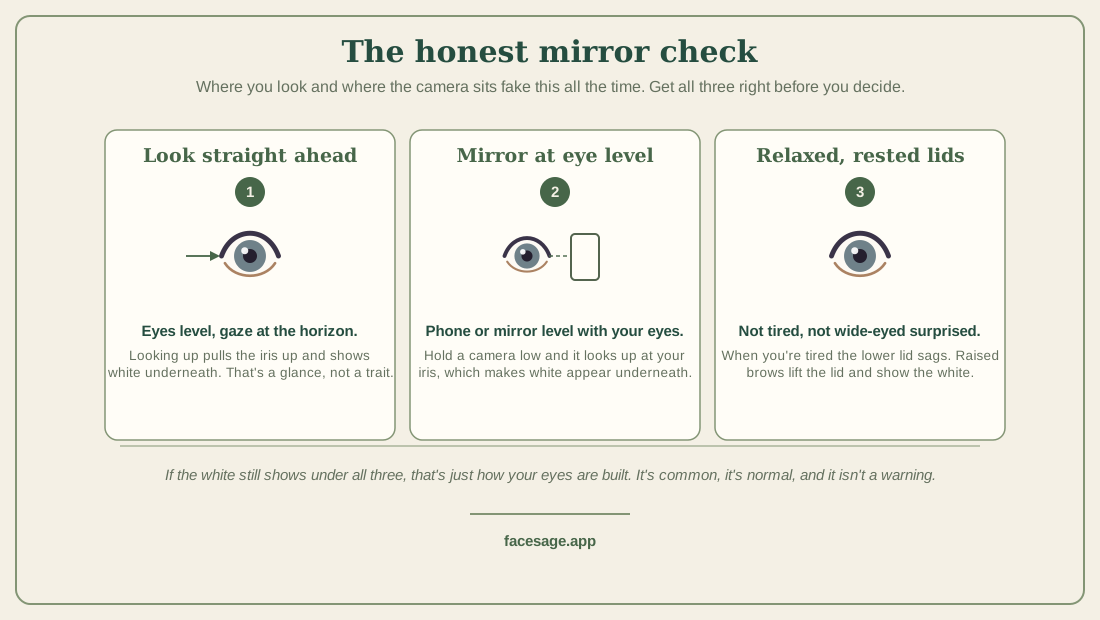
A moment of eye widening doesn’t establish that someone’s resting eye shape comes from stress. One expressive photograph tells you little about a persistent change.
Aging and changes to eyelid support
With age, the tendons supporting the lower lids can weaken. Changes in surrounding bone and soft tissue can also increase downward tension on the lid. These mechanisms can produce more lower scleral show, according to clinical guidance on lower eyelid malposition.
This is a possible age-related change, rather than a feature everyone develops. It also differs from a drooping upper lid, which covers more of the eye.
Scarring or changes behind the eye
Scarring after eyelid surgery, burns, or injury can pull a lower lid downward. Lower eyelid retraction guidance describes these acquired causes. Mention any relevant procedure or injury when a clinician asks when the change began.
Thyroid eye disease provides another mechanism. Immune activity causes swelling in tissues around the eyes, which can push them forward, called proptosis. Eyelids may also pull back or fail to close fully. Dryness, irritation, and double vision can accompany these changes. The National Eye Institute’s thyroid eye disease guide explains the condition and its assessment. Visible white alone cannot identify it.
When to have a change checked
If your eyes have looked this way for years and feel comfortable, you can discuss the feature at a routine eye appointment. Arrange an assessment for new, increasing, or uneven lower-lid changes; old photographs can help establish onset. Have new eye bulging checked promptly, too.
Tell the clinician about dryness, trouble closing your eyes, previous surgery or injury, and thyroid history. An examination can assess lid position, eye prominence, and the eye’s surface in ways a selfie cannot.
Associated symptoms change the urgency:
- Seek urgent assessment for eye pain, very red eye whites, light sensitivity, or changes in eyesight, following NHS eyelid guidance.
- Seek emergency care for newly bulging eyes with vision changes, a severe headache, or nausea; severe eye pain also needs emergency care. The NHS bulging-eye guidance also treats newly bulging eyes in a child as an emergency.
Can the appearance be changed?
Treatment depends on the cause and whether the eye needs protection. A stable anatomical feature doesn’t automatically require correction.
Lubricating drops or ointments can relieve irritation from exposure, but they don’t reposition a lid. Persistent retraction sometimes needs surgery; upper eyelid management guidance explains how treatment addresses the underlying problem. Thyroid eye disease may require separate eye treatment even when thyroid problems are being treated. Discuss comfort, eye closure, and any appearance concerns together so the options fit your situation.
The cultural story behind sanpaku
Sanpaku means “three whites” in Japanese. George Ohsawa’s You Are All Sanpaku, translated by William Dufty, appeared in English in 1965. Japan also has its own physiognomy tradition, and face reading in Japan introduces the Edo-period physiognomist Mizuno Nanboku and his teachings.
In a reproduced passage from Ohsawa’s book, white beneath the iris represented physical and spiritual imbalance. He associated it with accidents and an early death, and proposed macrobiotic eating as a remedy. This documents his particular teaching; it doesn’t establish a diet treatment or a way to predict someone’s health, personality, or future. Popular accounts now call white below the iris yin sanpaku, and traditional yin sanpaku readings collect the character and marriage claims made about it.
The cultural interest lies in how a small visual detail became part of a larger philosophy about balance and life. If that connection sparked your curiosity about facial symbolism, explore FaceSage’s face reading as an introduction to interpretations and personal reflection. Bring your own experiences to the reading and consider which themes feel relevant to your life.
Keep reading
What Is Face Reading and What Can It Tell You?
What Is Face Reading (Physiognomy)? Physiognomy is a folk art of fortune-telling that involves observing a person’s facial features, and strictly speaking,…
What Are Sanpaku Eyes and What Do They Mean?
In Chinese fortune telling, the eyes are the most important feature in the Palace of Destiny, governing fate and emotions, and are…