
Face reading for personality · The scan is free
Face reading
for your
personality.
Find out what your face says about your personality. Upload a photo and FaceSage reads your features the way face readers have for centuries.
See what your face says about you
Upload one clear photo. Your archetype and scores are free.
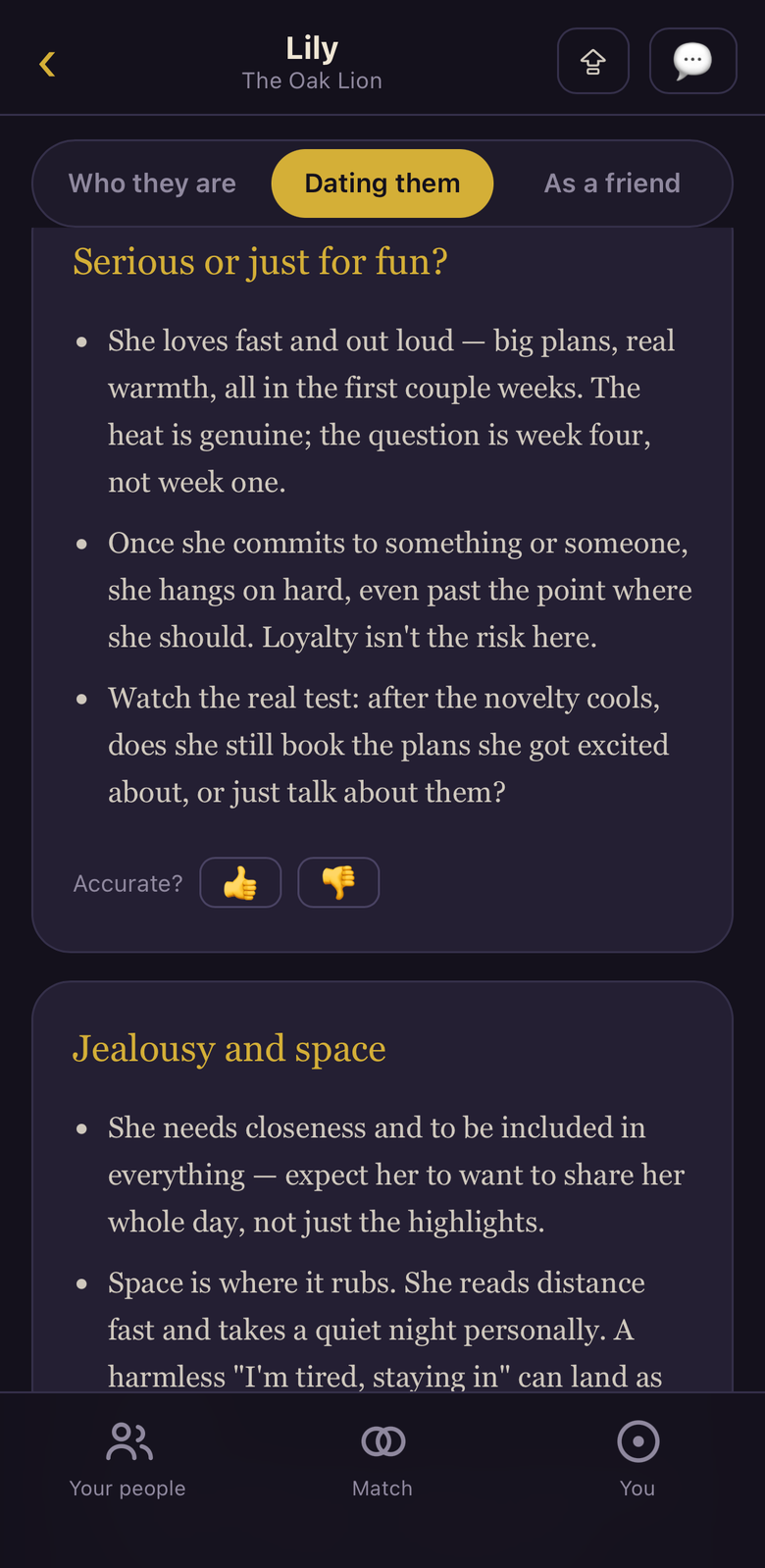
Your results from one photo.
Upload a photo and your free results show up right away. No email, no card.
Free with every scan
Your archetype
A name for how your face reads, like the Oak Lion or the River Swan, with a short description of the personality behind it.
Six first-impression scores
How your face comes across to people meeting you for the first time:
- Warmth
- Trust
- Competence
- Takes charge
- Social energy
- Presence
With a full reading
Your written personality reading
The traits and habits face-reading traditions link to your features, written for you.
Dating and friendship readings
How you are as a partner and as a friend, with scores like:
- Affection
- Long haul
- Space needs
- Loyalty
- Give and take
- Even temper
Five follow-up questions
Ask anything about your reading and get an answer based on it.
Three steps. No download.
FaceSage works in your browser, on your phone or your computer.
Choose a face
Upload a clear, front-facing photo. Start with yourself or someone you’re curious about.
See your first results
The app measures the face and shows the archetype name and first-impression scores.
Open the full reading
If you want the written reading, buy one read. It opens the character, dating, and friendship readings and five follow-up questions.
What your features say about your personality
Face readers link each feature to a side of your personality: the eyes to how you connect, the brows to drive, the mouth to how you express yourself, the jaw to staying power.
FaceSage reads all of them together and gives your personality a name, like the Oak Lion or the River Swan, with a description to go with it.
The concept of “physiognomy” originated in ancient times and remains a form of superstition in my country, with its application in judging people, understanding their character, and discussing marriage.
The *Impermanence Sutra* describes it thus: “Destiny is created by oneself, appearance arises from the heart, circumstances change with the mind, and tolerance leads to greatness.” This reveals that the Chinese perspective views future destiny through facial features. This isn’t unique to my country; research on physiognomy has also been very popular in the West.
Where Face Reading Personality Ideas Come From
The term “physiognomonica” appears in Aristotle’s Collected Works, where one chapter proposes that “a person’s face can reflect their character traits to a certain extent.” This view coincides with a view held in my country.
The term “physiognomy” sounds mysterious, but it actually refers to the arrangement and layout of our facial features.
How Your Face and Personality Shape Each Other
Modern scholars, both domestically and internationally, who do not believe in metaphysics, have spent decades studying physiognomy as a discipline and have concluded that a person’s appearance has a decisive influence on the formation of their personality. Furthermore, changes in personality can subtly alter one’s facial features.
In other words, facial features and personality are potentially related and influence each other.
The Dorian Gray Effect
Psychologists believe that the ancient saying “appearance reflects the heart” is related to the Dorian Gray Syndrome, which originates from a novel by Oscar Wilde.
The viewpoint is related to age: as you get older, your adult appearance will more accurately reflect your personality than when you were young.
Why Your Face Shows More Character With Age
This kind of description is very common in our lives. For example, attractiveness was initially a factor that young women paid more attention to, and attractiveness was directly related to their appearance.
However, as cells metabolize and age, by the time they reach middle age, their beauty is no longer what it was in their youth, and they are more likely to display qualities unrelated to beauty.
Phrases like “beauty that could make fish sink and geese fall from the sky,” “beauty that could shame the moon and flowers,” and “beauty that could make a fairy tale” are no longer enough to move middle-aged women. Sometimes, they even feel that such praise is hypocritical. Instead, praise that highlights the excellent qualities that have been cultivated over the years, such as “intellectual” and “capable,” is more valued and is an affirmation of the personal charm of middle-aged women.
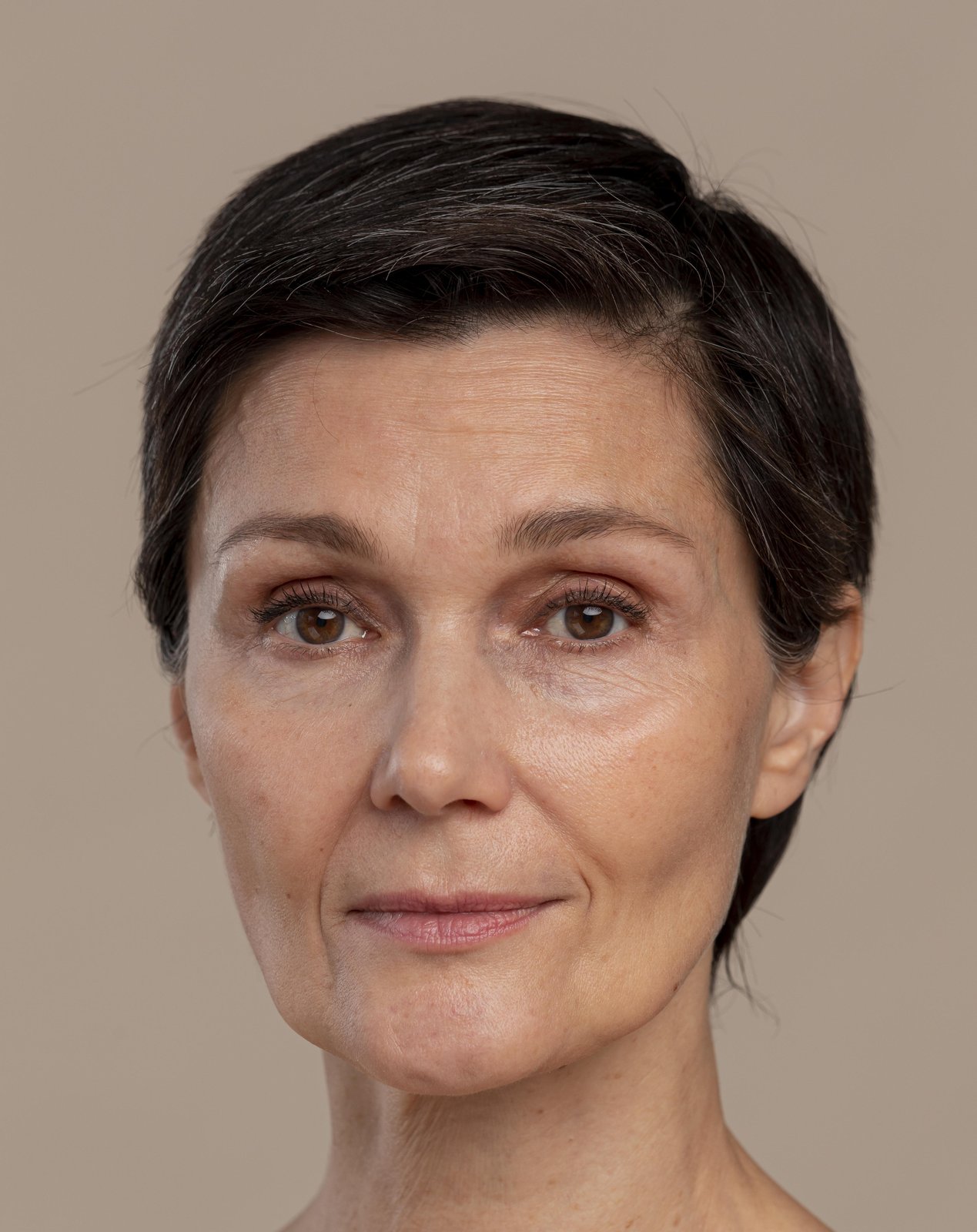
Your initial appearance is determined by genes, but your self-esteem can become expensive or cheap over time, and your personality traits can be assimilated by changes in your environment. Therefore, holding your head high and remaining steadfast in your original aspirations are very important.
Is Intelligence Reflected in Your Face?
First Impressions Start With Appearance
Parents know that praising a child once is better than praising themselves ten times, so many parents often say things like, “Your child is so smart!” or “Your child is just like you in terms of intelligence!” This is based on fact and is not just a polite remark.
Although judging people by their appearance is not advisable, and we are taught from a young age not to make subjective assumptions about others, the facts tell us that our first impression has a significant relationship with our appearance.
When we judge a person, the first thing we usually say is about their appearance. It’s hard to break away from the established pattern of describing their appearance first and then mentioning other characteristics. However, relying too much on facial features to describe a person is just as undesirable as relying too much on astrology to speculate about a person.
What a 2014 Study Found
A psychological study specifically aimed at clarifying the relationship between facial features and intelligence conducted a detailed investigation in 2014. Researchers first asked a group of women and men to guess the intelligence level of a member of the opposite sex based on facial features.
The results showed that people held a positive attitude towards those with wide-set eyes, large noses, slightly upturned corners of the mouth, and pointed chins; while those with closer-set eyes, short noses, downturned corners of the mouth, and wider chins held a negative attitude towards their intelligence.
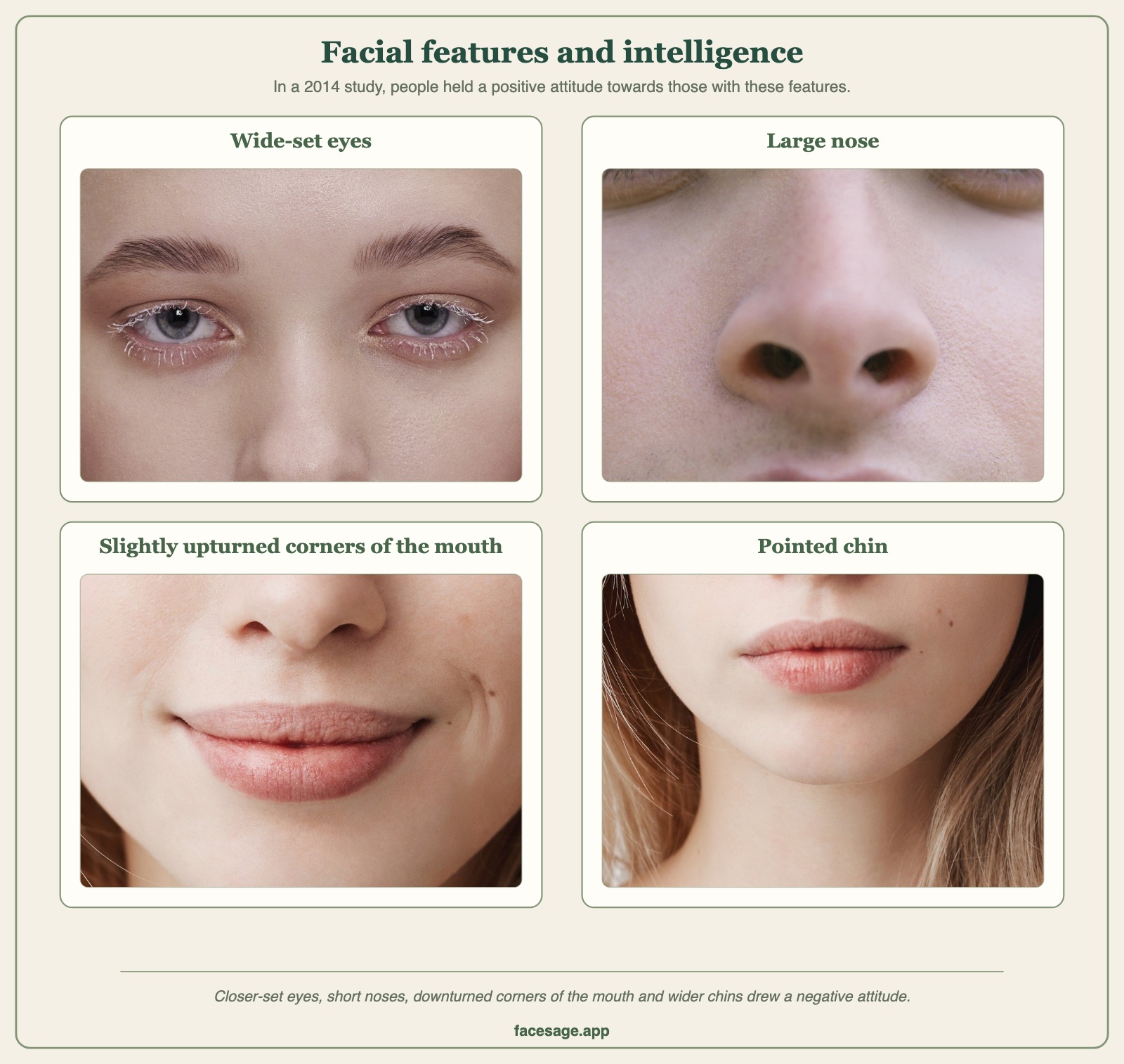
It is undeniable that facial preferences are closely related to the aesthetic trends of the times. This relationship can affect the development of a relationship at least, and a person’s entire life at worst. If the interviewer, parents, and lover all have strong facial preferences, one can imagine what will happen.
Is Leadership Ability Related to Face Width?
Even today, there are still such perceptions that people with wide faces have a dignified appearance, possess leadership qualities, and inspire confidence at first glance. John F. Kennedy is a typical example; conversely, Chester Arthur had a narrower face.
Further analysis based on the actual circumstances reveals that Kennedy was elected President of the United States in his prime, and his political methods were widely regarded as having a strong personal style; while Arthur was generally considered to be more moderate.
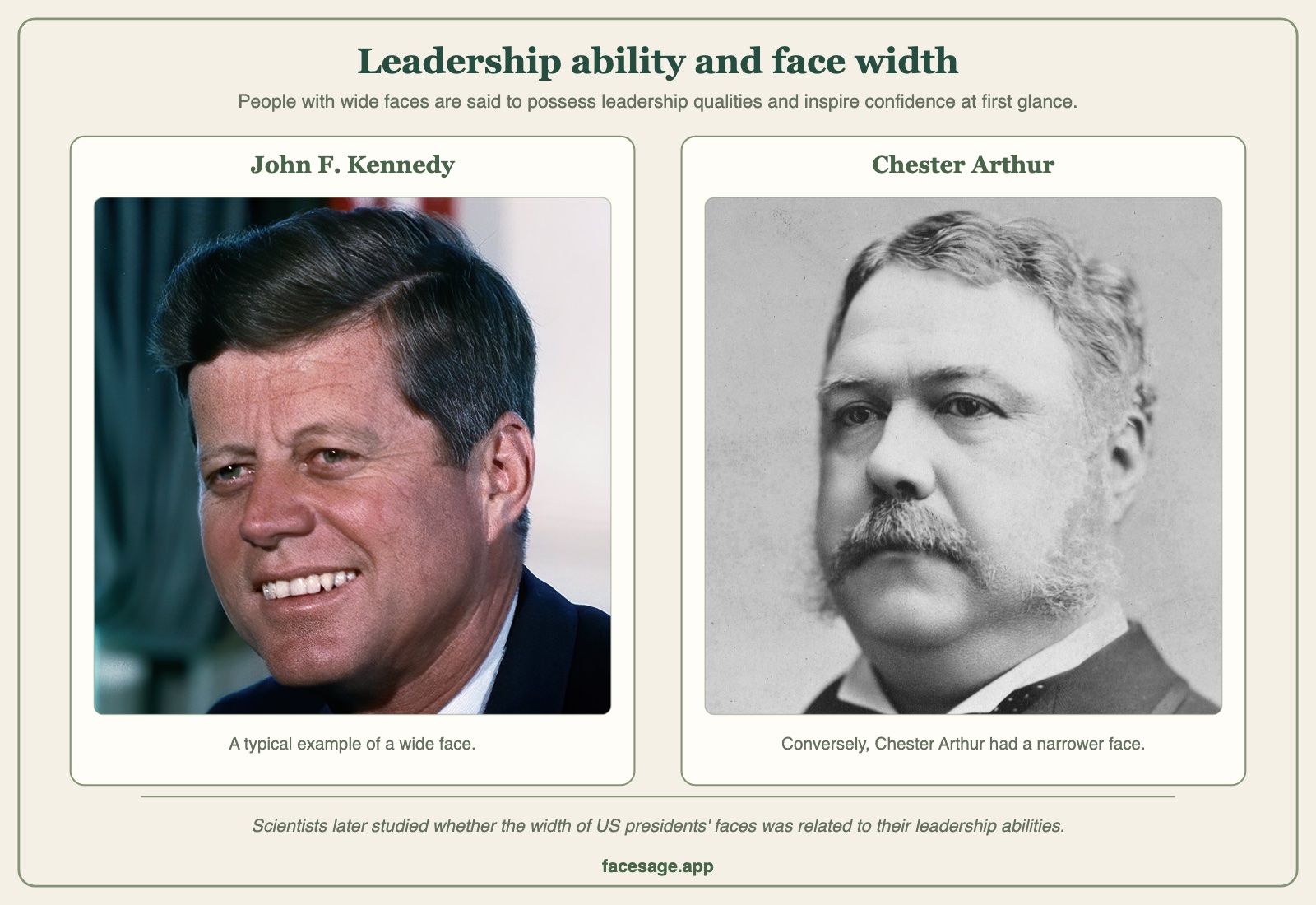
Scientists then continued their research on whether the width of US presidents’ faces was related to their leadership abilities, and found that those with strong administrative skills and political ambitions tended to have wider faces than US presidents.
Should You Judge Personality by the Face?
In conclusion, while these points demonstrate the importance of facial features, the superstitious belief that moles on different parts of the face determine a person’s future makes people’s understanding of facial features increasingly metaphysical.
However, facial features are only one aspect of interpersonal relationships. We should trust in the passage of time and the bonds formed through shared experiences, and approach facial features with objectivity and composure.
References
*Psychology and Life*, *The Works of Aristotle*
Featured on









What people say after a reading
“I ran his photo the night before our first date. It didn’t tell me he was a bad person or my soulmate — it told me to pay attention to whether the plans he suggested actually turned into dates. They didn’t, three times in a row. Having one concrete thing to watch for instead of a vague feeling made the whole thing easier to walk away from.”

“My girlfriend and I tried the couples match half as a joke, six months into our relationship. The section on jealousy and space described a recurring argument we have about weekends almost exactly. Some of the suggested working rules are things we genuinely say to each other now. I didn’t expect that level of accuracy from an app.”

“My roommate got Iron Hawk and I got River Swan, and our group chat talked about nothing else for a week. Everyone ended up sending in their photo. The cards are the fun part, but when you sit down and read your own report privately, some of it is surprisingly specific.”

“I’ve tried and deleted plenty of horoscope-style apps, so my expectations were low. What won me over is what this one doesn’t say. Where my face shows nothing, it says nothing — no filler. And it never claims someone is trustworthy, only how they’re likely to come across to others. Because of that restraint, the parts it did commit to felt earned.”

“I used the friend match before signing a lease with someone I’d only known a couple of months. ‘Who keeps the friendship alive’ and ‘what spending time together looks like’ were questions I hadn’t thought to ask. We went through the potential clash section together, and it turned into the easiest difficult conversation I’ve had. Our house rules actually came out of it.”

Before your first reading
What can your face say about your personality?
Face-reading traditions link features like the eyes, brows, nose, mouth and jaw to personality traits. FaceSage measures those features and shows what the traditions say about yours.
Which features matter most?
The eyes and brows usually carry the most weight, then the nose, mouth and jaw. FaceSage reads them together rather than one at a time.
How is this different from a personality quiz?
There is nothing to fill in. The reading comes from your photo, so you can also try it on someone else, with their permission.
Is FaceSage free?
The scan is free. You get an archetype and six first-impression scores for every photo, with no email or card. The written character, dating, and friendship readings and two-person matches are paid.
Will the person in the photo be notified?
FaceSage does not notify or message the person pictured. Only upload photos you have permission to use.
Do I need to download an app?
No. FaceSage works in your browser on a phone or computer.
What does your face say about you?
Upload one photo and meet your archetype. The scan is free.
Read my face free →No download. No card needed to scan.