What Does Your Nose Shape Say About Your Personality?
“Wealth is revealed in the nose,” a widely circulated folk saying that highlights the central role of the nose in physiognomy. Dear readers, have you ever carefully examined your own nose? It’s not merely an organ for breathing and smelling; the ancients considered it a key window into an individual’s “life information,” carrying many secrets about wealth, health, career, and even marriage. In physiognomy, the nose is called the “Palace of Wealth” or the “Official of Judgment,” located in the center of the face, like Mount Song, the central peak of the Five Sacred Mountains, governing all directions, its importance is self-evident. So, what life codes does this small nose hide? How does it foreshadow our fluctuating fortunes and life’s encounters? Our face reading chart of the palaces shows how the nose works with the other four of the Five Sacred Mountains.
An ancient saying goes, “The nose is like a mountain on the face; a high but not dangerous nose, and a straight nose, indicates wealth.” It also says, “The nose corresponds to the Earth element, governing one’s wealth and fortune.” Clearly, the quality of the nose directly relates to a person’s ability to accumulate wealth, career prospects, and health. When we say someone is “lucky,” we often unconsciously observe their face, and the nose is a crucial element in this observation. A good nose not only enhances one’s overall appearance but also improves one’s fortune. Below, we will categorize and explain in detail the profound meanings behind different nose features.
The Nose Root: The Foundation of the Nose
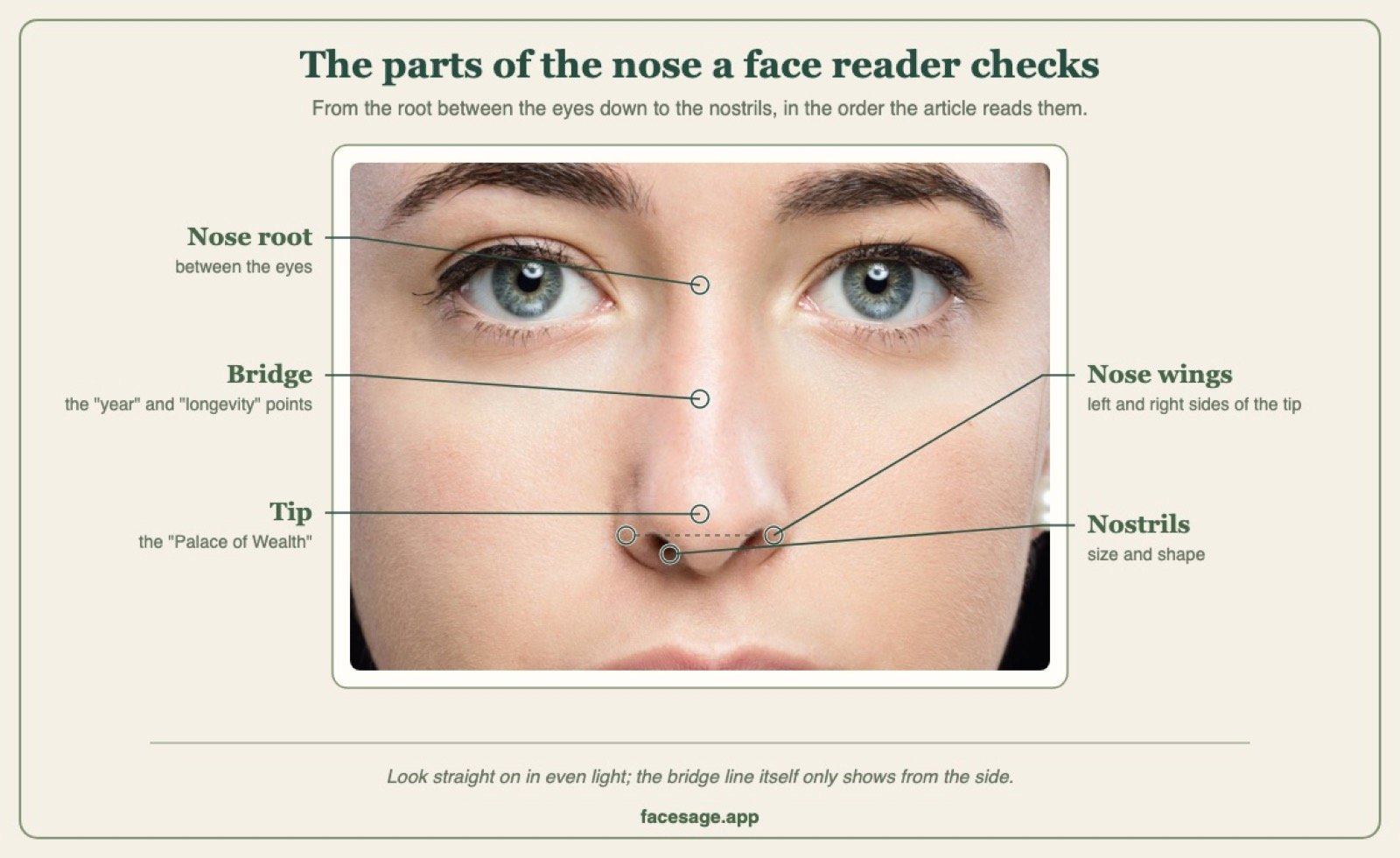
The root of the nose, located between the eyes, is the starting point of the nose, connecting to the glabella above and the area below. In physiognomy, the root of the nose not only represents a person’s ancestral foundation and early life fortune, but is also closely related to heart and lung health and willpower. An ideal root of the nose should be full, straight, without depressions, horizontal lines, or malignant moles.
A Prominent Nose Root
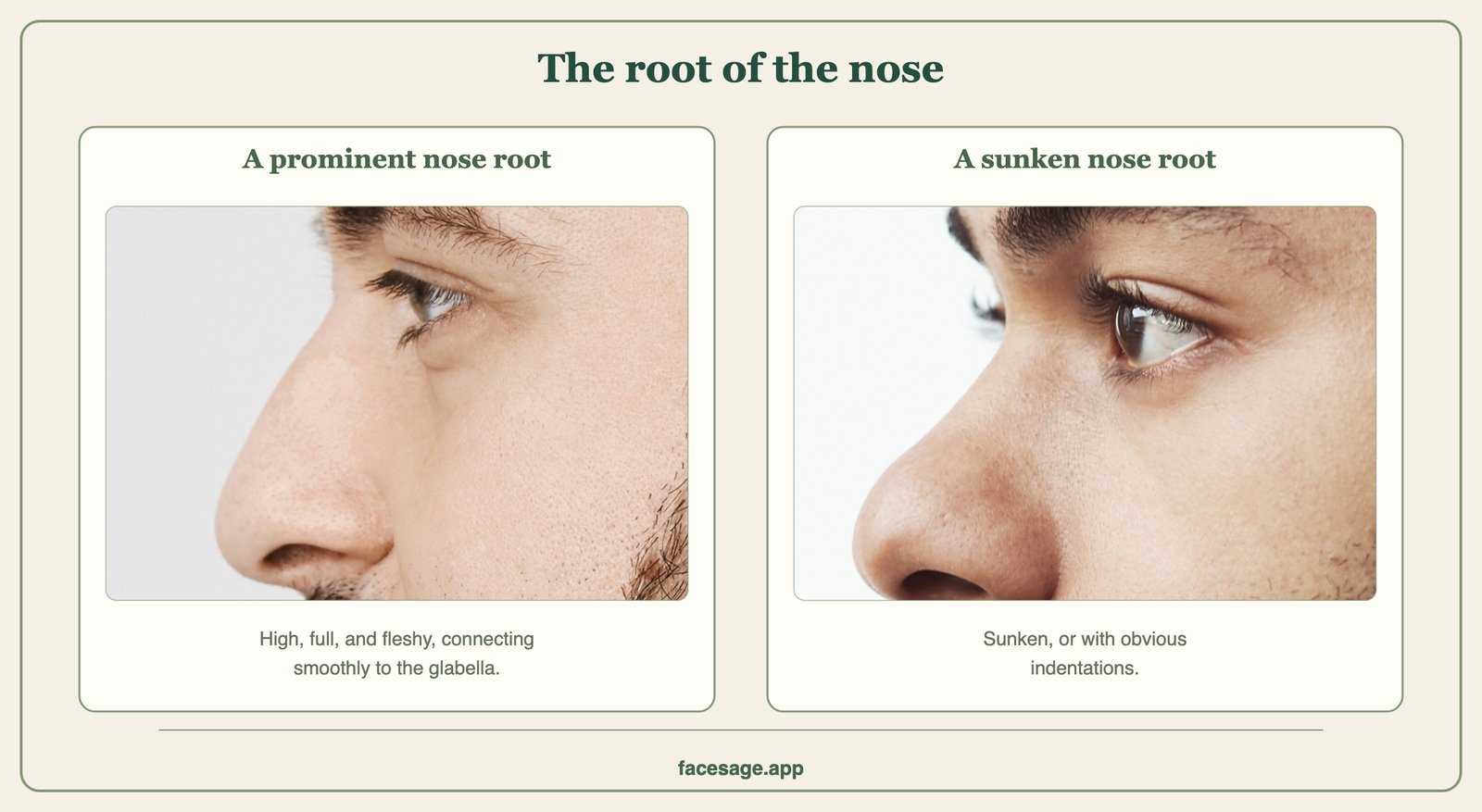
If the root of the nose is high, full, and fleshy, connecting smoothly to the glabella, it indicates a stable foundation, ancestral blessings, high intelligence, and strong self-confidence. Such people usually have smooth early lives, good health, and are likely to receive help from benefactors in their careers, starting from a high point and laying a good foundation for future development. The ancient saying, “A full root of the nose signifies abundant help,” perfectly encapsulates this idea.
A Sunken Nose Root
If the root of the nose is sunken or has obvious indentations, it indicates that the person may have difficulty relying on family inheritance, experience a turbulent early life, lack self-confidence, and have relatively weak willpower. In terms of health, a sunken root of the nose may also suggest slightly weaker cardiopulmonary function, requiring more attention to maintenance. Such people may face some challenges in their career and family life during middle age, especially around the age of forty.
Horizontal Lines on the Nose Root
Obvious horizontal lines on the root of the nose are called “obstacle lines.” One horizontal line indicates a major setback or failure in life; two lines indicate double the setback. These lines often represent obstacles in life, or are related to marital discord or career setbacks. The impact is even more pronounced if combined with other unfavorable features.
Moles or Scars on the Nose Root
Black moles, malignant moles, or noticeable scars on the root of the nose often indicate potential health problems, especially related to the heart. In terms of fortune, they may also experience obstacles, affecting marital harmony or encountering unexpected difficulties in career development. It is important to take steps to mitigate these negative influences and maintain a positive attitude.
A Narrow or Wide Nose Root
A narrow root of the nose often indicates a lack of open-mindedness, a somewhat impatient personality, and a lack of foresight in handling matters. A wide root of the nose, while suggesting a broad mind, may indicate a weak will and susceptibility to external temptations if it lacks fullness. The ideal width of the root of the nose should be in harmony with the distance between the inner corners of the eyes.
The root of the nose is a crucial point in life, carrying not only the “life information” we inherit from our ancestors but also foreshadowing our early experiences in society. A good root of the nose is like laying a solid foundation for the edifice of life.
Nose Bridge Shape and Personality
The bridge of the nose, connecting to the root of the nose and extending to the tip, includes the two sections: the “year” and the “longevity” areas. It primarily represents a person’s fortune in middle age (approximately forty to forty-eight years old), and also reflects their personality, courage, ambition, and the stability of their marital relationships.
A Straight, Full Nose Bridge
A straight, upright nose bridge with flesh covering it, without exposed bone or bumps, is considered an ideal nose shape. People with this type of nose are usually determined, opinionated, upright in their actions, and possess leadership qualities. They enjoy prosperous careers and wealth in middle age, and their marital relationships are also relatively stable and happy, making them typical of successful people.
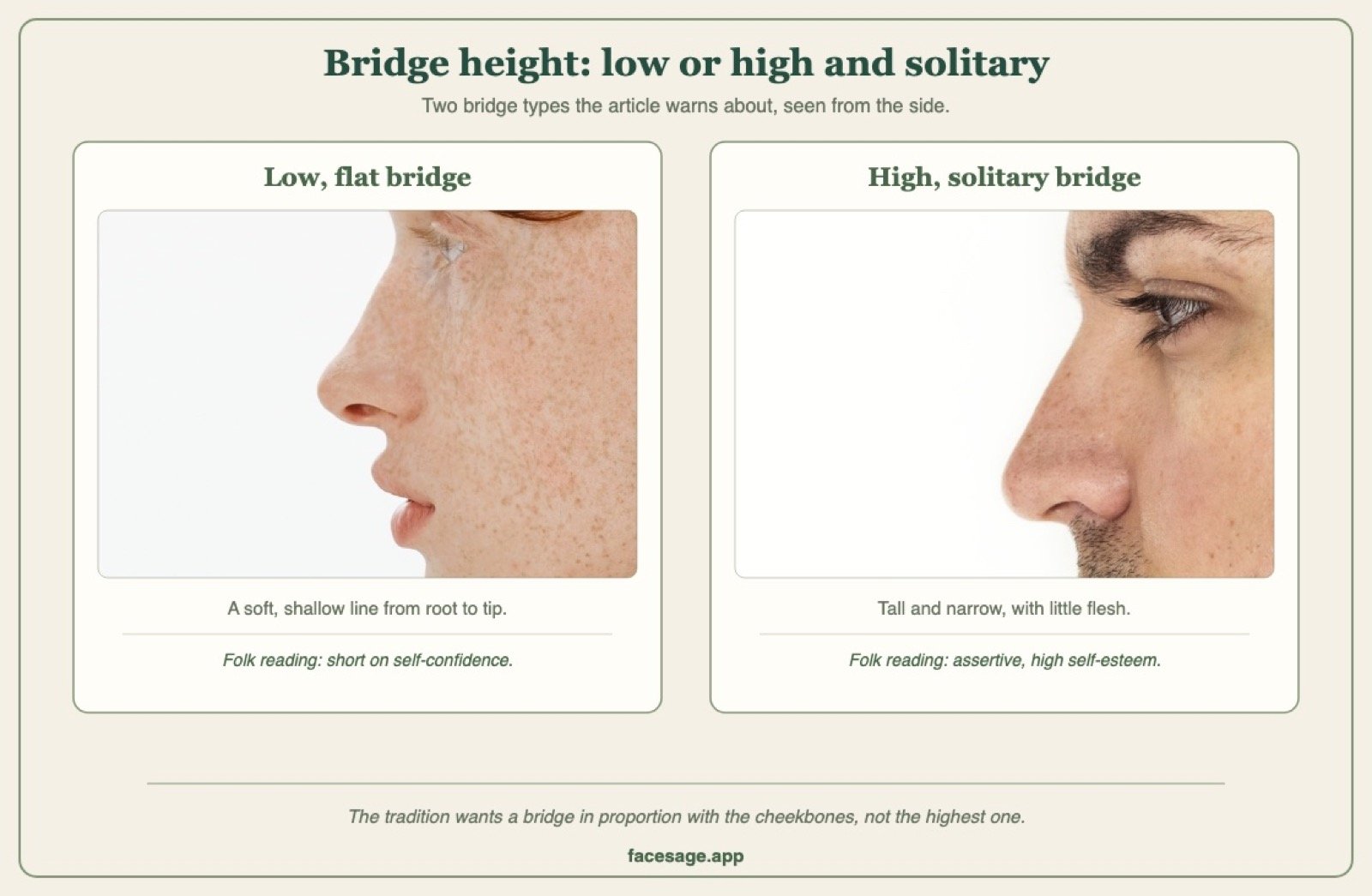
A Low or Flat Nose Bridge
A nose bridge that is too low, or even flat, makes one appear lacking in presence. Such people often lack self-confidence, are somewhat timid, lack independence, and tend to rely on others. They are unlikely to achieve great success in their careers, and their financial fortune is relatively mediocre. For women, a low or flat nose bridge may indicate less favorable marital prospects, requiring them to work harder themselves.
A High, Solitary Nose Bridge
While a high nose bridge is desirable, if it is excessively sharp, thin, and lacks fullness, or if it is disharmony with other facial features, forming a “solitary peak,” it is not considered an auspicious sign. Such individuals often have overly assertive personalities, high self-esteem, are stubborn, and unwilling to listen to others’ opinions. They are prone to setbacks in interpersonal relationships, and their marriages are likely to be turbulent. Although they may possess certain abilities, they are inevitably prone to aloofness and loneliness.
A Crooked Nose Bridge
A nose bridge that is crooked, bends to the left or right, or has a wavy shape is considered unfavorable. A crooked nose bridge may indicate a dishonest nature, extreme thinking, and a tendency to be two-faced. Such individuals often experience changeable circumstances and are prone to marital problems. If the nose bridge deviates to the left, it is unfavorable for the man himself; if it deviates to the right, it is unfavorable for his spouse (the principle of left for men and right for women).
A Bony Bump on the Nose Bridge
This feature indicates a stubborn and headstrong personality, unwilling to admit defeat easily, but sometimes appearing cold and unapproachable. Such individuals are prone to arguments with their partners in marriage, and their fortunes in middle age are often turbulent. For women in particular, a prominent bone joint on the bridge of the nose often foretells marital discord, requiring them to cultivate inner peace and self-control.
Moles or Scars on the Nose Bridge
Moles, spots, or scars on the bridge of the nose (near the root of the nose) indicate potential health problems or accidents during middle age, and may also hinder career and wealth. Specifically, flaws on the bridge of the nose (near the root of the nose) will affect the fortune at ages 44 and 45; flaws on the bridge of the nose (near the tip of the nose) will affect the fortune at ages 46, 47, and 48.
The bridge of the nose, as the pillar of the mid-face, is related to the ups and downs of life during the crucial stages. A good nose can provide strong support for our struggles in middle age.
The Nose Tip: A Hub of Wealth and Character
The tip of the nose is the core of the “Palace of Wealth,” representing a person’s fortune, character, and the beginning of their later years. A round, full, and bright-colored tip of the nose is a symbol of wealth and good fortune.
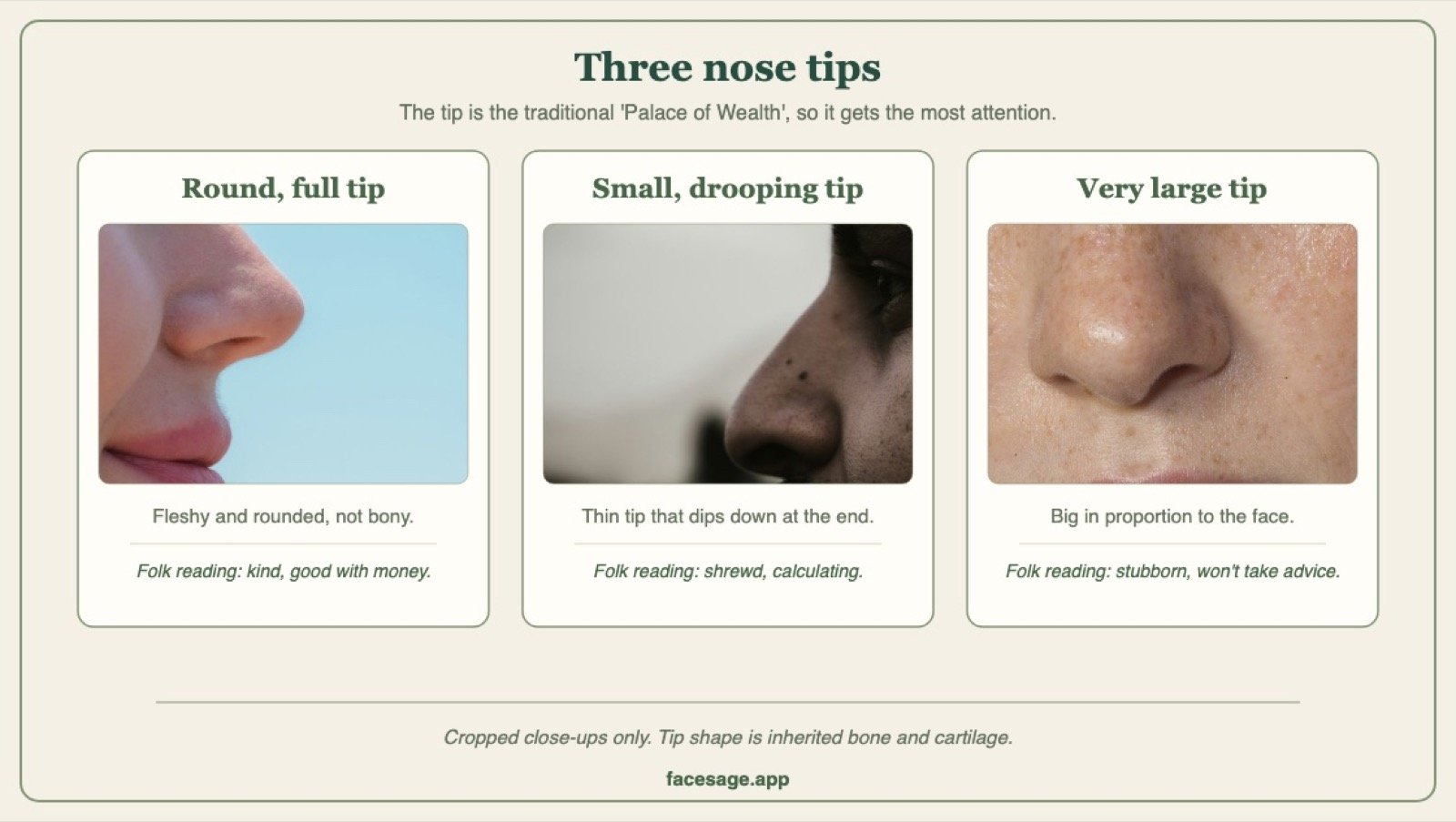
A Round, Full Nose Tip
A nose tip that is round, thick, and fleshy, neither pointed nor bony, resembling a hanging pig’s gall bladder or a cut bamboo tube, is an excellent sign of wealth. Those with this nose are kind-hearted, honest, and upright, enjoy good fortune, are good at saving, and live a prosperous old age. Women with this nose are often considered to bring good fortune to their husbands and children.
A Small, Pointed or Drooping Nose Tip
A small, pointed nose tip with little flesh, sometimes even hooked downwards like an eagle’s beak, is called a “hooked nose.” People with this type of nose are usually shrewd and capable, with a deep mind and a talent for calculation; sometimes they will stop at nothing to achieve their goals. Although they may gain wealth temporarily, they often have poor interpersonal relationships and may face loneliness in their later years. If the small, pointed tip also presses downwards against the philtrum, it may negatively affect their children’s fortune.
An Oversized Nose Tip
While a large nose tip is desirable, if it’s disproportionate to the other facial features and appears too abrupt, it’s not considered perfect. Such individuals may be overly self-centered, stubborn, and unwilling to listen to advice, sometimes appearing reckless. Although they may have earning power, their financial management skills might be somewhat poor.
A Mole on the Nose Tip
A mole on the tip of the nose is often considered a “mole of financial loss” or a “mole of lust.” It signifies a tendency to have unexpected financial losses and difficulty accumulating wealth. In relationships, it may also indicate a promiscuous nature or a predisposition to romantic entanglements and troubles. Women with a mole on the tip of their nose should pay attention to their gynecological health.
The Color of the Nose Tip
The color of the tip of the nose is very important. If the tip of the nose is consistently red, it is called “fire damaging the central hall,” indicating gossip, slander, susceptibility to petty people, and poor fortune. If the color is bright and lustrous yellow, it indicates prosperous fortune and a smooth career. If it is black or dark, it may be a sign of poor health or financial ruin.
Vertical Lines or Scars on the Nose Tip
If there are obvious vertical lines on the tip of the nose (not congenital), they are traditionally called “ruin lines,” which may lead to career failure or financial loss in middle age. If there are scars, they will have an adverse effect on wealth and health, depending on the size and depth of the scar.
The tip of the nose is the convergence point of wealth and also an outward manifestation of one’s character. As the saying goes, “A fleshy nose tip indicates a kind heart,” a good nose tip not only brings wealth but also represents a virtuous character.
The Nose Wings: Guardians of Wealth and Windfalls
The wings, located on either side of the tip of the nose, are collectively known as the “Golden Armor” (or “Golden Armor”), with the left side called Lantai and the right side Tingwei. They represent a person’s financial management skills, savings habits, and luck in windfall gains. Ideally, the wings should be full and fleshy, opening and closing appropriately, and not upturned to expose the nostrils.
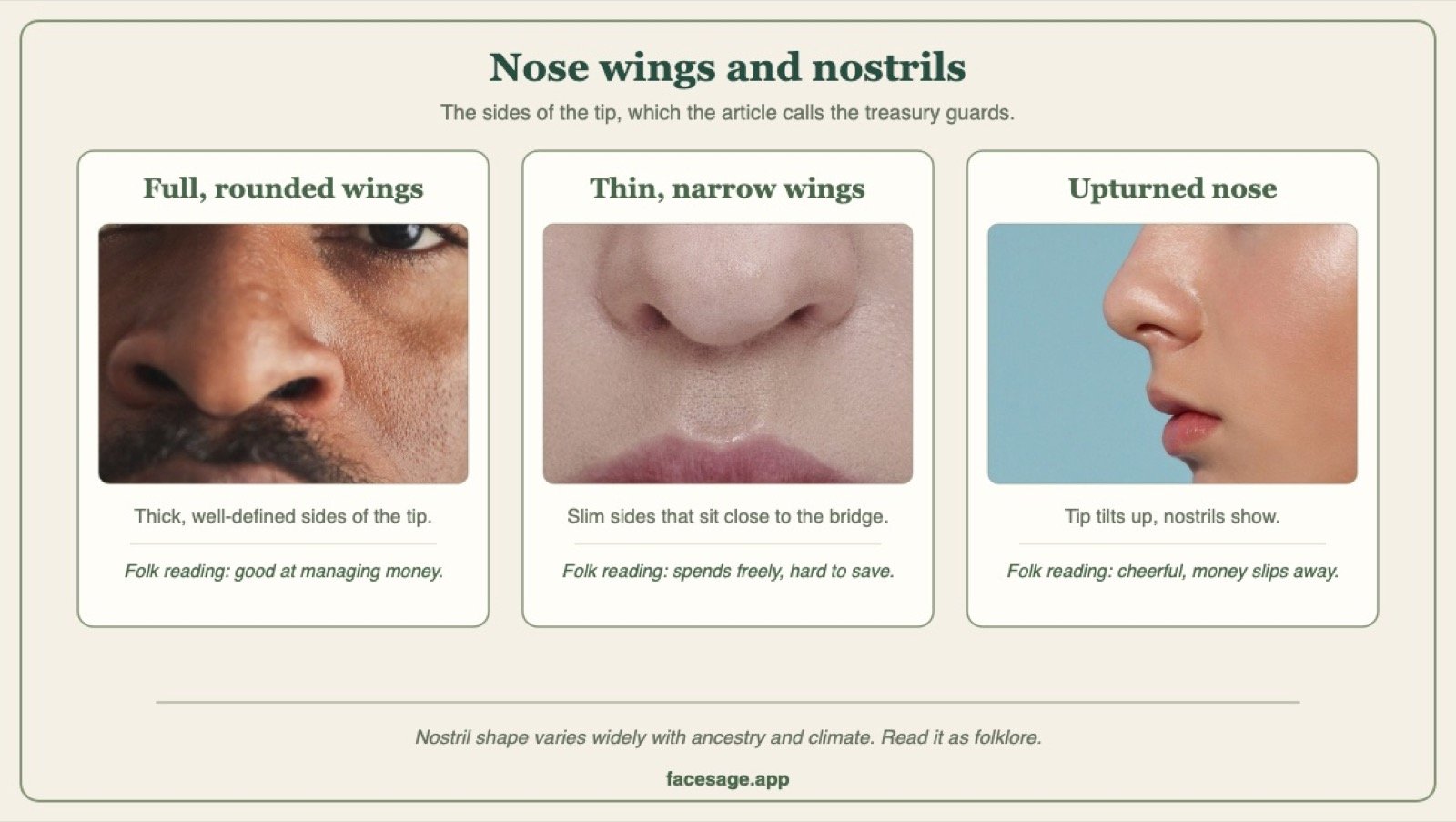
Full, Rounded Nose Wings
Full and thick wings with clear outlines, without exposed nostrils, are a sign of strong financial management skills. People with this feature are shrewd, good at managing money, and able to effectively accumulate their earnings without easily losing it. They usually have a strong sense of responsibility and strong execution ability.
Thin, Narrow Nose Wings
The wings are thin and bony, appearing to lie close to the bridge of the nose and lacking definition. People with this feature often have poor financial management skills, spend money extravagantly, are not good at saving, and easily lose money even if they earn it. They may lack decisiveness and be somewhat hesitant in their actions.
Upturned Nostrils
When viewed from the front, the nostrils are clearly exposed, known as a “leaky nose” or “upturned nose.” People with this feature are generally straightforward and cheerful, not bothered by details, but this also makes them prone to spending money easily, spending money like water, and finding it difficult to accumulate wealth. They may lack long-term planning and tend to be impulsive spenders.
Uneven Nose Wings
The left and right wings are asymmetrical. If the left wing (Lantai) is more prominent and the right wing (Tingwei) is relatively thinner, the person may have better luck with windfall gains and is suitable for investment, side jobs, etc. Conversely, if the right wing is better than the left, the person’s regular income is stable, but their luck with windfall gains is average.
Moles or Scars on the Nose Wings
Moles on the wings of the nose, especially black moles, are often considered “leaky moles,” indicating a damaged financial foundation and susceptibility to financial losses due to unexpected events or the machinations of malicious people. They may also affect gastrointestinal health. Scars can also negatively impact one’s financial foundation.
Firm or Loose Nose Wings
Tight and strong wings indicate strong self-control and the ability to manage money well. If the wings appear loose and weak, it may indicate a lack of willpower and susceptibility to external temptations that lead to financial loss.
The Lantai and Tingwei areas are like guardian deities of the treasury; their shapes directly relate to whether we can safeguard the wealth we’ve worked so hard to earn. Well-formed wings can contribute to and protect our wealth.
The Nostrils: Breathing and Spending Habits
The nostrils are the passage for air to enter and exit, and also symbolize a person’s courage, consumption habits, and degree of acceptance of the outside world.
Moderately Sized Nostrils
The size of the nostrils is in harmony with the overall nose and face, neither too large nor too small. People with this feature usually have a rational spending habit, are moderate in their income and expenditure, know how to enjoy life, and do not overspend.
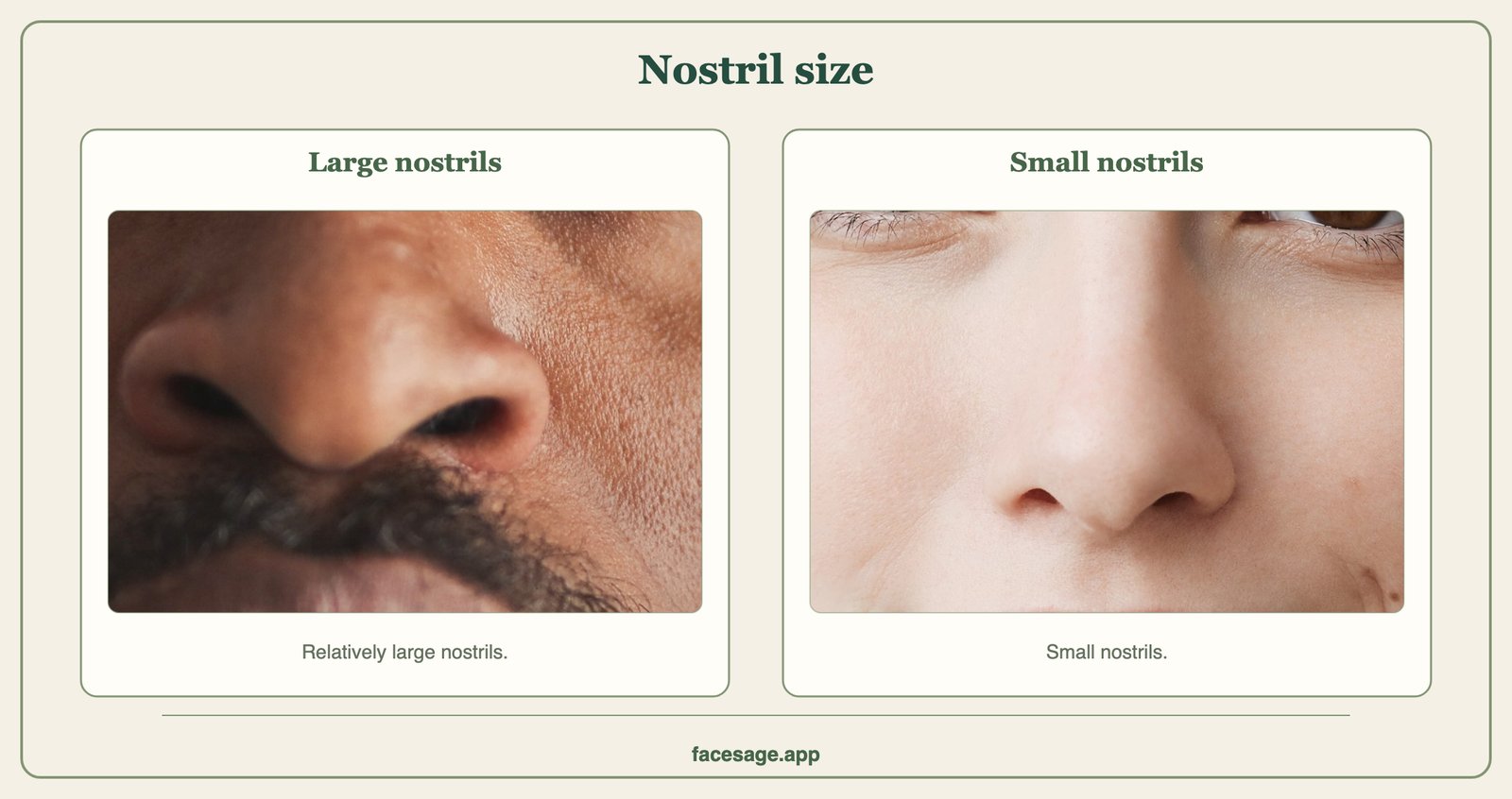
Large Nostrils
People with relatively large nostrils tend to be generous, easygoing, and spend money lavishly, sometimes to the point of being wasteful. They are decisive and adventurous, but this may also lead them to take on greater risks.
Small Nostrils
People with small nostrils are usually meticulous and cautious in their actions, but they may also appear narrow-minded and somewhat stingy. They are frugal in their spending and do not spend money easily, but sometimes their overly conservative approach may cause them to miss opportunities.
Nostril Shape
Nostrils that are slightly oval or teardrop-shaped are ideal. If the nostrils are irregularly shaped, or too flat or pointed, it may indicate deficiencies in personality or fortune.
Visible Nose Hair
Overly long nasal hairs that protrude from the nostrils not only affect appearance but are also considered in face reading to indicate “financial loss” and unnecessary expenses. They should be trimmed.
Although the nostrils are small, they are a window into a person’s inner character and outward behavior. They are closely related to our breathing and indirectly reflect our attitude towards life.
How the Nose Works With Other Facial Features
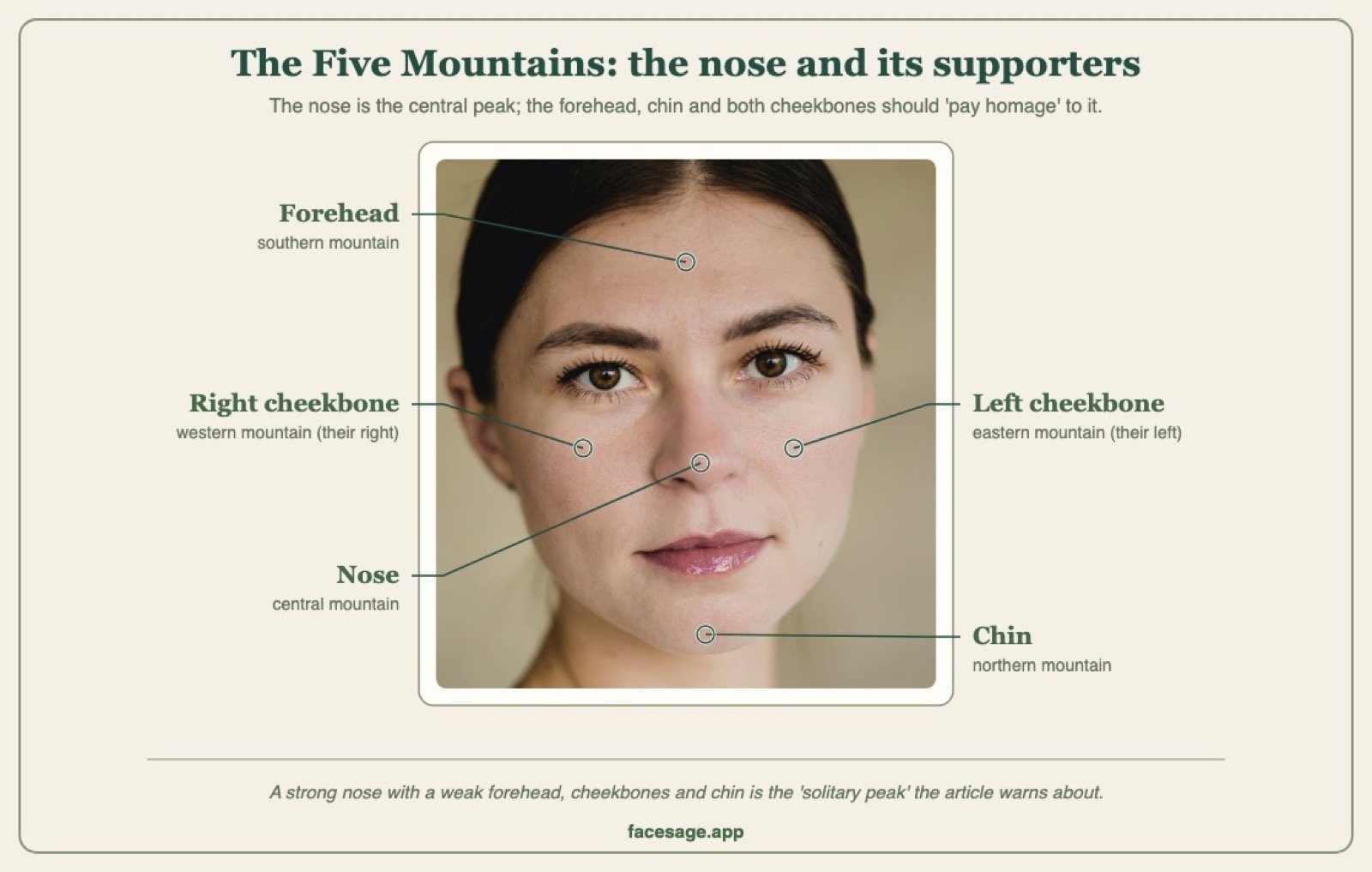
In physiognomy, overall harmony is emphasized, and the “Five Sacred Mountains Paying Homage” principle is a key element. The nose represents Mount Song (Central Sacred Mountain), the forehead Mount Heng (Southern Sacred Mountain), the chin Mount Heng (Northern Sacred Mountain), the left cheekbone Mount Tai (Eastern Sacred Mountain), and the right cheekbone Mount Hua (Western Sacred Mountain). For the Central Sacred Mountain to be considered auspicious, it must be protected and supported by the other four mountains.
The Solitary Peak Nose
If the nose itself is well-formed, high and full, but the forehead is low and narrow, the cheekbones are sunken, and the chin is pointed and short, it forms the “solitary peak” configuration. This means that although the person has certain abilities or talents, they lack capable assistants and a good interpersonal environment, making it easy for them to fight alone, achieve limited success, and may even encounter setbacks in middle age.
A Large Face and a Small Nose
The face is large, while the nose appears relatively small and disproportionate. People with this feature often lack self-confidence, are not capable enough to manage situations, and lack decisiveness. Women with this feature are often destined for a life of hard work, find it difficult to enjoy marital bliss, and must do everything themselves.
Nose and Cheekbone Proportion
The harmony between the nose and cheekbones is crucial. A high nose and low cheekbones indicate a tendency towards self-admiration and a lack of support; a low nose and high cheekbones may suggest subservience or a wife usurping the husband’s authority. Ideally, a full nose and prominent cheekbones, in harmony, indicate a strong sense of control, career success, and good interpersonal relationships.
Nose and Mouth Harmony
The distance between the tip of the nose and the lips, as well as the shape of the philtrum, also affect one’s fortune. If the tip of the nose droops down and presses down on the philtrum, it may affect one’s fortune with children and in old age. A clear and deep philtrum, combined with a good nose shape, indicates longevity and good fortune.
Facial features are an organic whole. Although the nose is the “Palace of Wealth,” its function cannot be realized without the coordination and support of other parts. Only when all parts are in harmony and flow smoothly can a truly excellent “picture of wealth and prosperity” be formed.
Nose Color: Early Warnings of Change
Besides its static appearance, changes in the complexion of the nose are also an important indicator of one’s fortune and health. Complexion is dynamic; it changes with a person’s physical and mental state and the external environment.
A Bright Yellow Glow
This is the best complexion, indicating prosperous wealth, a successful career, and good physical and mental health. If the yellow has a hint of purple, it is even more auspicious, indicating unexpected joy or a major breakthrough.

A Reddish Color
If the nose, especially the tip, frequently appears abnormally red, or even has blood streaks, it indicates that you are prone to gossip, legal troubles, or financial losses due to emotional distress. Rosacea is a different story, but persistent redness and swelling is also not a good sign.
A Bluish or Dark Color
A bluish or dark complexion on the nose indicates illness, worries, or stagnant fortune. Bluish is often associated with the liver and gallbladder and may also foreshadow disputes. Darkness represents a period of low fortune and general misfortune.
A Smoky, Blackened Color
If a smoky, blackened appearance appears on the nose, this is a very ominous sign, possibly indicating an impending serious illness, major disaster, or bankruptcy. Immediate vigilance is necessary; adjust your lifestyle and be cautious in your words and actions.
A Pale, Bloodless Color
If the nose is pale and bloodless, like withered bones, it indicates poverty and illness, and a decline in fortune.
Observing one’s complexion should be done under natural light when one is calm and at peace. Changes in complexion are often a barometer of one’s recent fortune; timely awareness and appropriate adjustments may help to avoid misfortune and attract good fortune.

Final Thoughts on Nose Shape and Personality
The nose, though small, truly holds endless mysteries. By observing and interpreting the shape of the nose, we can not only gain a preliminary understanding of our own fortune, health, career, and personality, but also draw upon the wisdom of the ancients to guide our daily lives.
However, we must understand that “appearance reflects the heart, and circumstances change with the mind.” Facial features are not immutable fatalism; rather, they are more like a “factory setup” blueprint for life. Our efforts, moral cultivation, and mindset adjustments can, to some extent, alter and optimize this blueprint. Even if one’s nose is not naturally perfect, as long as we maintain kind intentions, strive for progress, are willing to help others, and accumulate good karma, our facial features and complexion will improve, and our fortune will naturally develop in a positive direction.
I hope today’s sharing will give you a new understanding of your “Palace of Wealth.” Pay attention to your nose regularly, not only for aesthetics, but also for the “life information” it conveys. May everyone have a healthy, full, and radiant nose, ushering in a new chapter of wealth and good fortune! Remember, understanding the code of destiny is to better create your own. True wealth lies not only in material abundance, but also in inner peace and wisdom.
Keep reading
What Is Face Reading and What Can It Tell You?
What Is Face Reading (Physiognomy)? Physiognomy is a folk art of fortune-telling that involves observing a person’s facial features, and strictly speaking,…
The Face Reading Chart Guide to the Twelve Palaces
“If you have a heart but no appearance, your appearance will follow your heart; if you have an appearance but no heart,…