
Abstract: This article revolves around the important proposition of “The Book of Physiognomy: Mizuno Nanboku,” exploring its multi-dimensional connotations in detail. It systematically analyzes Mizuno Nanboku’s “The Book of Physiognomy” from four aspects: historical background, ideological content, practical application, and its influence on later generations. First, the article introduces Mizuno Nanboku’s life and his connection to the theory of physiognomy. Then, it delves into the unique position of “The Book of Physiognomy” within traditional physiognomy, further analyzing its profound impact on society and culture. Finally, it examines the applicability and development potential of this theory from a modern perspective. Through these layers of analysis, the article comprehensively reveals how Mizuno Nanboku, through “The Book of Physiognomy,” combined physiognomy with a philosophy of life, promoting the theoretical advancement of physiognomy and thus influencing the development of various aspects of culture and society.
Mizuno Nanboku and the History of Japanese Face Reading
Mizuno Nanboku (1761-1823), a renowned physiognomist of the Edo period in Japan, led a legendary academic career. Nanboku was not only a physiognomist but also a philosopher and historian. Born into a samurai family, he displayed a strong interest in scholarship from a young age, particularly in physiognomy. Nanboku’s theory of physiognomy not only incorporated traditional face reading but also integrated various academic ideas such as Yin-Yang and Five Elements theory, and fortune-telling, thus constructing a systematic theory of physiognomy. His work, *Sōhō Ekiseiki* (Record of Physiognomy), has become a classic in physiognomy research, exerting a profound influence.
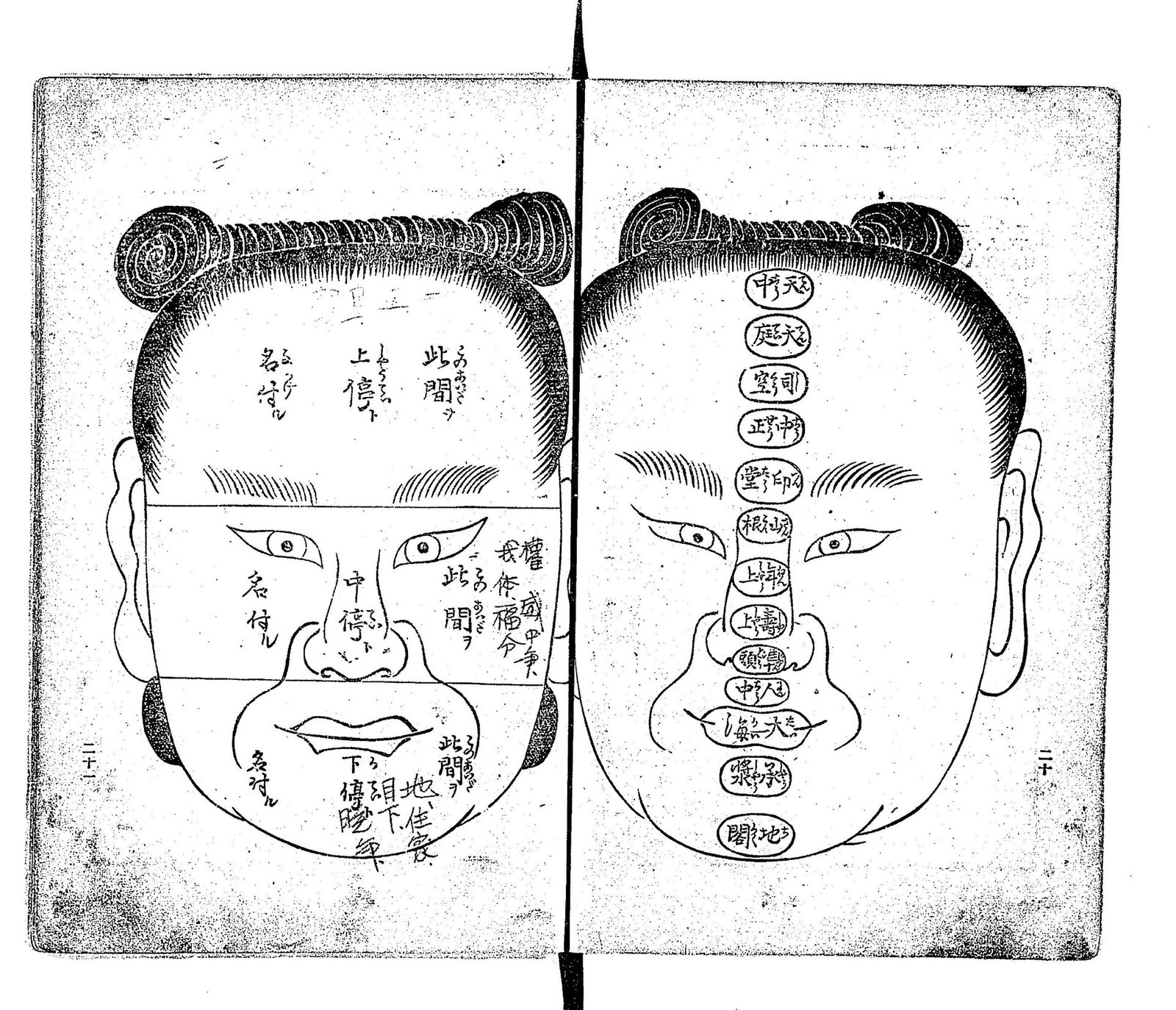
In Mizuno Nanboku’s time, physiognomy already had a long history in Japan, but most schools remained at the level of superficial observation, lacking systematicity and depth. Mizuno Nanboku broke through this limitation. Through in-depth research of historical documents and a re-examination of ancient physiognomy, he proposed the core concept of “physiognomy as a record of life.” This theory posits that human facial features not only reflect an individual’s physical characteristics but can also, through meticulous observation, reveal a person’s character, destiny, and even their deepest thoughts and emotions. Much of East Asian face reading grew from the Chinese Mian Xiang system, which reads the forehead, eyes, nose, mouth and ears one by one.
Mizuno Nanboku’s physiognomy theory broke through the narrowness of previous physiognomy, endowing it with deeper philosophical significance. His academic career thus provided rich ideas and methods for later generations of physiognomy theory and practice. Through “The Book of Physiognomy,” Mizuno Nanboku combined traditional physiognomy with a philosophy of life, proposing that physiognomy is not merely a tool for divination, but also a wise path to self-understanding and comprehending others.
Mizuno Nanboku’s Core Idea: Your Face Records Your Life
“The Book of Physiognomy” is one of Mizuno Nanboku’s most representative works, with its core ideas lying in the deepening of physiognomy theory. Unlike traditional physiognomy theories, Nanboku’s doctrine emphasizes that “the face is destiny,” meaning that changes in facial features are directly related to a person’s inner character and fate. He believed that the face is not merely an outward expression, but also reflects a person’s psychological activities and inner temperament at a deeper level. Differences in facial features can reveal multi-dimensional information about a person’s personality, emotions, and potential.
The *Xiangfa Yisheng Ji* further proposed the view that “one’s temperament determines one’s appearance.” This view profoundly influenced later generations’ research and practice of physiognomy. Nanboku believed that a person’s psychological activities and inner state of mind could be expressed through subtle changes in their face, and these changes were closely related to an individual’s destiny. Therefore, changes in facial features could predict the future; through observation and analysis of facial features, one could deduce an individual’s future achievements and experiences.
Furthermore, in his book *Sōhō Ekiseiki*, Mizuno Nanboku proposed the idea that “physiognomy is imbued with emotion.” He believed that facial analysis should be interpreted in conjunction with an individual’s emotional world, emphasizing “observing the face through emotion,” that is, analyzing changes in facial features through shifts in emotions. Nanboku argued that facial features are not merely static; they change with an individual’s emotions, state of mind, and experiences, and these changes reflect the ups and downs of a person’s destiny.
How Japanese Face Reading Was Used in Practice
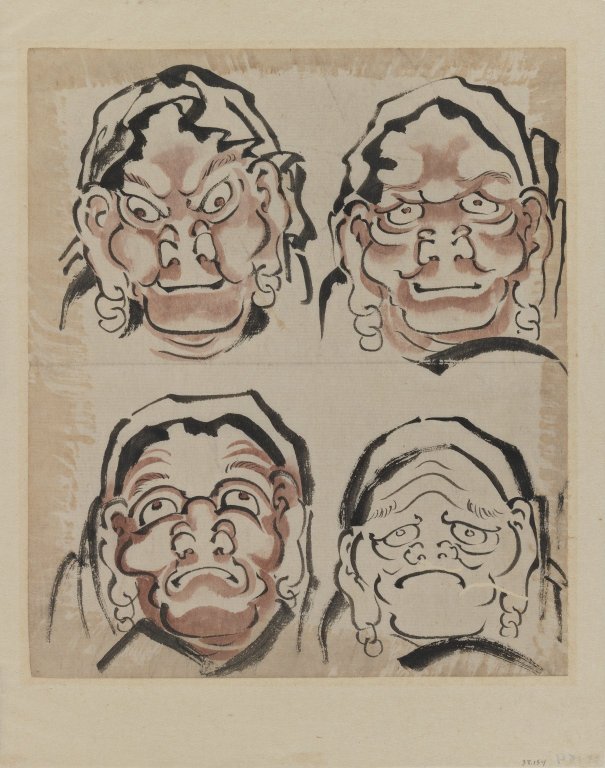
Mizuno Nanboku’s *Sōhō Ekiseiki* (Record of Physiognomy) not only possesses profound theoretical value but also demonstrates immense influence in practical application. During the Edo period, Nanboku’s teachings began to be widely used at all levels of society, particularly in politics and business. Many officials and merchants relied on Nanboku’s physiognomy to select talent and predict the course of events. Nanboku’s teachings became a social tool, helping people make decisions in complex social environments. One Japanese term still common in face reading is sanpaku, meaning three whites, and the traditional meaning of yin sanpaku eyes explains what white showing above or below the iris is said to signal.
The practical application of *The Book of Physiognomy* extends beyond predicting individual destinies to include the operation of collective organizations. For example, the North and South used physiognomy to help influential politicians analyze the character and potential moves of their opponents, thus gaining a strategic advantage in political struggles. The business world also employed physiognomy to select partners or assess the feasibility of investment projects. In this context, physiognomy gradually became part of social decision-making.
Furthermore, Nanboku’s physiognomy also influenced Japanese culture and art. His theories were adopted by some artists to analyze character traits, thus creating more vivid characters. In literature and drama, Nanboku’s physiognomy was seen as an effective means of revealing the inner world of characters, thereby influencing Japanese literary and dramatic traditions.
The Lasting Influence of Japanese Face Reading Today
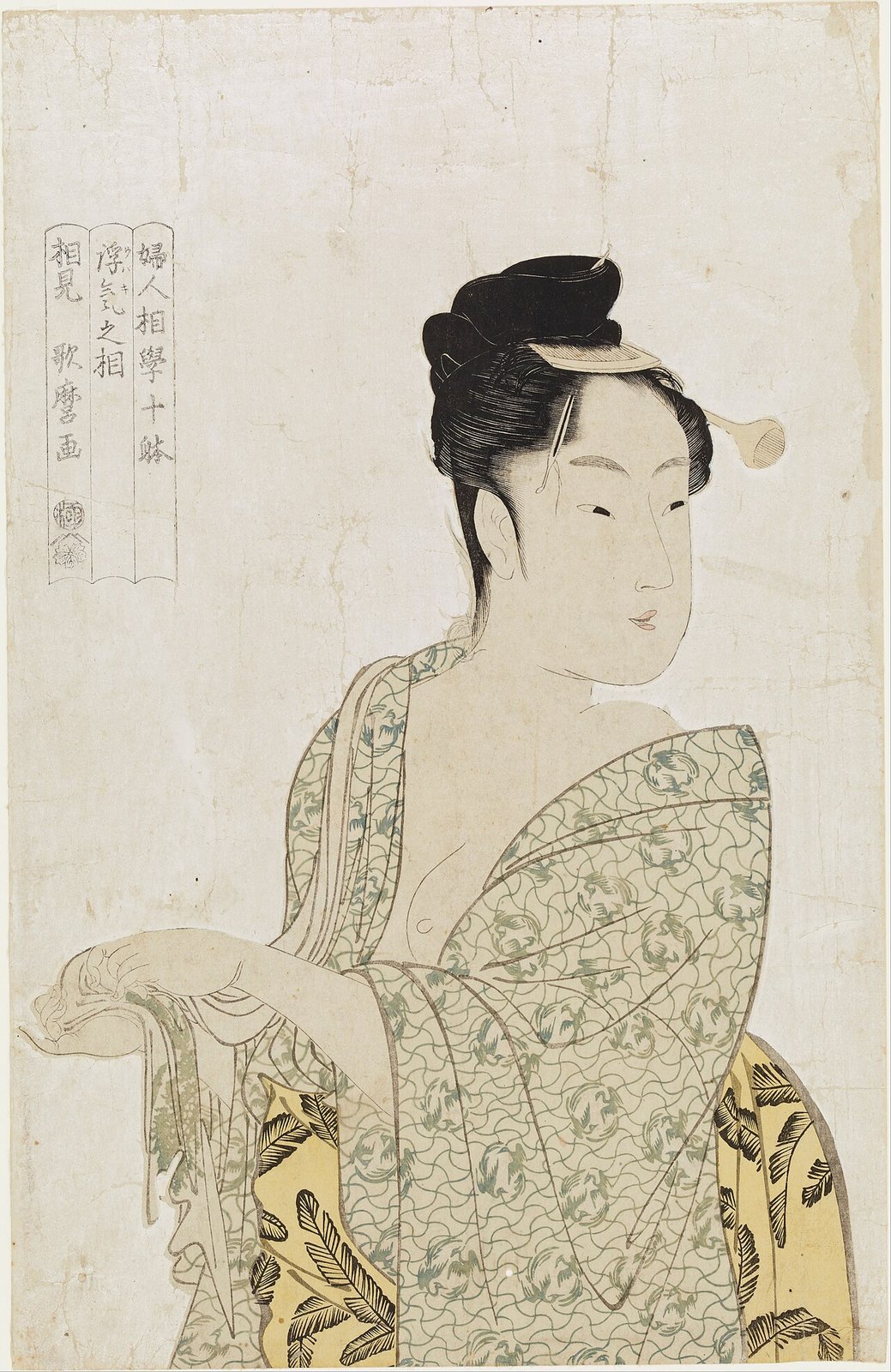
The *Xiangfa Yisheng Ji* had a profound influence on later generations. The doctrines of both the North and South not only spread widely in Japan but also entered China, Korea, and other regions, becoming an important part of East Asian physiognomy. In Japan, the doctrines of both the North and South underwent multiple transmissions and developments, forming various schools based on “physiognomy.” These schools occupy important positions in modern Japanese divination, fortune-telling, and psychology. Korea kept its own variations, and Korean face reading, known as gwansang, links the upper, middle and lower face to different stages of life.
In modern society, with the advancement of technology, traditional physiognomy theories have gradually been questioned. However, the “physiognomy of life” still provides valuable insights for many. In disciplines such as psychology, emotional studies, and personality analysis, the “face reveals personality” viewpoint from both the North and South still holds some reference value. Especially in psychological counseling and career planning, physiognomy analysis is often used as a supplementary tool to understand a person’s personality traits.
Furthermore, the influence of *Xiangfa Yisheng Ji* on modern culture remains undeniable. It not only influenced people’s understanding of physiognomy but also promoted societal attention to fields such as psychology and behavioral science. Today, although the practicality of physiognomy is challenged, it still holds a place in philosophical and cultural spheres, serving as an important tool for exploring human nature and destiny.
Final Thoughts on Japanese Face Reading (Ninsō)
In summary, Mizuno Nanboku’s “The Book of Physiognomy” is not only an important classic in the field of physiognomy, but also a work that integrates philosophy, psychology, and fortune-telling. Its core ideas broke through the limitations of traditional physiognomy at the time, and promoted the development of physiognomy by deeply exploring the connection between physiognomy and destiny.
While the practical application of physiognomy decreased in later generations, *The Book of Physiognomy* remained profoundly influential, particularly in fields such as culture and psychology, providing important perspectives and methodologies. It is not merely an academic work, but a crystallization of life wisdom, worthy of our deep reflection and emulation in modern society.
References
Keep reading

How Mian Xiang Chinese Face Reading Uses Your 5 Facial Features
Facial features are not just for predicting good or bad fortune; they can also help us understand our innate traits, personality weaknesses,…
Korean Face Reading (Gwansang): The Complete Guide
Korean face reading, or gwansang (관상), interprets facial features through traditional ideas about character, fortune, and the course of a life. A…