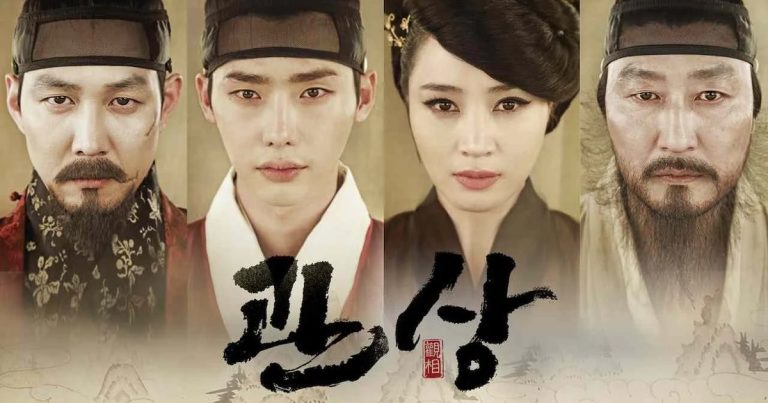
Korean face reading, or gwansang (관상), interprets facial features through traditional ideas about character, fortune, and the course of a life. A forehead might introduce a discussion of family background; a nose might turn the conversation toward money. Learning these associations gives you a way into a tradition that connects physical appearance with life’s enduring questions.
If you discovered gwansang through Korean cinema or a reading online, start with its vocabulary. The interesting detail lies in how a reader connects individual features, the whole face, and different stages of life. Because gwansang draws on systems developed in China, Chinese Mian Xiang face reading is useful background for that vocabulary.
What gwansang means in Korean tradition
The National Institute of Korean Language lists 관상 with the Chinese characters 觀相 and translates it as “physiognomy.” Its Korean-English dictionary entry covers both facial appearance understood through this tradition and the act of interpreting it. Gwansang names the practice; gwansangga (관상가) is a term for a face reader.
Its history belongs to a wider East Asian exchange. Folklorist Cho Hung-youn’s Encyclopedia of Korean Culture account of gwansang explains that the systems circulating across East Asia were developed in China. His description draws on the physiognomic text Ma-ui sangbeop (麻衣相法), while also documenting Korean variations. For example, he describes a Korean approach called ilwolgak with a different arrangement of elemental correspondences. A Chinese face chart can offer useful context, but it cannot stand in for every Korean method. Japan developed its own line as well, and Japanese face reading (ninsō) follows the Edo-period teacher Mizuno Nanboku, who held that a face records how a person lives.
You may also encounter saju (사주). That practice uses the year, month, day, and time of birth—the four components identified in the encyclopedia’s discussion of birth-based divination. Gwansang begins with appearance. Readers sometimes combine them, so knowing the difference helps you understand which part of a consultation an interpretation comes from.
How a reader moves through the face
An accessible introduction comes from Korean practitioner and columnist Janet Shin. In her explanation of saju and face reading, she describes observing posture, body language, and voice as well as facial structure. An in-person reading can therefore involve more than examining a photograph.
Shin organizes the face into three regions:
- Upper face: The forehead through the eyebrows concerns early life, inherited circumstances, and reputation.
- Middle face: The area from the eyelids to the nose tip concerns the middle years, including career, money, marriage, and ambition.
- Lower face: The region below the nose toward the chin concerns later life and the upkeep of property and relationships.
This gives the reading a sequence. Moving down the face takes the interpretation from life’s beginnings toward what a person builds and maintains over time.
Within those regions, smaller features introduce particular themes. Shin’s published feature guide supplies four useful examples:
- Forehead: Its traditional associations include parents, career, reputation, and the fortune someone starts life with.
- Eyes and the surrounding area: Shin connects this region with love, marriage, and children. The eye area brings relationships into the reading.
- Nose wings: The sides around the nostrils are associated with wealth, the movement of money, and readily available assets.
- Chin: Its associations include real estate, employees, and popularity, extending the reading toward property and connections with other people.
Notice the distinction between money in circulation and property held over time. Even within one broad topic such as wealth, this account assigns different roles to different features.
Shin also uses a memorable image: the nose tip as a purse holding money. In the same discussion of facial harmony, she emphasizes the relationship between features and distinguishes favorable physiognomy from fashionable attractiveness. “Auspicious” means favorable within the reading’s symbolic framework; it isn’t simply another word for beautiful.
Imagine a hypothetical reading focused on resources. Following these associations, its discussion might move from the nose to the chin, connecting financial flow with longer-term holdings. That example shows how the vocabulary joins up. A single feature is only one part of the interpretation.
Gwansang in Korean stories and contemporary life
Face reading offers storytellers a compelling question: can someone recognize a future that others cannot yet see? Cho’s cultural overview identifies physiognomic descriptions in the classical novel The Cloud Dream of the Nine (Guunmong) and in Korean proverbs. The tradition has a literary life alongside its role in consultations.
The film The Face Reader (2013) brings that question into Joseon court politics. Directed by Han Jae-rim and starring Song Kang-ho, it follows Nae-kyeong, whose reading abilities draw him into a struggle over the throne. The Korean Film Council’s film entry provides the credits and synopsis. Its extraordinary predictions belong to the drama’s fictional premise. Our review of The Face Reader separates the film’s real cultural background from its invented reading abilities.
A smaller-scale encounter appears in a 2025 Korea Times feature, which follows host Yasmin’s visit to practitioner Kim Min-jung. Kim presents self-understanding as part of the reading’s purpose. That is one practitioner’s approach, rather than a picture of what all Koreans believe. It illustrates how the same tradition can support a personal conversation as well as a cinematic story about destiny.
What to take from your first reading
Gwansang offers a rich set of traditional interpretations, but these feature meanings aren’t established personality measurements or reliable forecasts of an individual’s future. Research on facial first impressions addresses a related question: people can agree about the impression a face creates without accurately knowing its owner. A review by Alexander Todorov and colleagues explains this distinction and argues that the accuracy of such judgments has been overstated. It is not a direct test of gwansang.
Approach a reading with a topic you want to explore. Ask the reader to explain how a feature connects to an interpretation and how it fits the surrounding features. If two explanations differ, the contrast can help you understand each reader’s method. Your experience gives you the basis for deciding what feels relevant and what misses.
Curious to move from learning the vocabulary to exploring a reading yourself? Try FaceSage as an introduction to personal face-reading interpretations. Bring your interest in gwansang’s connections between features and life themes, and compare the explanations with what you’ve learned here. Understanding how an interpretation is formed makes the encounter more interesting than collecting a prediction alone.
Keep reading
How Mian Xiang Chinese Face Reading Uses Your 5 Facial Features
Facial features are not just for predicting good or bad fortune; they can also help us understand our innate traits, personality weaknesses,…
Samudrika Shastra: The Indian Art of Face Reading
Samudrika Shastra is an Indian tradition that interprets bodily features as signs of character, life circumstances, and fortune. Face reading is one…