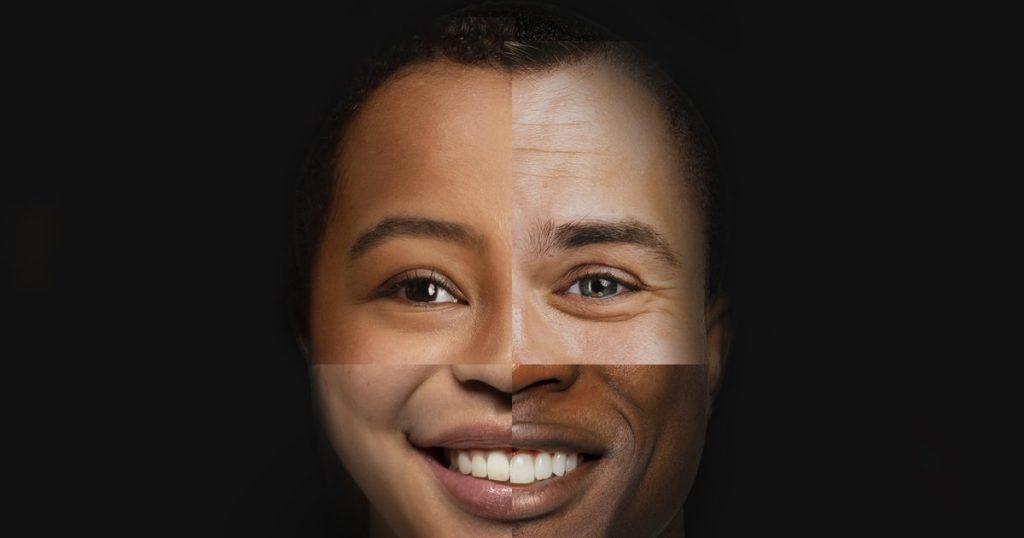
Facial features are not just for predicting good or bad fortune; they can also help us understand our innate traits, personality weaknesses, and fortune tendencies. This self-assessment guide focuses on five areas: the forehead, eyes, nose, mouth, and ears, teaching you to identify your facial strengths and areas for improvement. A reminder: facial features should not be interpreted in isolation; a single feature cannot be used to draw definitive conclusions. This is for general reference only.
A Practical Way to Learn Face Reading
Hello everyone, it’s been a while since I wrote an article on face reading.
This time, we’re bringing you a more down-to-earth self-examination guide for your face, avoiding complicated jargon and arbitrary predictions. Instead, we’ll guide you step-by-step on how to observe five key areas of your face: forehead, eyes, nose, mouth, and ears.
Through these areas, we can see more clearly our innate strengths, personality traits, and areas that need adjustment and improvement.
The Golden Rule: Never Judge by One Feature
Before reading, remember this sentence:
A comprehensive assessment of facial features is necessary; one cannot directly determine good or bad fortune based on a single feature.
A good feature in one area doesn’t mean a good person in general; a flaw in one area doesn’t mean a complete failure in life. Facial features are more like a “personality and fortune manual,” helping us understand ourselves rather than trapping us in labels. Many respected readers make the same point, and our profiles of well-known face readers include Ma Xiangbo, who warns against arbitrary judgments based on physiognomy.

The Forehead: Early Fortune, Mindset and Understanding
In face reading, the forehead is considered the upper part of the face and is mainly used to observe a person’s early fortune, thinking wisdom, and mindset. It is also related to one’s family of origin and innate blessings.
What a Good Forehead Looks Like
A good forehead usually has several characteristics:
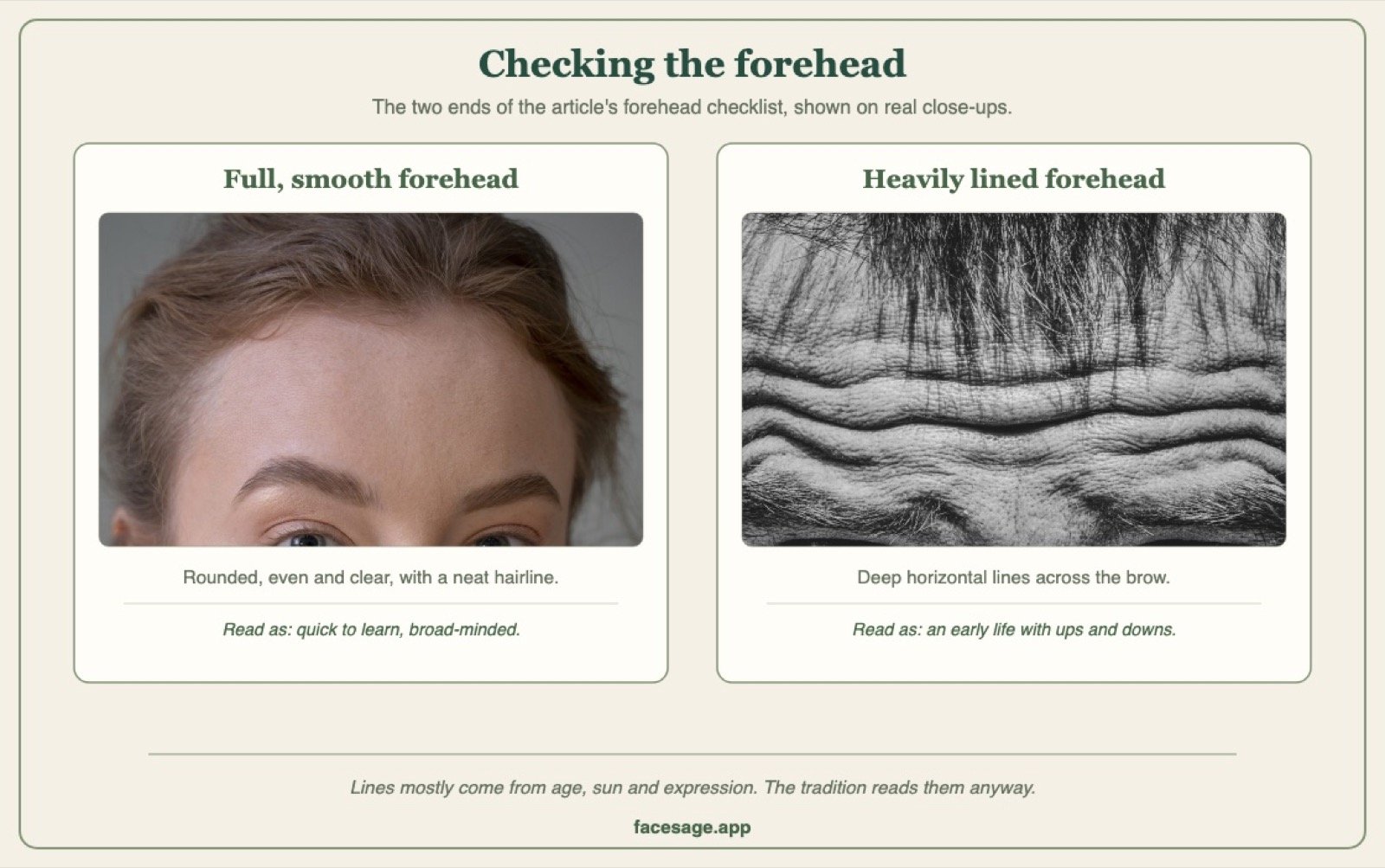
- A full and prominent forehead;
- The shape is even and glossy;
- No obvious messy patterns;
- No obvious dents or pits;
- A neat and smooth hairline;
- The glabella and forehead blend naturally, appearing bright and relaxed.
People with well-formed foreheads tend to have strong innate comprehension and excellent learning and understanding abilities. They are often farsighted, not focused on immediate gains, and have a relatively broad mind. Their early life is usually smooth, and they are likely to receive help from family, elders, or opportunities.
However, a wider forehead is not necessarily better.
If the forehead is too broad and prominent, it can make a person careless and lacking in meticulous consideration, sometimes leading to unrealistic expectations and a lack of practical skills. They may seem to have a long-term vision, but in actual execution, they overlook details, which can actually delay things.
Less Ideal Forehead Shapes
A less-than-ideal forehead often exhibits the following characteristics:
- Low, narrow, and sunken forehead;
- The surface is pitted and uneven;
- A messy, crooked hairline;
- Dense horizontal and vertical lines on the forehead;
- The forehead is dull and lacks luster year-round.
People with this type of forehead shape tend to have fluctuating fortunes in their early years, and may experience some setbacks in their family of origin or during their upbringing. They are usually more sensitive and prone to overthinking.
The advantages are deep thinking and strong perception; however, the disadvantages are also obvious, such as being prone to getting stuck on details, thinking too much but not acting accordingly, and hesitating for too long when faced with opportunities.
Tips for a Low or Narrow Forehead
People with low, narrow foreheads, stray hairs along the hairline, especially those with a narrow upper face and obvious imbalance in the three facial sections, can consider trimming their hairline before the age of thirty to make their foreheads appear more open. This isn’t about changing your fate, but rather about helping yourself improve your rationality, optimism, and decisiveness.
The Eyes: Mindset, Sense of Purpose and Communication
The eyes are one of the most important features in facial features.
When looking at eyes, the first thing to look at is their “spirit,” that is, whether their eyes are bright, firm, and clear.
People with bright and clear eyes are usually clear-headed, have their own judgment, and are more assertive when it comes to important matters.
People with dull, lifeless, and confused eyes are prone to feeling lost and aimless. They often struggle to understand or sort things out and are easily swayed by their emotions.
Next, observe the clarity of the black and white of the eyes.
Eyes with clear black and white indicate a relatively simple and kind mindset, and an ability to empathize with others.
If the eyes are bright and clear, with distinct black and white, it indicates that the person possesses both rational thinking and emotional intelligence, and is neither too cold-blooded nor completely controlled by emotions.
If someone’s eyes are dull and lifeless, but their pupils are clear and bright, especially if their irises are very large and dark, they are usually sensitive, kind, and sentimental. However, they are also easily deceived and taken advantage of by people with ill intentions because they trust others too much.
Therefore, bright and expressive eyes are generally better than dull and lifeless eyes.
If you find your eyes often appear dull, tired, and confused, it might not just be a matter of facial features; it also indicates that your recent mental state needs adjustment. Try getting more rest, avoiding staying up late, and reducing internal stress to help your eyes regain their clarity.
What Different Gazes Suggest
Let’s look at their eyes and overall demeanor:
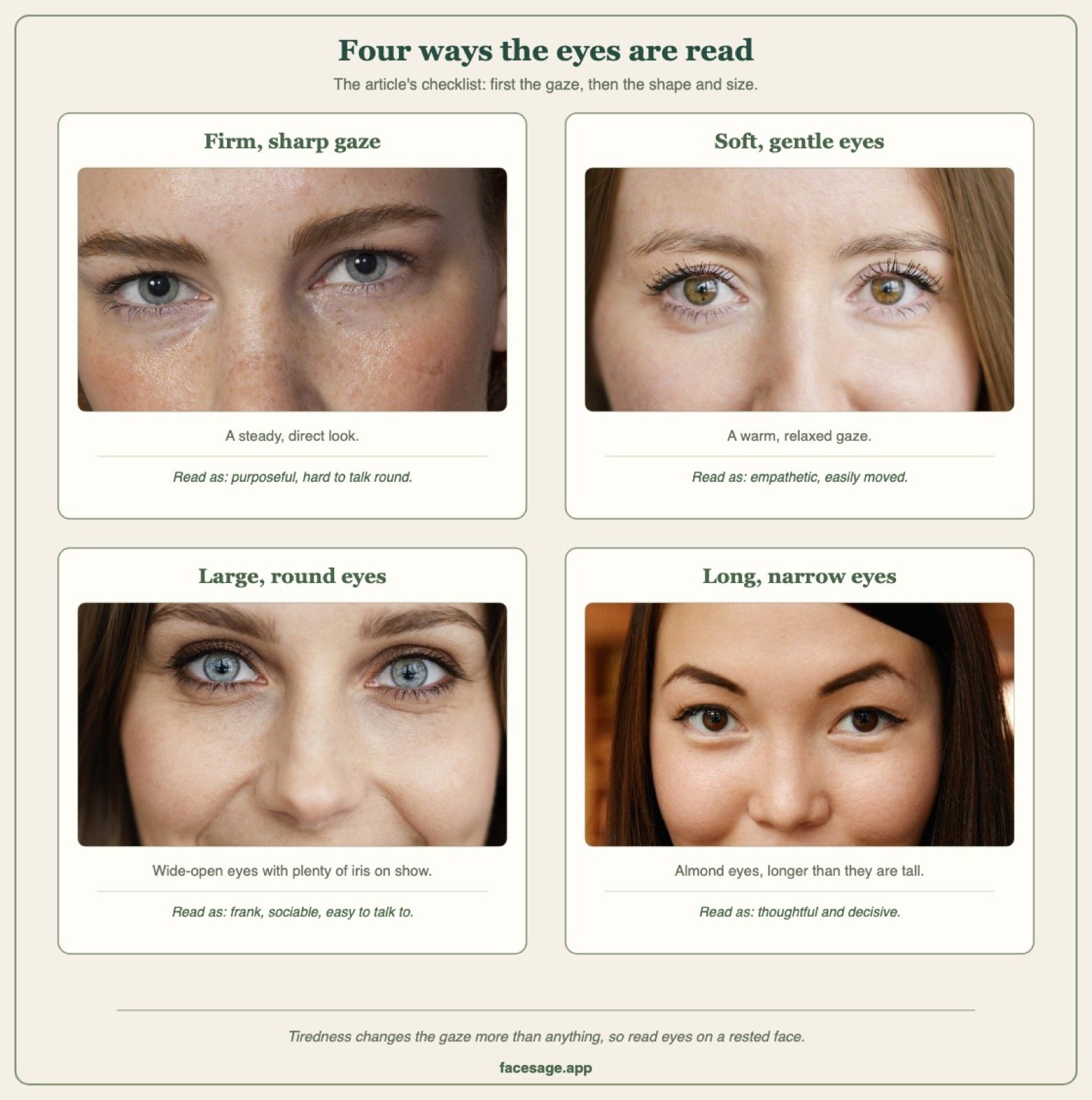
- Firm and sharp gaze: Strong sense of purpose, realistic thinking, not easily persuaded;
- Soft, gentle eyes: Emotionally rich, easily empathetic, and easily influenced by others;
- Large, round eyes with a gentle gaze: Usually easy to talk to, frank, and with strong social skills;
- Long, narrow eyes with sharp gaze: likes to think, acts decisively, and dislikes being indecisive;
- Large eyes and large irises: childlike, innocent, curious, and easily moved;
Small eyes: People with small irises are meticulous and don’t easily trust others based on emotions alone. They value reason and evidence more.
Are Single or Double Eyelids Better?
Many people ask: Is it better to have single eyelids or double eyelids?
In fact, whether you have single or double eyelids is more about personality and does not directly determine your facial features.
Generally speaking:
- Single eyelids: People with single eyelids tend to be pragmatic, rational, and logical; their thoughts and actions are more realistic.
- Double eyelids: People with double eyelids tend to be more emotional and have rich feelings; they are easily influenced by their preferences and feelings.
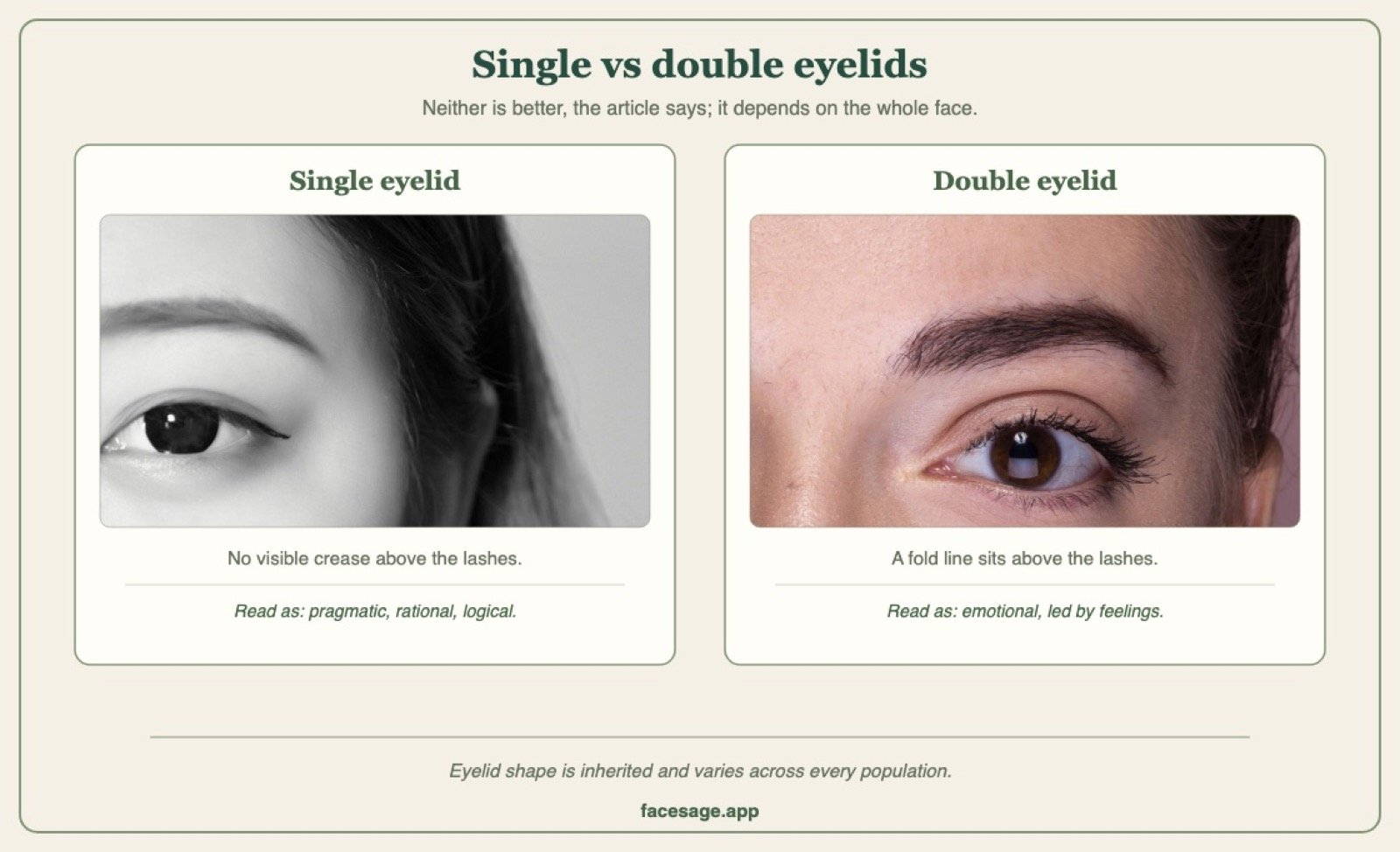
Therefore, there is no absolute good or bad in single or double eyelids; the key is whether they match the eye shape, gaze, and overall face.
The Nose: Career, Wealth and Confidence
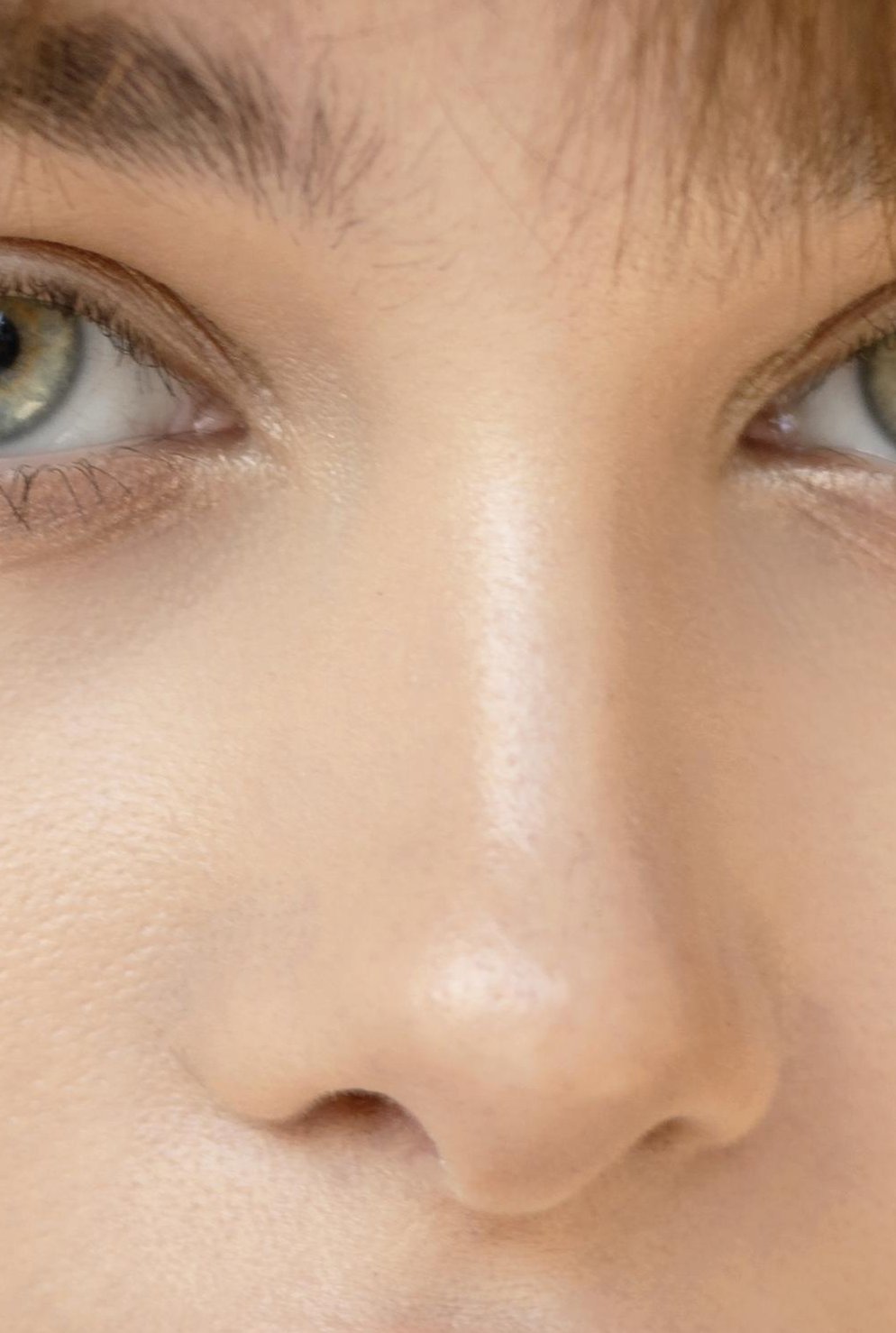
The nose primarily influences one’s fortune in middle age, and is also related to career, wealth, leadership ability, and social connections.
A nose isn’t just about how high it is; you also need to look at the proportions of the root, bridge, tip, wings, and nostrils.
What a Good Nose Looks Like
A good nose generally has several standards:
- The root of the nose is high, prominent, and smooth, without any obvious nodules or scars;
- A high, straight nose bridge, neither crooked nor slanted;
- The nose tip has strong lines, is not puffy, and has no obvious acne, scars, or moles;
- Full and strong nasal wings;
- The nostrils do not bulge outwards or show obvious eversion.
A high and smooth root of the nose is beneficial for career advancement and smooth development.
A straight and well-proportioned nose indicates a person with good character and stable interpersonal relationships.
A strong nose tip indicates wealth and the ability to accumulate it.
Full nostrils and nostrils that do not protrude indicate good fortune and the ability to save money.
Less Ideal Nose Shapes
Less than ideal nose shapes commonly include:
- Low and crooked nasal bridge;
- Bones exposed with no flesh;
- The root of the nose is sunken, and it even feels broken;
- A pointed, sharp nose;
- Thin, everted nasal alar;
- Large, exposed nostrils;
The nose has a dull and lackluster overall color.
People with this type of nose tend to have fluctuating fortunes, weak ability to save money, and unstable career foundations. In particular, those with a low root of the nose are prone to lacking assertiveness, easily giving up when faced with setbacks, and getting stuck on trivial matters.
Tips for a Weaker Nose Shape
People with a weak nose shape are not suited for blind speculation, gambling, or high-risk investments. They are better suited to making money through expertise, connections, and long-term accumulation; a steady and reliable approach is more dependable than taking risks.
The Mouth: Enjoyment, Social Skills and Communication
In face reading, the mouth is called the “intake-and-output official,” which governs a person’s food and fortune, social relationships, speech, and optimism.
What a Good Mouth Looks Like
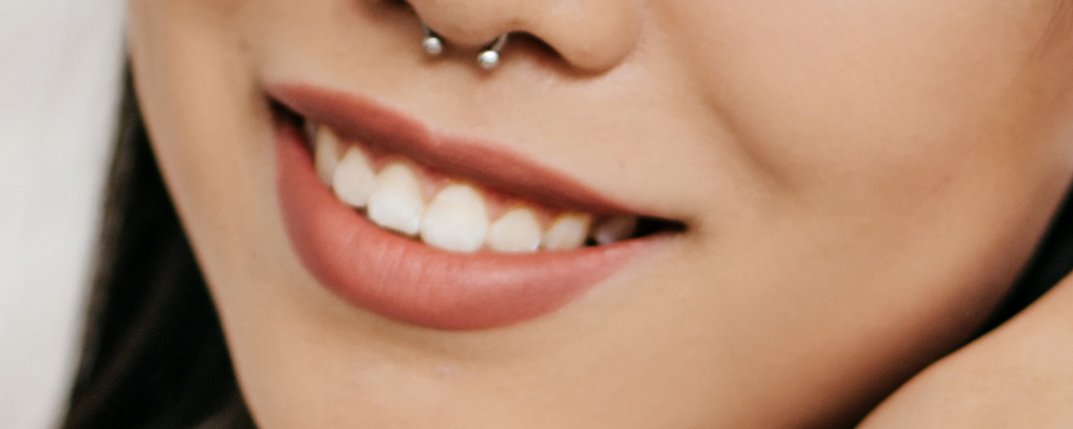
Good mouth features typically include:
- Full and rosy lips;
- Not dry or shrunken;
- The lip line is clear and the angles are distinct;
- When relaxed, the corners of your mouth should turn up slightly;
- Teeth are straight and white;
- The mouth opens and closes in a controlled manner, neither loose nor droopy.
People with this type of mouth usually have good eloquence and communication skills. They speak appropriately and are less likely to offend others with their words. They also tend to be more popular in the workplace and in life.
Less Ideal Mouth Shapes
Less than ideal mouth shapes commonly include:
Thin, dry lips;
- Disordered and dense lip lines;
- The corners of the mouth droop naturally;
- Sparse or crooked teeth;
A big mouth has no limits;
- The lips are always tightly closed.
Such people are prone to being taken advantage of in their speech, speaking without considering the context and unintentionally offending others, leading to a more bumpy social path.
In terms of personality, they are also more prone to complaining, getting caught up in their own thoughts, and being overwhelmed by negative emotions. Their worries accumulate, and they may even cause interpersonal conflicts due to verbal disputes.
Tips for a Weaker Mouth Shape
For people with a weak mouth shape, the key is not to speak less, but to learn to “speak slowly.” Think before you speak, listen before you answer, and avoid making rash remarks that could lead to future problems.
The Ears: Fortune, Composure and Later Life
Ears are mainly associated with good fortune, composure, and temperament, and are also related to one’s fortune in old age.
What Good Ears Look Like
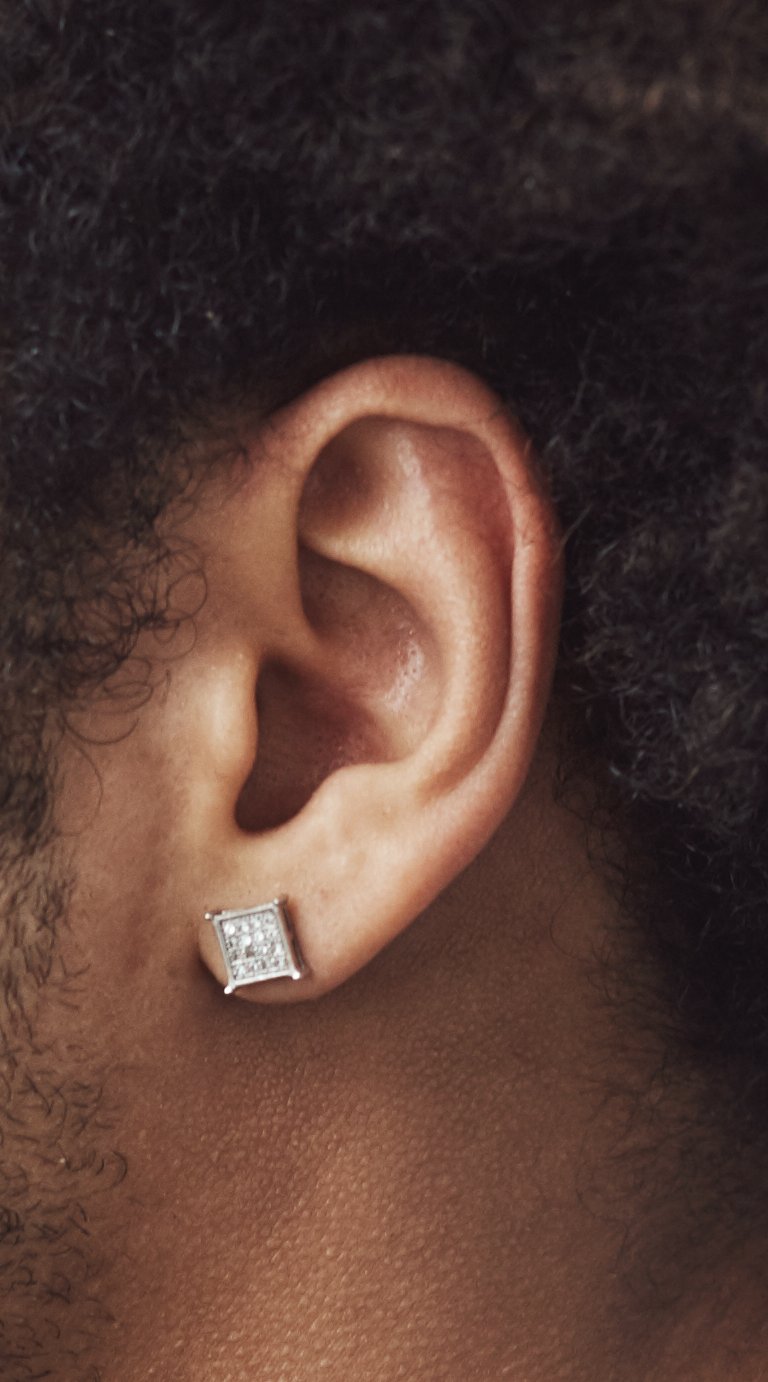
Good ear features typically include:
- White and smooth in color;
- Ears high;
Large ears;
- Thick and large earlobes;
- The outline is complete, with no obvious defects.
There’s a common saying that “large earlobes bring good fortune,” and this is often true. People with thick, large earlobes usually have better luck, fortune, and interpersonal relationships, which is especially beneficial in their later years.
However, having large earlobes is not without its drawbacks.
People with small ears and large earlobes are generally lucky, but they can sometimes be introverted and conservative, and may lack initiative and energy. It’s not that they lack luck, but rather that they tend to be slow to react or don’t like to take the initiative.
What Ear Color Suggests
Ear color is also important.
Ears that are whiter than the face are generally considered a good sign, indicating fame, noble connections, and good fortune.
The pinkish hue of the ears is also nice.
If the ears are too red or black, especially if the face is normal in color but the ears are black, it usually indicates that you are overworked and tired, and you should pay attention to your health.
Ear Size and Shape
The height and size of one’s ears can also reveal a person’s composure and foundation.
Thin, small, and soft ears: Innate weak willpower, prone to impulsiveness;
- Ears that flare outwards: Indicate a more rebellious and unruly personality;
- Large, white, thick, and droopy ears: Indicates a kinder and more upright nature, and better fortune.
Ears Without Earlobes
Another common ear shape is the “chicken beak ear,” which means there is no earlobe.
People without earlobes are usually quick-tempered, restless, and prone to worrying. If, in addition, their ears are incomplete or crooked, they may lack honesty and a sunny disposition.
However, the shape of the ear is not static.
If you feel that your ear shape is not ideal, don’t be discouraged. Ears reflect one’s temperament and habits. By cultivating one’s mind, maintaining health, and stabilizing emotions, one’s state will gradually change, and one’s facial features will become softer.
Final Thoughts on Learning Face Reading
After checking yourself in the mirror, you will find that:
Facial features that are considered advantageous often correspond to traits such as optimism, composure, courage, good communication skills, and a stable temperament.
The shortcomings in our appearance are merely reminders that we still need to make adjustments in our personality, mindset, expression, and actions.
One’s facial features are not destiny, but a mirror.

It reflects our current state, not the only possible outcome in the future.
What truly determines a person’s fortune is always their long-term mindset, choices, and actions.
This self-assessment guide for facial features aims to help everyone gain a more objective understanding of themselves. The forehead reveals early life, the eyes reveal character, the nose reveals middle age, the mouth reveals interpersonal relationships, and the ears reveal fortune. However, a reminder: facial features should not be interpreted in isolation; don’t judge yourself based on just one feature. What facial features have you noticed? Feel free to leave a comment below, and don’t forget to save and share this with your friends for self-assessment.
Keep reading
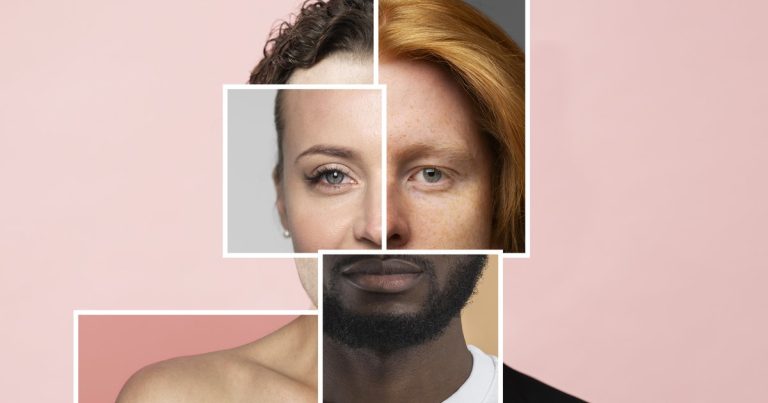
What Is Face Reading and What Can It Tell You?
What Is Face Reading (Physiognomy)? Physiognomy is a folk art of fortune-telling that involves observing a person’s facial features, and strictly speaking,…
The Best Face Reading Books: 6 Classics Reviewed — and Tested Against Real Measurements
The right face reading book depends on how you like to learn. Start with Mac Fulfer for a feature reference, Chi An…