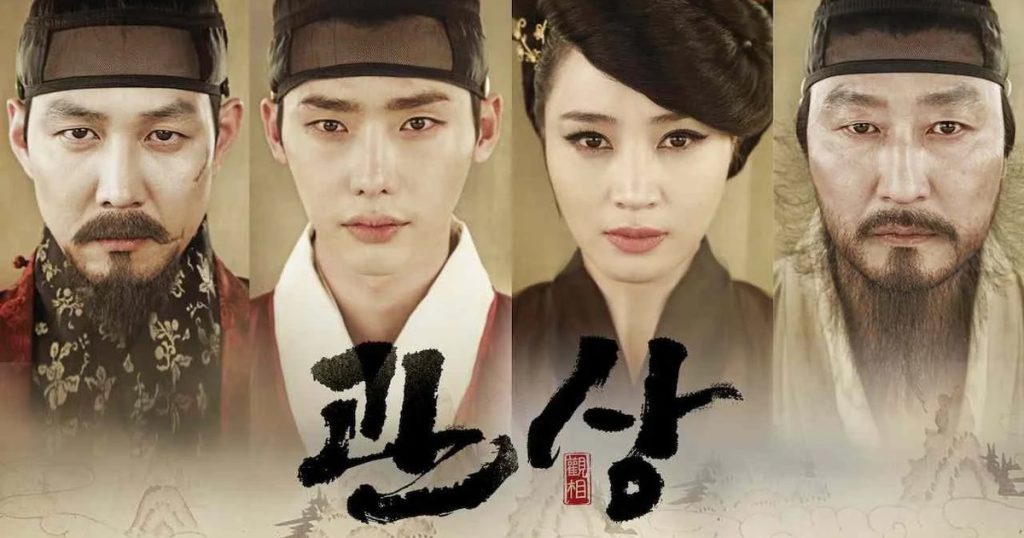
The Face Reader turns Korea’s face-reading tradition into a royal thriller: an outsider who interprets faces finds himself caught between powerful rivals. This 2013 South Korean drama, directed by Han Jae-rim and starring Song Kang-ho, runs 139 minutes in Korean. Korean Film Council credits.
Its cultural starting point is real; its extraordinary reading abilities belong to the story. That combination offers an intriguing introduction to face reading through court intrigue. Gwansang draws on systems developed in China, and Chinese face reading, or Mian Xiang, shows how that older tradition reads the forehead, eyes, nose, mouth and ears.
The story and key characters
Nae-kyeong (Song Kang-ho) leaves his mountain home after courtesan Yeon-hong offers him work reading faces in Hanyang, the capital. His reputation attracts senior minister Kim Jong-seo, drawing him into government service and a struggle involving Prince Suyang (Lee Jung-jae). Within the film, Nae-kyeong interprets both character and fortune through appearance. KOFIC’s story overview.
Keep that central relationship in mind: a reader accustomed to interpreting individuals enters a world where the throne is at stake.
The real tradition and historical setting
The Korean title, Gwansang, names a divination practice that interprets appearance as signs of fortune. The Encyclopedia of Korean Culture describes attention to facial structure, complexion, eyebrows, nose, mouth and ears, alongside movement and voice. It’s a richer observational vocabulary than the English title alone suggests.
Those traditional interpretations don’t establish someone’s actual character or future. A review of facial judgments finds their diagnostic accuracy has been overstated.
The court conflict has historical roots: young King Danjong succeeded his father in 1452, supported by ministers including Kim Jong-seo, while his uncle Suyang pursued power. Academy of Korean Studies biography. Nae-kyeong, however, is a fictional participant, as the New York Asian Film Festival explains.
What to know before watching
If you enjoy political intrigue and elaborate period settings, this may suit you. Critic Pierce Conran praises the cast and visual craft, while finding the film somewhat long. Expect humor alongside serious drama.
No earlier film is necessary: the later The Princess and the Matchmaker and FENGSHUI share themes, not narrative continuity. KOFIC’s trilogy explanation.
For viewing, check Viki’s official listing from your country; the September 4, 2026 check did not confirm local playback access.
If the film leaves you curious about a reading of your own, explore FaceSage and consider its interpretations as prompts for reflection on your own experiences.
Keep reading

How Mian Xiang Chinese Face Reading Uses Your 5 Facial Features
Facial features are not just for predicting good or bad fortune; they can also help us understand our innate traits, personality weaknesses,…
Korean Face Reading (Gwansang): The Complete Guide
Korean face reading, or gwansang (관상), interprets facial features through traditional ideas about character, fortune, and the course of a life. A…