Why Face Reading Includes Body Language
Physiognomy theory holds that to improve the accuracy of face reading, one must not only observe a person’s static appearance, form, and complexion, but also their dynamic changes. This is because when a person conveys information to the outside world, language accounts for only about 7%, tone of voice only 38%, and the remaining 55% is expressed through nonverbal body language. More importantly, body language is a natural, subconscious behavior, more authentic and reliable than verbal tone of voice, and less deceptive. Therefore, in face reading, if one can correctly interpret the various messages in a person’s body language, one can understand many hidden, subconscious emotional changes and thought processes deep within their heart.
What Head Posture Reveals
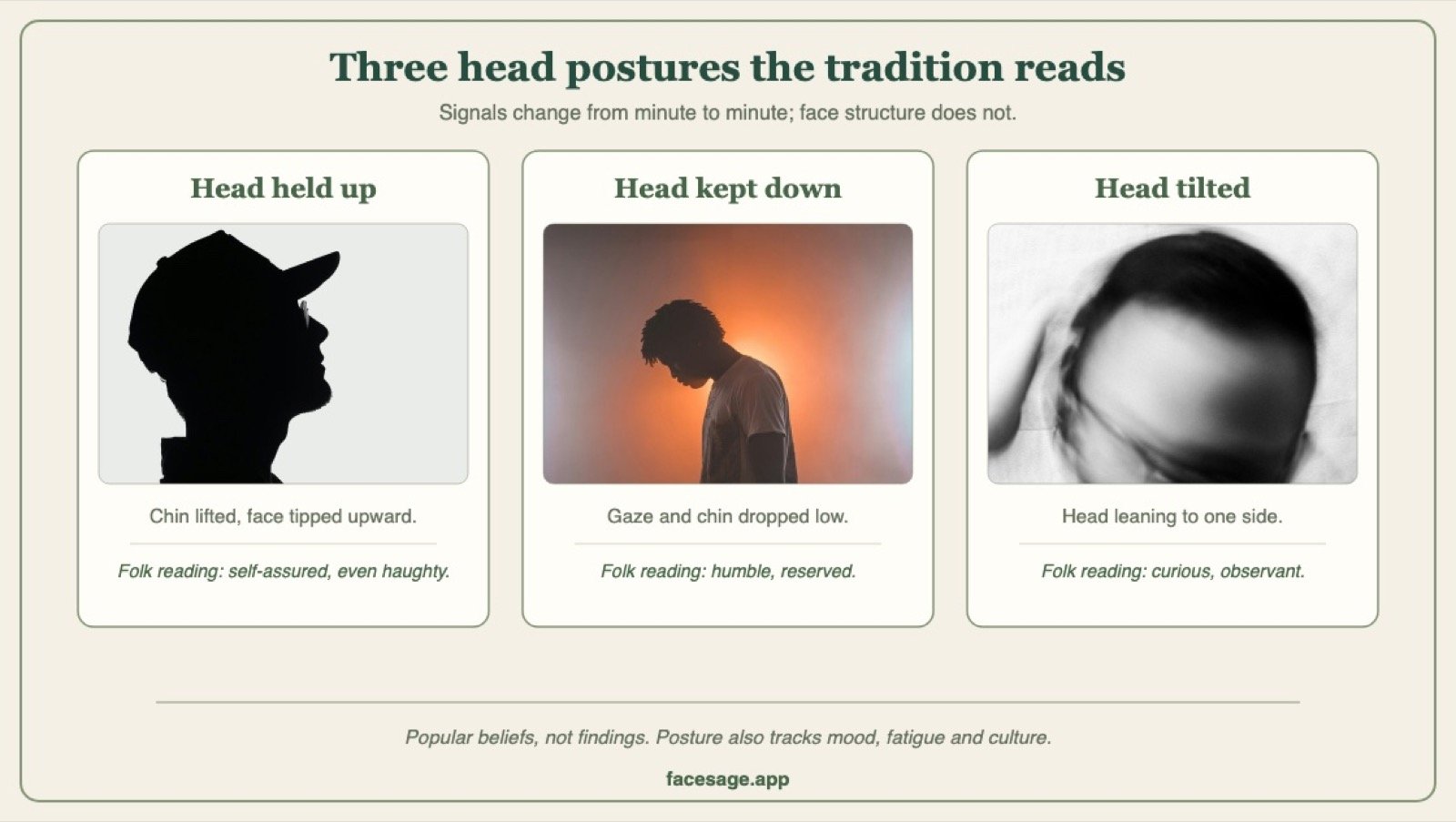
The head, located at the highest point of the body, houses the brain and numerous vital sensory organs. It possesses exceptional hearing, keen observation, a wide field of vision, and heightened sensitivity. Therefore, even the slightest changes in head posture can reflect a person’s inner emotions and feelings. For example, people who frequently hold their heads up are often somewhat self-righteous or arrogant, even displaying haughtiness and a sense of superiority. Such individuals typically lack consideration for or concern for the feelings of others. Conversely, those who always keep their heads down are often introverted, humble, and unassuming, sometimes even exhibiting a slight inferiority complex and a lack of passion and courage. People who prefer to tilt their heads to the side tend to be curious and observant, but also stubborn and have poor patience.
What Hand Movements Reveal
Hand Gestures
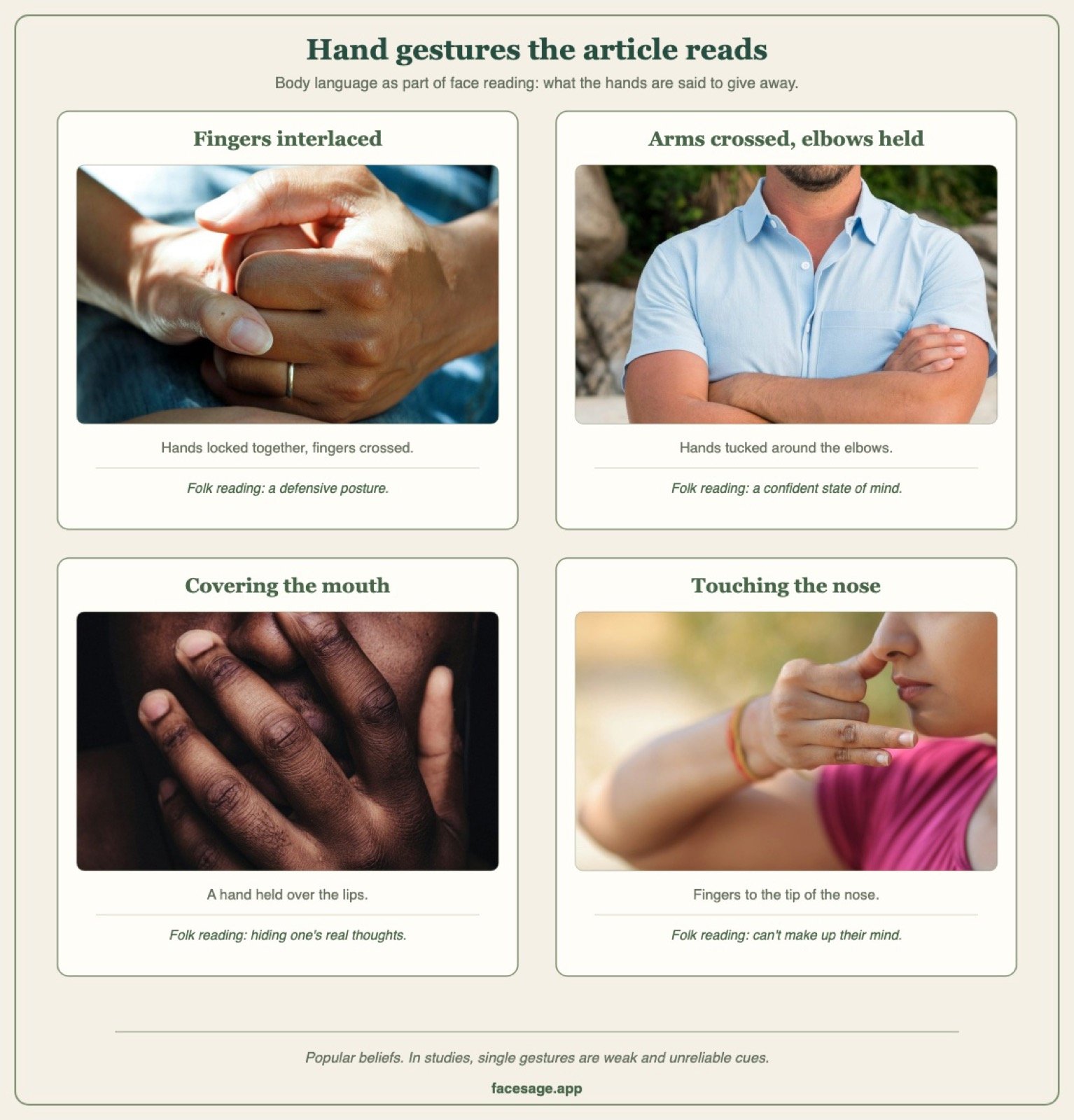
The ancients said, “The ten fingers are connected to the heart, and the heart is the organ that governs the spirit.” Modern scientific research has proven that the hands are the most tactile and expressive part of the human body. Therefore, observing changes in a person’s hand posture can often reveal various information. For example, crossing the fingers is a typical instinctive defensive posture, indicating that the person may have suffered serious trauma and has some psychological trauma. Crossing the hands while supporting the elbows reflects a confident state of mind. A person who forms a pyramid shape with their fingers indicates that they are only interested in what you say, not in you as a person. Touching their ears suggests a lack of basic trust in what you are saying. Constantly touching the tip of the nose is a common body language indicating indecisiveness and an inability to make a clear decision. Scratching the head suggests restlessness; covering the mouth indicates an attempt to conceal one’s true thoughts; and rubbing the face indicates inattentiveness and a lack of interest in the conversation.
What a Handshake Can Tell You
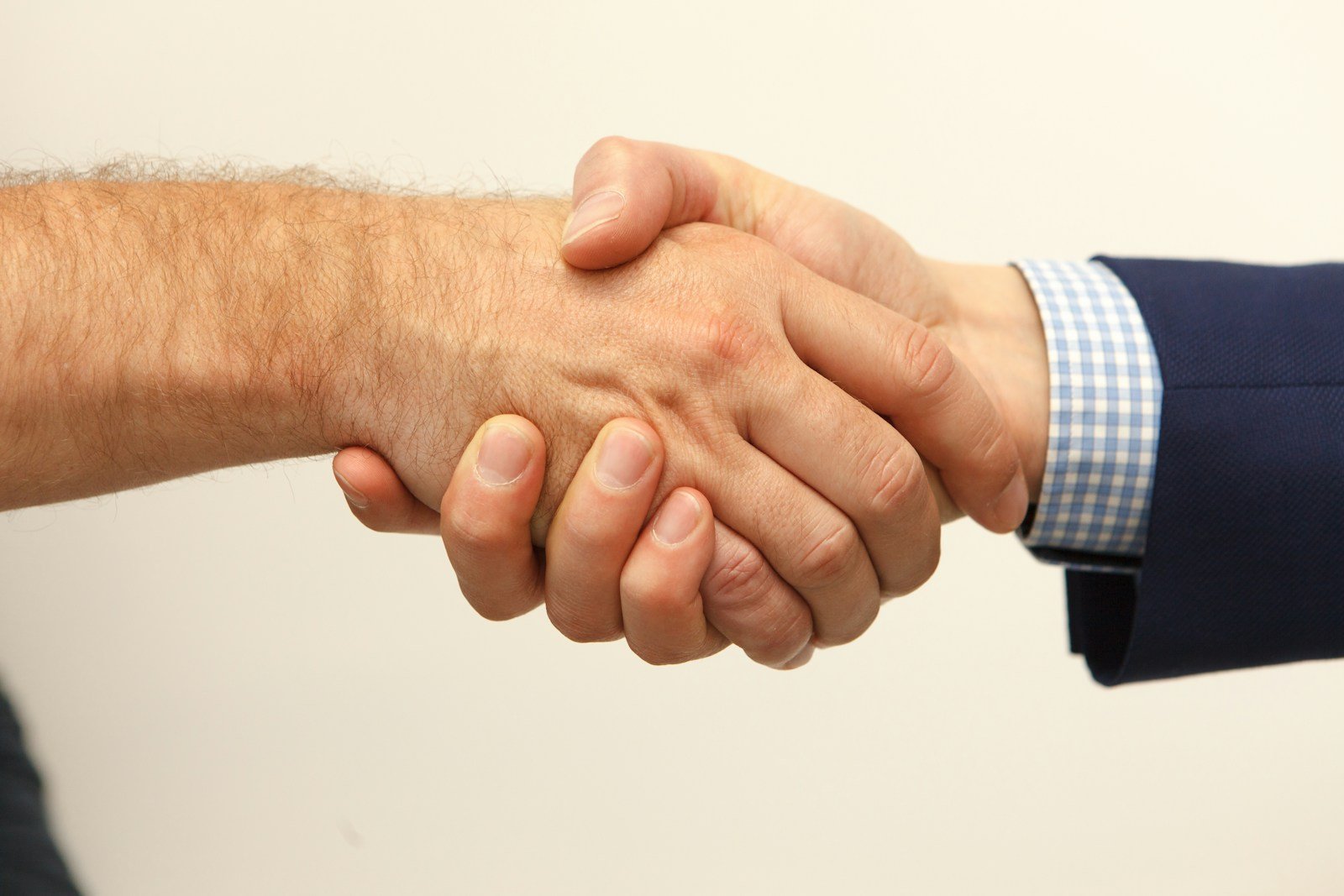
In modern society, shaking hands is not only a basic courtesy in interpersonal interactions, but also the best opportunity to observe others’ inner thoughts and receive information from them. When shaking hands, people with dry palms tend to be outgoing, but this may also indicate a lack of particular interest in the meeting. People with damp palms tend to be introverted, or perhaps very nervous or fearful. People with palms facing up are generally gentle and easy to get along with, while those with palms facing down are competitive and unwilling to submit. Those who only extend their fingers when shaking hands are worldly-wise, stingy, greedy, and like to look down on others. Women generally don’t use much force when shaking hands with men; if she suddenly applies more pressure, she’s definitely hinting at something, so pay attention to her subsequent behavior.
What Leg and Sitting Postures Reveal
If observing changes in head posture provides sensitive and nuanced information, and observing changes in hand posture provides timely and rapid information, then observing changes in foot posture provides truthful and reliable information. This is because modern people’s heads and faces are often artificially adorned and concealed, and their hands undergo extensive professional training. Therefore, merely observing the static features of the head, face, and hands can sometimes lead one astray. In contrast, foot posture is remarkably natural and unpretentious, lacking the artificiality often associated with these features. Thus, by observing the movements of a person’s feet and legs, one can more accurately predict their true inner thoughts.
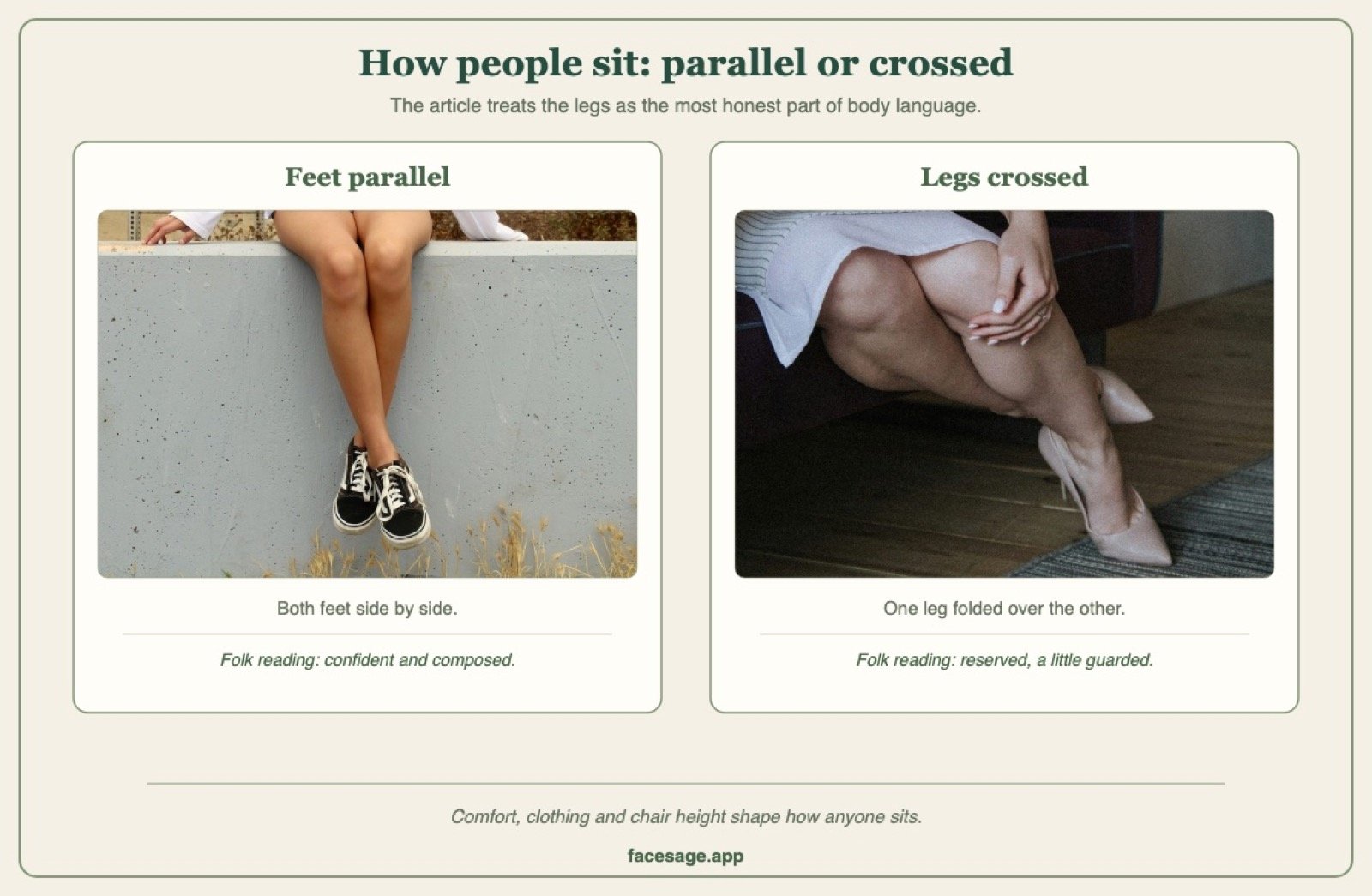
The most common way people sit is with their feet parallel. People who sit this way are very confident; they are neither overly open to outsiders nor overly closed off. Except for those they greatly admire and trust, they will not show excessive enthusiasm, but rather remain composed and polite. People who like to cross their legs, especially women, are often traditional and conservative in their thinking, introverted, and have a strong sense of defensiveness towards the outside world and the opposite sex. People who habitually cross their right leg over their left are mostly rational and calm, tending to suppress and control their emotions, and not easily revealing their true feelings. People who habitually cross their left leg over their right are mostly emotional and impulsive, bold, brave, and adventurous, especially in love, often acting recklessly and passionately.
Keep reading
What Is Face Reading and What Can It Tell You?
What Is Face Reading (Physiognomy)? Physiognomy is a folk art of fortune-telling that involves observing a person’s facial features, and strictly speaking,…
How to Read People’s Faces Using Ancient Techniques
It’s often said that “it’s easy to draw a tiger’s skin but hard to draw its bones; it’s easy to know a…